**React Native** offers a unified codebase for both iOS and Android, enhancing development efficiency.
Essential features for an image gallery app include high-resolution support, categorization, and robust search functionalities.
Integrating photo editing tools like *react-native-image-picker* and *react-native-photo-editor* enriches user experience.
Performance optimization, responsive design, and security measures are crucial for app reliability and user trust.
Following best practices ensures a smooth user experience and efficient app performance.
Why Crafting a High-Quality Image Gallery App in React Native?
In today’s digital age, visual content drives engagement, conversions, and user satisfaction. Whether for portfolios, e-commerce catalogues, social networks, or media platforms, users expect fast, responsive, beautiful image experiences on mobile devices.
For agencies offering mobile solutions, a High-Quality Image Gallery App built with React Native is not just another project — it’s a strategic differentiator and revenue generator.
At SolutionSquares, we build production-grade image gallery apps that handle high-resolution media, complex gestures, offline access, and enterprise-scale performance, all from a single React Native codebase.
Why React Native Is Ideal for Image Gallery Apps
1. Cross-Platform Efficiency Without Compromising Quality
React Native allows agencies to deliver iOS and Android apps simultaneously, reducing development effort by up to 35–40% compared to separate native builds—while still achieving near-native performance.
Over 3.6 billion images are shared daily across platforms worldwide. (Source: industry estimates)
Nearly 54% of consumers say they engage more with apps featuring rich visual content.
Visual search and image-centric UX are major trends in e-commerce, fashion, travel, and social networking.
Mobile Gallery App Demand is Growing
The global mobile app market is expected to exceed $935 billion by 2030, with media-rich applications leading adoption. (Source: Statista)
Rich media apps are especially in demand in:
Creative agencies
Digital portfolios
Photography marketplaces
E-commerce brands
Social communities
For agencies, offering React Native image gallery app development unlocks access to this high-growth segment.
Business Benefits for You
Benefit
Impact
Faster downloads
Higher retention
Smooth UX
Better client reviews
Cross-platform
Wider reach
Cloud integration
Scalable growth
Analytics enabled
Data-driven improvements
Who Is This Right For?
This solution is perfect for:
Digital agencies seeking premium mobile app offerings
Startups building visual communities
E-commerce brands with rich catalogs
Photographers and creative platforms
Enterprises modernizing customer engagement
Essential Features of an Image Gallery App in React Native
User-Friendly Interface and Navigation:
The user interface in an app, especially one handling visual content, should be intuitive. Smooth scrolling and responsive design enhance the user’s interaction, making them comfortable and more engaged. User Interface Tips
High-Resolution Image Support and Loading Optimizations:
Supporting high-resolution images is crucial for a gallery app, as is the efficiency of their loading times. Techniques like lazy loading and generating thumbnail previews can significantly enhance performance. Optimization Techniques
Categorization and Tagging of Photos:
Organizing photos through tagging and categorization aids users in navigating their collections. Effective categorization enhances user experience by making photo retrieval straightforward. Categorization Strategies
Search and Filter Functionalities:
These features are vital for users to efficiently sort through large collections based on various criteria such as name, date, or tags, making the app user-friendly and functional.
If your client needs a slick, modern image experience on mobile, React Native delivers with speed and flexibility.
Ready to build stunning image gallery experiences that delight users and win clients?
Contact SolutionsSquares.com today Let us help you design, develop, and scale a beautiful React Native Image Gallery App that stands out in a crowded market. Contact Us.
Turn your mobile app ideas into high-impact solutions.
Frequently Asked Questions (FAQ)
Q 1: Why choose React Native over pure native iOS/Android?
A: With React Native, you get the best of both worlds: native-like performance with one shared codebase — saving time and cost without compromising quality.
Q 2: Can React Native handle complex image features like zoom, filters, and offline viewing?
A: Absolutely. With robust libraries and custom native modules where needed, complex features perform smoothly.
Q 3: Is React Native suitable for enterprise-grade applications?
A: Yes. Many Fortune 500 companies use React Native at scale for mission-critical apps.
Q 4: How does SolutionsSquares help with development?
A: We offer end-to-end services: strategy, UI/UX, development, QA, deployment, and post-launch support.
Q 5: What can clients expect in terms of timeline?
A: Typical delivery for a robust image gallery app ranges from 8–16 weeks, depending on features.
React Native provides cross-platform compatibility, enabling seamless deployment on both iOS and Android.
Essential features for a successful react native travel app include itinerary management, real-time booking, GPS integration, and user reviews.
The development process involves thorough planning, intuitive UI/UX design, efficient implementation, rigorous testing, and ongoing maintenance.
Cost and timeline are influenced by feature complexity, design specifics, and the geographical location of the development team.
Adhering to best practices such as ensuring performance, prioritizing security, and incorporating user feedback is crucial for app quality.
Building a Successful React Native Travel App
In today’s digital landscape, a React Native travel app has become essential for travellers seeking seamless planning and booking experiences on both iOS and Android platforms. The capacity to streamline travel logistics through a powerful mobile app isn’t just a convenience; it’s a necessity. This guide aims to inform and guide developers on leveraging React Native to create effective, engaging travel apps. The dual focus on commercial viability and enriching user information ensures that developers can satisfy both aspects of the search intent effectively.
What is a Travel App?
A travel app is a software application designed to assist users in planning, booking, and managing their trips. Core functionalities include:
Itinerary Management: Organizing trip schedules in one easy-to-access place.
Destination Information: Providing details and tips about destinations.
Booking Services: Enabling the booking of flights, hotels, and more.
Navigation Tools: Offering maps and directions to enhance the travel experience.
Key features often found in successful travel apps, based on our research, are:
Personalized Recommendations: Tailors suggestions based on user preferences for a custom experience.
GPS Integration: Uses location-based services for navigation and discovery.
User Reviews and Ratings: Implements feedback mechanisms for informed decision-making.
The importance of user experience in travel apps cannot be overstated—it’s crucial for user adoption and retention, ensuring that the app not only attracts users but also keeps them engaged.
Why Choose React Native for Your Travel App?
Why Agencies Prefer Building Travel Apps with React Native
1. Faster Cross-Platform Development
React Native allows developers to build a single codebase that works seamlessly on both iOS and Android.
Faster time-to-market
Reduced development and maintenance cost
Faster iteration and updates for agencies managing multiple clients
For agencies, this means delivering travel apps more efficiently without compromising quality.
2. Native-Like Performance
Travel apps require smooth animations, map performance, real-time updates, and offline capabilities. React Native bridges JavaScript with native modules, ensuring:
Fast loading time
Smooth UI transitions
Stable performance even with heavy content
This is especially important for features like flight status, map routing, and media galleries within travel apps.
3. Rich Ecosystem for Travel-Specific Functionalities
At SolutionsSquares, we build full-scale, production-ready travel apps with features such as:
Core Features
User onboarding & profiles
Destination discovery
Map-based navigation
Image & video galleries
Hotel, flight, and tour booking
Itinerary creation
Multi-language support
Push notifications & reminders
Advanced Features
AI Itinerary Planner
AR-based destination previews
Payment gateway integration
Offline mode
SOS & safety features
Review & rating systems
These features make React Native an ideal choice for developing a travel app. For more information on React Native app development services, visit React Native App Development Services.
Key Features of a React Native Travel App
To ensure your React Native travel app stands out, several key features should be implemented:
User-friendly Interface and Intuitive Navigation: Critical for keeping users engaged and ensuring they find what they need quickly and efficiently.
Real-time Booking and Reservation Systems: Allows users to make reservations on the go, increasing the usability of the app.
GPS and Mapping Integrations for Location-based Services: Helps users navigate new areas effortlessly.
Secure Payment Gateway Integration: Essential for safe transaction processing.
Social Sharing, Reviews, and Ratings Functionalities: Enables users to share their experiences and feedback, which can help attract new users.
Push Notifications for Updates and Promotions: Keeps users informed and engaged with the latest app developments and offers.
Development Process for a React Native Travel App
The process for creating a travel app with React Native includes several crucial steps:
Planning and Requirement Analysis: Start by defining what the app needs to do and for whom.
Designing the User Interface and User Experience (UI/UX): Focus on making the app appealing and easy to use.
Implementing Key Features Using React Native: Develop the app’s essential services using React Native’s functionalities. Learn more about the importance of mobile app development here.
Testing Across Multiple Devices and Platforms: Ensure the app works well on all targeted devices.
Deployment and Ongoing Maintenance: Launch the app and keep it updated to meet user needs and fix any issues.
Case Studies: Successful Travel Apps Built with React Native
How React Native Accelerated a Travel App Launch by 60%
Client: Mid-size marketing agency serving a tourism company
Challenge: Build a feature-rich travel app within 10 weeks
Solution:
SolutionsSquares used React Native to develop a cross-platform travel experience featuring:
Destination discovery
Map navigation
Offline itinerary
Push alerts
Integrated hotel API
Results:
Delivered 2 apps (iOS + Android) with a single codebase
Reduced overall development time by 60%
Saved the agency nearly 40% in cost
Increased user engagement by 3X within the first month
This strengthened the agency’s trust and led to a long-term partnership.
AI Travel Planner App: This app showcases features like AI chat assistants and personalized itineraries, enhancing the travel planning process. Source
Cross-Platform Travel App: Helps users organize group travels with features such as calendar views and to-do lists, proving the versatility of React Native. Source
Key lessons from these studies highlight the effectiveness of React Native in creating responsive and user-focused travel apps.
Cost and Timeline for Building a Travel App with React Native
Factors like feature complexity, design specifics, and team size will influence development costs (source). Timelines can vary from weeks to months, depending on the app’s complexity. Effective budgeting involves prioritizing crucial features and leveraging reusable components to save time and expenses.
Best Practices for Developing a High-Quality Travel App
For a top-quality React Native travel app, consider these best practices:
Ensuring Seamless Performance and Responsiveness: Use optimized coding and thorough testing.
Prioritizing Security and Data Protection: Implement strong security measures to safeguard user information.
Incorporating User Feedback for Continuous Improvement: Adapt the app based on user suggestions and needs.
Staying Updated with the Latest Trends and Technologies: Continuously integrate the latest innovations in travel and technology.
Conclusion
React Native is a potent tool for developing travel apps, owing to its cross-platform capability, cost-effectiveness, and efficient coding possibilities. Businesses and developers ready to embark on building a travel app with React Native should harness these strengths to craft engaging user experiences.
Ready to develop your own travel app with React Native? Contact ustoday to get started!
Additional Resources
For more insights into React Native and travel apps, explore these resources:
Recommended Tools and Libraries: Leverage MongoDB for data management and tools like React Native Maps and Stripe for mapping and payments.
Further Reading: Dive into current market trends and user behaviors with this comprehensive report.
This guide provides a thorough playbook for anyone looking to build a travel app using React Native, ensuring you have the knowledge and tools necessary to create an exceptional product.
Frequently Asked Questions
1. Why is React Native a good choice for developing travel apps?
React Native offers cross-platform compatibility, allowing developers to create apps that work seamlessly on both iOS and Android. This reduces development time and costs while ensuring a consistent user experience across platforms.
2. What are the essential features to include in a travel app?
Key features include itinerary management, real-time booking, GPS integration, user reviews and ratings, secure payment gateways, and push notifications for updates and promotions.
3. How much does it typically cost to develop a React Native travel app?
The cost can vary based on feature complexity, design requirements, and the development team’s location. Generally, costs can range from $50,000 to $200,000.
4. What is the typical timeline for developing a React Native travel app?
The development timeline can range from a few months to over a year, depending on the app’s complexity, the number of features, and the efficiency of the development process.
5. How can user experience be enhanced in a travel app?
Enhancing user experience involves creating an intuitive and user-friendly interface, ensuring seamless navigation, providing personalized recommendations, and incorporating user feedback for continuous improvement.
React Native for wearable apps empower cross-platform development, enabling faster, cost-effective deployment on both Android Wear OS and Apple watchOS.
Wearable app development demands optimization for smaller screens, limited battery, and unique inputs like touch gestures and voice commands.
Proper adaptation includes responsive design, native module integration, and managing power efficiency to maximize device performance.
React Native’s single codebase approach greatly reduces development effort while maintaining native hardware integration capabilities.
Future trends indicate expanding wearable capabilities and deeper IoT integration, where React Native continues evolving to meet emerging needs.
React Native for Wearable: Empowering Cross-Platform Wearable App Development
In the ever-evolving world of technology, React Native for wearable applications has emerged as a transformative framework, enabling businesses to build robust applications for wearables with a single codebase.
This powerful JavaScript-based framework is integral to developing applications for smartwatches, fitness trackers, and health monitoring systems.
The demand for seamless, user-friendly applications is growing, and React Native fulfils this demand by providing a consistent development experience across various platforms.
According to industry insights, “React Native has emerged as a transformative framework for wearable device application development” (Accelfintech).
Cross-Platform Capability
One of the standout features of React Native for wearable development is its ability to leverage the “write-once-deploy-everywhere” approach. With this framework, developers can create applications that run on multiple platforms, including Android Wear OS and Apple watchOS, thus maximizing return on investment (ROI) while maintaining uniformity across devices.
This capability significantly reshapes the economics of wearable app development, allowing companies to enter broader markets without proportionately increasing complexity or costs (Accelfintech).
Wearable devices have transformed how people track health, manage productivity, and interact with technology—and the industry is growing faster than ever.
As smartwatches, fitness trackers, AR/VR glasses, and health-monitoring wearables become part of everyday life, businesses are shifting their focus toward delivering seamless wearable experiences. At SolutionSquares, we help organisations turn this opportunity into reality by delivering high-performing React Native wearable applications.
Growth Of the Wearable Market Globally
The global wearable industry is experiencing rapid expansion, driven by rising health awareness, advancements in sensors and AI, and wider use across fitness, healthcare, and smart-device ecosystems.
Recent reports show the market growing from around USD 84–102 billion in 2024–2025 to USD 186–532 billion by 2030–2034, with growth rates between 13% and 20%+ CAGR. Smartwatches and fitness bands remain dominant, while medical wearables, AR/VR devices, and smart clothing are emerging strongly.
North America leads in adoption, but Asia-Pacific is the fastest-growing region, supported by increasing digital adoption and rising incomes. Key challenges include battery limitations, data privacy concerns, and lack of standardisation, but overall demand signals strong multi-year growth.
Why React Native Is Ideal for Wearable App Development
React Native has become one of the most reliable frameworks for building cross-platform mobile applications. Its strengths become even more powerful when applied to the world of wearable tech:
1. One Codebase for Multiple Wearables
React Native allows developers to build apps for Android WearOSand Apple watchOS using a unified codebase. This means faster development, consistent visual design, and reduced long-term maintenance costs.
2. Real-Time Data Handling for Health & Fitness
Most wearable apps rely on continuous streams of data—steps, heart rate, sleep cycles, notifications. React Native integrates smoothly with health APIs such as Google Fit, Apple HealthKit, and custom sensor SDKs, enabling real-time data processing with low latency.
3. Smooth Performance & Lightweight UI
Wearables require extremely efficient, optimised interfaces due to small screens and limited hardware resources. React Native’s component-based architecture allows us to build clean, uncluttered, responsive UIs that feel natural on any wearable device.
4. Rapid Development + Strong Community Support
The extensive React Native ecosystem—including libraries, plugins, and community extensions—shortens development time without sacrificing quality. Clients benefit from faster time-to-market and future-proof solutions.
Key Differences from Traditional Mobile Development
When transitioning from traditional mobile development to wearable applications, developers must adapt to significant design and optimization priorities.
Wearable apps prioritize simplification, focusing on minimalistic interfaces due to their smaller screen sizes. As stated in research, “Battery management becomes a critical design constraint” (Accelfintech).
The efficient handling of asynchronous data is paramount in fitness and health monitoring applications, making power management and optimization essential aspects of wearable app design.
React Native’s primary advantage is its ability to leverage existing JavaScript expertise. However, for performance-critical applications—especially in sectors like healthcare where real-time sensor processing is essential—businesses may consider alternative frameworks such as Flutter for superior performance at the cost of smaller developer communities (Accelfintech).
Numerous high-profile companies are successfully leveraging React Native for wearable applications, showcasing the framework’s capabilities.
Tesla Smartwatch App: Designed with React Native, Tesla’s smartwatch application allows users to control vehicle functions directly from their wrists, including unlocking doors and monitoring battery status. This app exemplifies how React Native can efficiently handle real-time connectivity while performing optimally on constrained hardware.
Strava Fitness Tracking: Strava uses React Native to maintain consistent experiences across mobile and wearable components, enabling athletes to monitor their workouts in real-time. This application illustrates how to handle continuous sensor data streams (GPS, heart rate) while optimizing for battery life (Accelfintech).
FitTrack: Another application built with React Native, FitTrack, engages users by providing dedicated fitness tracking functionality. Its cross-platform deployment aspect underlines how businesses can efficiently operate across multiple wearable ecosystems without managing separate codebases.
If you want to explore more on health and fitness wearable app development and the features React Native empowers in these sectors, don’t miss the Health & Fitness App guide for React Native.
How SolutionSquares Builds Superior Wearable Apps
At SolutionSquares, we combine strategic thinking, technical excellence, and user-centered design to create wearable applications that deliver real business value.
Expert Integration with Wearable Hardware
From Bluetooth Low Energy (BLE) devices to custom fitness sensors and IoT devices, we integrate wearables with mobile apps to ensure seamless data flow and accurate tracking.
Elegant, Minimalist Wearable UI Design
Our design team creates sleek interfaces built specifically for small-screen usability—ensuring clarity, readability, and intuitive navigation.
Battery-Friendly Architecture
Wearable users demand long-lasting battery performance. We implement optimized processes, efficient background execution, and lightweight data sync, helping apps perform well without draining device power.
Custom Health & Activity Tracking Features
We build features such as:
Step, calorie, and heart rate monitoring
Sleep analysis dashboards
Workout & sports tracking
Stress, SpO2, and fitness alerts
VO2 max & advanced insights (where supported)
Enterprise-Grade Security
SolutionSquares follows strict security standards, including encrypted communication, secure authentication, and protected data storage—critical for medical, fitness, and enterprise applications.
Industries We Serve with React Native Wearable Apps
Our wearable solutions empower businesses across multiple sectors:
Healthcare & Telemedicine – Remote health monitoring, patient tracking, digital therapy support
IoT & Smart Living – Smart home control, automation, remote device management
Whether you are launching a fitness startup or upgrading enterprise workflows, Wearable App development can unlock entirely new ways of engaging your audience.
Why Businesses Trust SolutionSquares
Specialized React Native team with hands-on expertise in wearable ecosystems
Proven ability to integrate apps with WatchOS, WearOS, BLE sensors, and IoT platforms
Strong experience in UI/UX for compact screens
Track record of delivering fast, robust, scalable applications
End-to-end services—from strategy to design, development, and maintenance
We don’t just build apps. We help you shape digital experiences that match your brand, delight users, and grow your business.
Ready to Build Your Wearable App?
If you’re looking to turn your innovative idea into a functional, high-performing wearable app, SolutionSquares is here to help. We combine technical excellence with user-focused design to deliver apps that stand out in a competitive market.
Let’s build your next wearable innovation together. Contact us at SolutionSquares.com to get started.
Future Trends and Evolving Technologies
Emerging Wearable Capabilities
As technology advances, the wearable sector is expanding to include more sophisticated devices, such as continuous glucose monitoring devices and advanced biosensors. React Native’s ability to integrate with platforms like HealthKit and Health Connect positions it favorably for these emerging use cases. Recent insights indicate that “continuous glucose monitoring devices and blood pressure monitors…” are becoming increasingly relevant (Blog Xmartlabs).
For a comprehensive look at leveraging React Native for healthcare and medical wearable apps, see this detailed guide to healthcare app development.
IoT and Smart System Integration
The integration of wearables within broader IoT ecosystems offers excellent growth opportunities. React Native applications can coordinate functions across multiple connected devices, encompassing smart homes and connected fitness equipment. While React Native’s strength in cross-platform mobile development sets the stage for this expanded ecosystem, the framework must continue evolving to handle IoT-specific requirements, such as edge computing (Accelfintech).
Framework Evolution
The community’s ongoing commitment to enhancing React Native for wearable applications suggests that improvements in performance profiling tools, dedicated UI libraries for wearables, and refined integration with new wearable operating systems will strengthen its competitive position in the market. As mentioned, “React Native continues maturing specifically for wearable use cases” (Blog Xmartlabs).
Conclusion
As wearables continue to reshape the way people live, work, and stay healthy, businesses that invest in smart, intuitive wearable applications gain a powerful advantage.
With React Native’s flexibility and efficiency—combined with SolutionSquares’ expertise in UI/UX, sensor integrations, performance optimization, and secure architecture—we help companies turn their vision into high-impact wearable experiences.
Whether you are launching a new health platform, building a fitness companion, or enhancing enterprise productivity, our team is ready to deliver innovative, future-ready solutions.
Partner with SolutionSquares and bring your wearable app idea to life with reliability, performance, and smart design.
Frequently Asked Questions
1. Why is React Native a good choice for developing wearable apps?
React Native enables cross-platform development with a single codebase, reducing costs and accelerating time-to-market. Its capability to integrate with native modules allows access to wearable-specific hardware features, making it ideal for wearable app development.
2. What challenges do developers face when building apps for wearables with React Native?
Developers must overcome hardware constraints such as smaller screen sizes, limited battery life, and lower processing power. Additionally, they need to optimize performance and adapt UI/UX to suit unique input methods like gestures and voice commands.
3. How does React Native handle performance optimization on wearables?
By using pure components, minimizing re-renders, and employing native module integration for heavy operations, React Native apps balance responsiveness with power efficiency.
Developers are encouraged to follow advanced optimization guides such as the React Native performance optimization guide for 2025.
4. Can React Native apps access wearable-specific sensors like heart-rate monitors?
Yes, through native module integration and hardware-specific APIs, React Native apps can access device sensors like heart-rate monitors, accelerometers, and more, enabling rich functionality tailored to wearables.
5. What future trends should businesses consider when selecting React Native for wearable development?
The growth of sophisticated biosensors, integration with health platforms such as HealthKit, and expansion of IoT ecosystems mean that React Native will need continual enhancements. Its evolving ecosystem indicates strong potential to support emerging wearable use cases efficiently.
Mobile App Modernization is crucial for staying competitive and meeting evolving user expectations.
React Native offers an efficient framework for cross-platform app development, reducing costs and time-to-market.
Modernizing apps leads to improved performance, enhanced scalability, and lower maintenance costs.
The modernization process involves assessment, planning, architecture selection, and comprehensive testing.
Real-world case studies demonstrate significant business benefits from adopting React Native for app modernization.
Mobile App Modernization with React Native: A Strategic Approach for Businesses
Introduction
In a rapidly evolving digital landscape, outdated mobile applications can hold businesses back — leading to poor performance, security risks, low engagement, and high maintenance costs. Mobile app modernisation is no longer optional; it’s a strategic necessity.
React Native, backed by Meta and used by leading global brands, has emerged as a powerful solution for modernizing legacy apps, enabling businesses to migrate faster, enhance performance, and scale across platforms — all with a single codebase.
Understanding App Modernization
What is App Modernization?
App modernization refers to the process of revamping old software applications to scalable, efficient systems that leverage modern technological capabilities . It transforms legacy systems into assets that support modern user interfaces, integrate smoothly with other business systems, and scale as market demands change.
Why Modernize Your Mobile App?
Problem with Legacy Apps
Impact on Business
Slow Performance & Crashes
Frustrates users → High uninstall rate
Outdated UI/UX
Lower engagement & poor brand perception
High Maintenance Costs
Multiple native codebases drain resources
Security Vulnerabilities
Data risk & compliance failure
Lack of New Features Support
Can’t integrate AI, biometrics, or cloud
Benefits of Modernizing Mobile Applications
Improved Performance: Modern apps load faster and perform better, enhancing user satisfaction (Athenagt).
Enhanced Scalability: Keeps pace with business growth without the need for constant redesigns.
Future-Proofing: Prepares businesses for future technological shifts, ensuring that the app remains relevant and competitive.
Why React Native for Mobile App Modernization?
Overview of React Native
React Native is an innovative open-source framework designed by Facebook for creating native-style apps using JavaScript. It allows developers to reuse code across iOS and Android platforms, making it a popular choice among businesses aiming to update their apps efficiently.
Core Features of React Native
Cross-Platform Development: Developers can write one codebase and deploy on both iOS and Android.
Hot Reloading: This feature allows programmers to see code changes in real-time, speeding up the development process.
Access to Native Components: React Native integrates with native device functionality, offering a user experience that rivals native applications.
Key Reasons to Choose React Native
Fast Development and Quicker Time-to-Market: Using component-based architecture, developers can reuse code and pre-built elements, which speeds up the development cycle.
Rich Ecosystem and Community Support: Offers a wide range of libraries and tools, continually supported and expanded by a vast community of developers.
Benefit
Description
Single Codebase for iOS & Android
Eliminates duplicate development and speeds up delivery
Improved Performance Over Hybrid/WebView Apps
Near-native speed with access to native modules
Modern UI/UX Ready
Works seamlessly with Material Design, SwiftUI-like patterns, and custom animations
Easy Integration with Existing Native Code
You can upgrade the module by module instead of a full rebuild
Scalable and Future-Proof
Supports AI, AR/VR, push notifications, cloud sync, biometrics, and more
Key Benefits of Mobile App Modernization with React Native
Enhanced User Experience: React Native apps are responsive and deliver a smooth user experience.
Cost-Effectiveness: Maintaining a single codebase for both iOS and Android reduces development and maintenance costs.
Accelerated Market Reach: Faster development cycles enable quicker updates and feature rollouts, keeping users engaged.
Mobile App Modernization Strategies with React Native
Strategy
Description
Best For
Full Rebuild
Recreate the entire app in React Native
Severely outdated or unmaintainable apps
Incremental Migration
Modernize feature-by-feature using native bridges
Complex enterprise apps
UI/UX Overhaul Only
Keep backend logic, refresh front-end experience
Apps with good functionality but outdated design
Performance Refactoring
Optimize image caching, state management, and navigation
Slow or unstable apps
Steps to Modernize Your App with React Native
Assessment and Planning
Start by analyzing the current state of your app in terms of performance, technology stack, and user feedback. This assessment will help identify key areas for improvement.
Choosing the Right Architecture and Development Path
Opt for a flexible, modular architecture like microservices to ensure smooth upgrading and feature expansion. Begin the migration with less critical features to minimize risk.
Testing and Deployment
Implement comprehensive testing to ensure the updated app performs well across all target devices. Use automated CI/CD pipelines for efficient and reliable app deployment.
Overcoming Modernization Challenges with React Native
React Native simplifies mobile app modernization by providing a unified codebase that reduces complexity and streamlines updates. Incremental migration minimizes downtime, ensuring that fundamental app functions remain uninterrupted during the transition.
Success Stories — Brands That Modernized with React Native
Company
Previous Issues
Modernization Outcome
Airbnb (Partial Migration)
Native complexity
Faster prototype cycles & hybrid code reuse
Walmart
Performance bottlenecks
React Native boosted speed by 2x
Discord (iOS App)
Native maintenance overhead
Switched to React Native to simplify updates
Bloomberg
Fragmented native builds
Unified development → Faster releases
Key Best Practices for React Native Modernization
Audit your current app — identify modules to migrate first
Reuse existing APIs & backend to save time
Maintain a parallel release strategy for a smooth transition
Adopt TypeScript for cleaner, maintainable code
Ensure robust testing (Jest, Detox, Appium)
When NOT to Use React Native for Modernization?
If your legacy app heavily relies on platform-specific hardware features (e.g., advanced ARCore/ARKit, real-time audio processing).
If JavaScript expertise is unavailable, or your team is deep into native Swift/Kotlin development.
Want to Modernize Your Legacy App?
We specialize in migrating outdated mobile apps to React Native with minimal downtime.
Let’s turn your old app into a high-performing, future-ready product!
Conclusion
Mobile App Modernization with React Native is not just an upgrade; it’s a transformation that brings substantial business benefits. By enhancing user experiences, reducing costs, and preparing your app for future advancements, React Native sets the stage for sustained competitive advantage.
React Native is one of the smartest modernization choices for businesses aiming to retain their existing users while upgrading performance, UX, and scalability — without starting from scratch. It combines speed, flexibility, and cost-efficiency, making it ideal for enterprises, SaaS platforms, and consumer-facing apps.
Ready to modernize your mobile app? Contact our React Native experts today for a free consultation and explore our case studies and services to see how we can revitalize your mobile applications. Take the first step towards a future-proof mobile presence and ensure your business stays ahead in the digital era.
Mobile app modernization involves updating and enhancing existing applications to align with current technological standards, business objectives, and user needs. It ensures that apps remain competitive, efficient, and scalable.
React Native allows for cross-platform development, enabling a single codebase to run on both iOS and Android. This reduces development time and costs while maintaining a native-like user experience.
The steps include assessment and planning, choosing the right architecture, migrating to React Native, comprehensive testing, and deploying the updated app using automated CI/CD pipelines.
By enabling code reuse across multiple platforms, React Native minimizes the need for separate development teams for iOS and Android, thereby reducing overall development and maintenance costs.
Yes, React Native seamlessly integrates with native device functionalities and components, allowing for a user experience that closely matches fully native applications.
Mastering Cross-Platform Development with React Native Web Tool
Key Takeaways
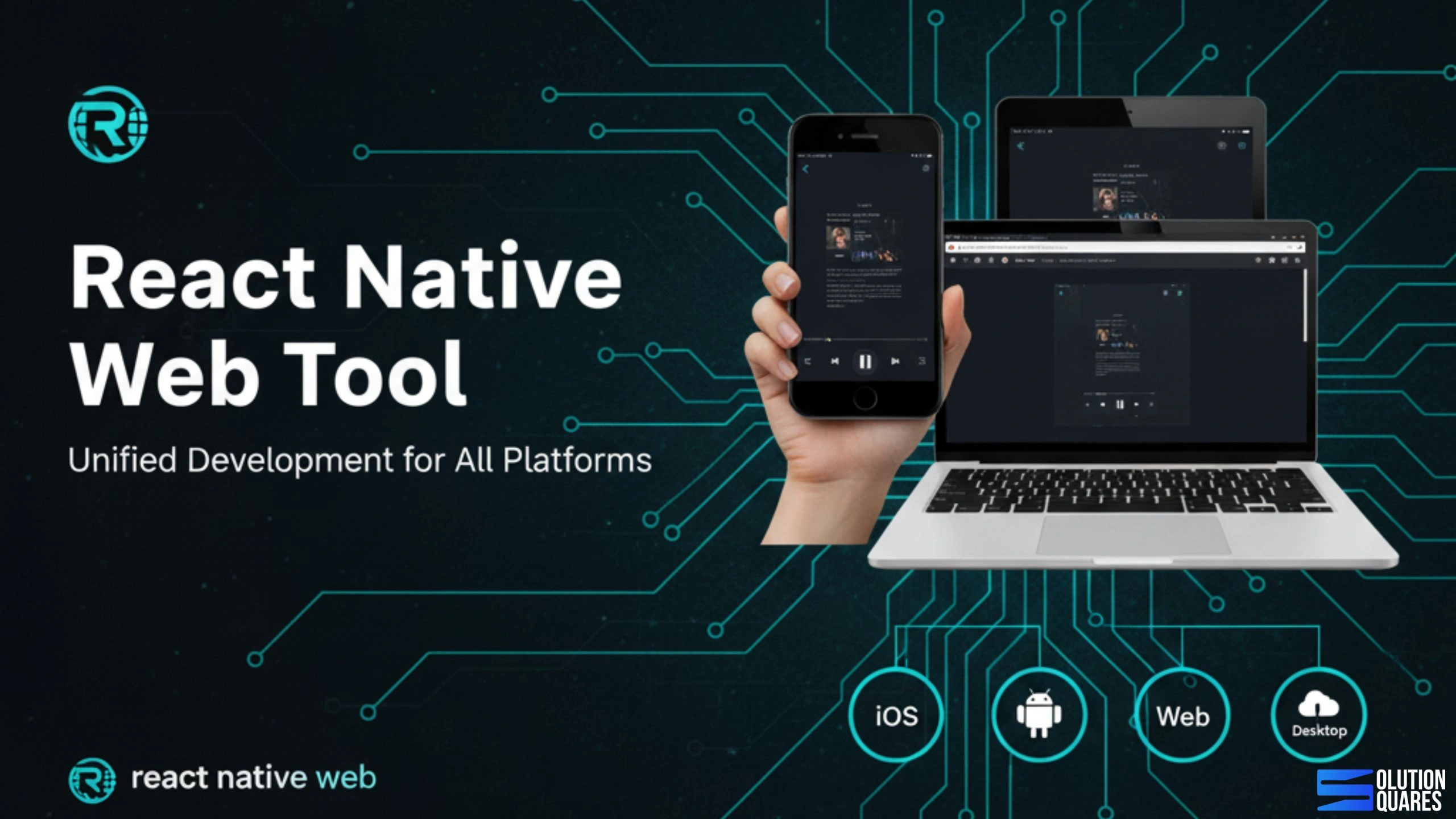
React Native Web Tool bridges mobile and web platforms, enabling a unified codebase.
Enhances code reusability and performance across multiple platforms.
Supports seamless integration with existing web technologies, optimizing development efficiency.
Offers robust features like cross-platform compatibility, maintenance efficiency, and performance optimization.
Future advancements will continue to strengthen its position in cross-platform development.
In the dynamic realm of software development, the drive towards unification and efficiency has led to the creation of innovative solutions like React Native Web Tool. This compatibility layer bridges the gaps between mobile and web platforms, fostering an ecosystem where code reuse and performance are paramount. Let’s dive deep into how this tool is revolutionizing the development processes by allowing teams to manage web and mobile development from a singular codebase.
Introduction to React Native and Its Extension to Web Development
React Native is an open-source framework that has transformed mobile development through its ability to create native applications for iOS and Android using a single JavaScript and React codebase. Find out more about React Native here.
Expanding beyond mobile borders, the term react native web tool refers to leveraging React Native capabilities for web development. By utilizing libraries like react-native-web, developers can now write once and deploy across mobile platforms as well as on the web, making the development process more streamlined than ever.
React Native as a web tool speaks directly to the demands for efficient, cross-platform development. This approach allows developers to repurpose their code across multiple platforms, enhancing productivity and reducing time-to-market.
What Is React Native Web?
React Native Web is an open-source library that allows developers to run React Native components and APIs directly on the web using standard web technologies like HTML, CSS, and JavaScript. This means you can share UI components, logic, and styling across iOS, Android, and Web — all from a single codebase.
What is React Native Web Tool?
The React Native Web Tool, or react-native-web, acts as a compatibility layer that makes it possible for React Native components, tuned for mobile environments, to operate seamlessly on the web. This tool essentially translates mobile-specific elements like View, Text, and Image into web-friendly elements such as <div>, <span>, and <img>.
Bridging the Gap Between Mobile and Web Development
The boundaries between mobile and web development are rapidly fading — and React Native Web tools are at the forefront of this evolution. Traditionally, businesses had to maintain separate teams, codebases, and workflows for web and mobile platforms. This led to higher costs, inconsistent user experiences, and slower time-to-market.
But with React Native Web and supporting tools like Expo, Next.js, and React Native CLI extensions, developers can now build once and deploy across iOS, Android, and Web — all from a single, shared codebase.
Key Ways React Native Web Tools Bridge the Gap
1. Unified Component System
React Native Web translates React Native components (View, Text, Image, etc.) directly into HTML and CSS, allowing the same UI code to work seamlessly across platforms.
2. Shared Business Logic & State Management
You can reuse Redux, Context API, or Zustand logic across mobile and web — eliminating duplication and reducing bugs.
3. Consistent User Experience
Design systems and styles can be standardized across platforms, making your product feel cohesive whether users are on a phone or browser.
4. Faster Development & Maintenance
Instead of managing two different engineering teams, companies can work with a single React/React Native team — cutting development time by up to 40–50%.
5. Ecosystem Support & Tooling
Expo for Web simplifies deployment and testing.
Next.js + React Native Web enables server-side rendering (SSR) for better performance and SEO.
Tailwind + NativeWind allows consistent styling across platforms.
Real-World Adoption
Major companies like Shopify, Twitter, Flipkart, and Uber are already leveraging React Native Web to build unified cross-platform experiences — proving that it’s not just a trend but a future-proof development strategy.
React Native Web tools are dissolving the divide between mobile and web development, enabling faster delivery, reduced costs, and consistent user experiences — all without compromising performance.
If you’re planning to build an app in 2025 and beyond, choosing a unified development approach with React Native Web isn’t just efficient — it’s strategic.
Advantages of Using React Native Web
Benefit
Description
Single Codebase
Share over 80–90% of code between mobile and web apps.
Faster Development
No need to manage separate web and mobile projects.
Consistent UI & UX
Ensure design uniformity across platforms.
Cost-Efficient
Fewer developers, less maintenance, faster time-to-market.
Seamless Integration with Expo, Next.js, or Vite
Ideal for scalable & production-ready projects.
Setting Up React Native for Web Development
Embarking on setting up React Native for the web involves installing essential packages like react-native-web, react-dom, and react-scripts. These facilitate the unified running of React components across all platform interfaces.
Development Workflow Optimization
Employ hot reloading for instant feedback.
Maintain consistent project structure and shared styling conventions to facilitate component-driven development.
Comparing React Native Web Tool with Other Development Frameworks
React Native for Web offers distinct advantages over traditional frameworks like React.js, which focus solely on web development. In contrast, frameworks like Flutter and Ionic, while also supporting cross-platform outputs, do not offer the same native feel and direct integration with web technologies that React Native Web provides.
Framework
Focus
Integration Level
Native Experience
React Native Web
Mobile + Web
High
Yes
Flutter
Mobile + Web
Moderate
Medium
Ionic
Mobile + Web (Web View)
Low
No
Traditional React.js
Web Only
N/A
N/A
Best Practices for Using React Native Web Tool
When using React Native for web, adhere to best practices such as efficient code organization, performance optimization (utilizing tools like React Native DevTools), and ensuring accessibility through Flexbox and ARIA roles. For detailed performance strategies, check out React Native DevTools.
The Future of React Native Web Tool
Moving forward, enhancements in compatibility and performance are on the roadmap for React Native Web Tool, ensuring it continues to meet evolving industry standards and developer needs. As cross-platform development trends rise, React Native is poised to remain at the forefront, pioneering innovations that facilitate code-sharing and unify user experiences across diverse device landscapes.
Conclusion
In summary, React Native Web Tool significantly simplifies the web and mobile development landscape. Its ability to merge development channels into a single streamlined process marks a pivotal advancement in application development. Organizations considering new cross-platform projects should look no further than this powerful tool.
Additional Resources for React Native Web Tool
For those eager to dive deeper into React Native Web Tool, check out the official documentation and explore tutorials available across various developer platforms. Community forums like Stack Overflow and Reactiflux also offer vibrant spaces for discussion and support.
Incorporating React Native Web into your development toolkit can revolutionize how you approach building applications, significantly reducing development time while broadening your app’s reach across platforms.
Frequently Asked Questions
1.What is React Native Web?
React Native Web is a library that allows developers to run React Native components and APIs in web browsers by translating them to HTML, CSS, and JavaScript. It enables shared codebases across iOS, Android, and Web.
2. How do React Native Web tools bridge mobile and web development?
They allow developers to reuse UI components, state management, and business logic across both platforms, eliminating the need to build and maintain separate applications for mobile and web.
3. Can I use React Native Web in production apps?
Yes. Many companies like Shopify, Flipkart, and Twitter already use React Native Web in production-level applications. With tools like Next.js or Expo, performance and maintainability are highly reliable.
4. Does React Native Web affect performance compared to native web frameworks?
Performance is generally good for most content-based and application-style interfaces. However, for highly complex web layouts or heavy animations, pure React or Next.js without React Native Web might be more optimal.
5. Do I need separate developers for mobile and web when using React Native Web?
Not necessarily. A single React/React Native team can manage both mobile and web apps, drastically reducing cost, effort, and communication overhead.
6. What tech stack is commonly used with React Native Web?
Popular combinations include:
Tool
Purpose
Expo
Easiest setup for mobile + web
Next.js + React Native Web
SEO support & SSR for production apps
Tailwind / NativeWind
Unified styling across platforms
7. Is React Native Web good for SEO?
React Native Web alone isn’t SEO-friendly, but when combined with Next.js or server-side rendering (SSR), it becomes highly optimized for search engines.
8. When should I avoid using React Native Web?
Avoid it when building:
Highly complex web dashboards
Heavy canvas/3D graphics apps
Websites requiring intricate HTML semantics (blogs, marketing sites)
In those cases, using traditional React or static site frameworks is recommended.
**React Native** enables **cross-platform development**, reducing costs and speeding up deployment.
Offers **scalability** and **security**, essential for **enterprise-grade applications**.
Utilizes a **modular architecture** and **state management libraries** for efficient growth.
Provides robust **security features** including **encrypted storage** and **safe API access**.
Successful case studies include **Discord, Shopify, and Coinbase**, showcasing its effectiveness.
As enterprises increasingly transition to mobile-first digital ecosystems, choosing the right technology for cross-platform app development becomes critical. React Native, backed by Meta (Facebook) and supported by a massive open-source community, has emerged as a leading framework for building robust, scalable, and high-performance enterprise applications.
React Native is revolutionizing how organizations deploy cross-platform solutions, enabling a unified development process across all mobile and web platforms with a single codebase. As industries move towards rapid digital transformation, React Native for enterprise apps gains traction for offering operational efficiency and providing omnichannel client experiences. Enterprises benefit from significant cost savings, faster development times, access to a vast talent pool, and a thriving community, enhancing both scalability and security.
Why Enterprises Are Choosing React Native
Why Choose React Native for Enterprise-Grade Applications
Enterprise-grade apps require robust, scalable, and secure solutions. Enterprise-grade React Native apps meet these needs effectively by offering native-like performance across multiple platforms and faster iteration cycles. Here’s why businesses should consider React Native for their application development:
Cross-platform compatibility: Seamlessly integrates with iOS, Android, web, and even desktop environments using one cohesive codebase, broadening reach and user engagement.
Cost-effectiveness: Reduces development costs by 30–50% when compared to native development approaches by streamlining team efforts and maintenance requirements.
Faster development cycles: Utilizes pre-built components and supports hot reloading, which accelerates prototyping and reduces time to market.
Comparatively, while native development ensures platform-specific optimizations, it lacks the versatility and speed of React Native. Frameworks like Flutter might compete in user experience and performance; however, React Native’s comprehensive ecosystem and focus on enterprise needs give it a distinct edge.
Scalability in React Native
Scalability within enterprise applications is about supporting an expanding user base and adapting to evolving business needs. React Native excels here by encouraging a modular design that facilitates growth and integration with various backend systems. Efficient strategies and tools to achieve robust scalability include:
Feature-based architecture to maintain a clean and manageable codebase.
State management libraries like Redux or MobX help manage app state across complex setups.
Continuous Integration/Continuous Deployment (CI/CD) pipelines that ensure smooth and iterative updates.
Tools such as React Navigation and Apollo for GraphQL, coupled with OTA Updates, ensure that apps can scale with minimal disruptions.
Security Considerations for React Native Enterprise Apps
The security of enterprise-grade applications is paramount due to the sensitive nature of data handled and stringent compliance demands. React Native provides several built-in security features to safeguard applications:
Encrypted storage options and safe API access enhance the security framework, fundamental for protecting data in transit and at rest.
Best practices include robust authentication methods (OAuth, biometrics), data encryption, and adhering to OWASP Mobile Security guidelines to shield against prevalent security threats. Learn more about mobile app security best practiceshere.
However, challenges such as source code exposure and third-party library vulnerabilities require proactive measures like code obfuscation and regular security audits for risk management.
Performance Optimization for Enterprise React Native Apps
Maintaining high performance is crucial for enterprise applications to provide a seamless user experience. React Native allows performance optimization through:
Effective list management components, such as FlatList or SectionList, are used for rendering extensive data sets efficiently.
Reducing re-rendering by implementing shouldComponentUpdate or utilizing React. memo.
Performance monitoring tools like Flipper and React DevTools help identify bottlenecks, while native module integration addresses performance-critical functions.
Ideal Use Cases of React Native in Enterprises
Industry
Application Type
Example Features
FinTech
Banking & Wallet Apps
KYC, payments, biometrics
Healthcare
Patient & Doctor Portals
Telemedicine, reports
Logistics
Fleet & Tracking Solutions
GPS, offline tracking
Retail & E-commerce
Shopping Apps
Cart, checkout, push notifications
HR & Internal Tools
Employee Portals
Task management, payroll
Security Considerations for Enterprise React Native Apps
To ensure full compliance and protection, enterprises should implement:
End-to-end encryption
Secure API communication (HTTPS, SSL Pinning)
Token-based authentication (OAuth2, JWT)
Data protection via Keychain/Keystore
Regular penetration testing
When React Native Is the Right Fit for Enterprise
You should choose React Native if your enterprise:
Needs rapid development without hiring separate Android & iOS teams
Requires long-term scalability and updates
Operates across multiple geographies and devices
Values high performance without ballooning budgets
Best Practices for Developing Enterprise-Grade React Native Applications
Adhering to best practices in application development ensures high quality and maintainability:
Clear planning and scalable architectural investments set the foundation.
High code quality with consistent standards and comprehensive testing strategies ensures reliability.
Effective collaboration and community engagement provide ongoing support and access to the latest advancements in React Native.
Conclusion
React Native stands out as an exceptionally scalable, secure, and cost-efficient solution for enterprise applications. It empowers businesses to fast-track their development processes, create robust applications, and enjoy the benefits of a dynamic community and ecosystem.
Additional Resources
To further explore React Native for enterprise applications, visit:
Official React Native documentation
Essential tools: Flipper for debugging, Sentry for error monitoring, Redux for state management, and Apollo for managing GraphQL data.
For personalized guidance, contacting React Native experts or consulting with enterprise development agencies is highly recommended. Your journey towards an efficient, scalable, and secure app ecosystem begins with choosing the right tools and practices available in the vibrant React Native community.
React Native enhances scalability by promoting a modular architecture, facilitating easy integration with backend systems, and utilizing state management libraries like Redux or MobX. These features allow enterprise apps to efficiently manage an expanding user base and evolving business requirements.
React Native offers encrypted storage options, safe API access, robust authentication methods like OAuth and biometrics, data encryption, and adherence to OWASP Mobile Security guidelines. These features collectively enhance the security framework of enterprise applications.
While native development offers platform-specific optimizations, React Native provides greater versatility and faster development cycles with a single codebase for multiple platforms. Additionally, React Native’s comprehensive ecosystem and enterprise-focused features give it a competitive edge over native development.
React Native reduces development costs by 30–50% compared to native approaches by streamlining team efforts, minimizing maintenance requirements, and allowing a single codebase to serve multiple platforms. Additionally, faster development cycles and access to a vast talent pool contribute to overall cost savings.
Yes, React Native can seamlessly integrate with existing enterprise backend systems. Its modular architecture and compatibility with various backend technologies enable smooth integration, ensuring that enterprise apps can leverage existing infrastructure and services effectively.
The Ultimate Guide to Hiring React Native Developers: Costs, Freelance vs Agency
Key Takeaways
Hiring React Native developers enables efficient cross-platform app development, reducing time and costs.
Costs vary based on developer experience, geographic location, and project complexity.
Freelance and agency models each offer unique advantages and challenges.
Careful evaluation and interviewing are essential to select the right developer for your project.
React Native plays a pivotal role in modern app development, allowing businesses to create high-quality, cross-platform mobile applications swiftly and efficiently. In today’s competitive app market, hiring React Native developers has become crucial for companies that aim to deliver seamless user experiences on both Android and iOS platforms.
India has become one of the top destinations for hiring React Native developers, thanks to its vast pool of skilled engineers and cost-effective engagement models. Whether you’re building an MVP, enterprise app, or scaling an existing product, choosing the right hiring model — freelancer or agency — is crucial.
In this guide, we’ll compare costs, pros & cons, and help you decide whether a freelance developer or a React Native agency like Solution Squares is the right choice for your project.
Why Hire React Native Developers?
Cross-Platform EfficiencyReact Native is a framework designed to let developers write a single codebase for both iOS and Android platforms, significantly speeding up development time and cutting down costs. This efficiency is indispensable, especially when aiming to quickly capture market share with your app.
Source
Technical ExpertiseA proficient React Native developer brings several key skills to the table:
Mastery over JavaScript/TypeScript
Capability to integrate various APIs smoothly
Experience in crafting dynamic and responsive user interfaces
Skills to optimize app performance effectively across different platforms
Collaboration SkillsHiring developers who can seamlessly integrate with cross-functional teams—including design, backend, and quality assurance—is crucial for the flawless execution of projects.
Source
Business ValueThe strategic hiring of React Native developers accelerates your time-to-market, simplifies ongoing app maintenance, and ensures scalability, making it a wise choice for both startups and established businesses.
Cost Breakdown — Hiring React Native Developers in India
Hiring Model
Avg Hourly Rate (USD)
Typical Monthly Cost
Best For
Freelance React Native Developer
$15–$30/hr
$1,500–$3,500
Small tasks, quick fixes, MVPs
Mid-Level In-House Hire (Full-Time)
$2,500–$4,500/month
$30K–$50K/year
Long-term team expansion
React Native Agency / Development Partner (like Solution Squares)
Access to UI/UX, QA, Backend, DevOps, PM under one roof
Communication
Direct but limited
Professional process & reporting
Scalability
Hard to scale
Can add/remove resources anytime
Security & NDA Assurance
Riskier
Legally compliant & process-driven
Comparing Costs: Freelance vs. Agency
Freelancers may charge between $5,000 and $15,000 for small to medium projects, while agencies can charge $20,000 or more, offering full-scale services from design to deployment.
Source
Factors to Consider When Choosing Between Freelancers and Agencies
Project Requirements: Complex, scalable projects may need an agency’s broad expertise whereas simple projects could benefit from a freelancer’s flexibility.
Budget Constraints: Your budget can dictate whether a freelance developer or an agency would be more cost-effective.
Timeline and Scalability: Consider how quickly you need to scale your team and how flexible your timeline is.
Tips for Hiring the Right React Native Developer
Whether you’re building a new mobile app or scaling an existing one, picking the right React Native developer is critical to your project’s success. Here’s how to evaluate candidates effectively:
1 . Check Real Project Experience — Not Just Resume Skills
Ask for live apps on App Store / Play Store, GitHub links, or portfolio demos.
Prefer developers with experience in end-to-end delivery, not just UI tweaks.
2. Evaluate Core Technical Skills
Your developer should be confident with:
Skill Area
Must-Know Technologies
Core React Native
Hooks, Navigation, Context API
State Management
Redux / Zustand / MobX
APIs & Backend
REST / GraphQL / Firebase
Native Modules
Ability to integrate iOS/Android native code when needed
Hiring the right React Native developer is crucial for your app’s success, impacting everything from budget to product quality. Assess your specific project needs, weigh the advantages and disadvantages of freelance versus agency models, and carefully select based on skill alignment and proven capability.
Ready to elevate your mobile app? Start by hiring the right React Native developers today!
Additional Resources
For further readings on hiring best practices, visit:
Contact top agencies or explore professional platforms to find the best React Native developers tailored to your project’s demands.
Frequently Asked Questions
1.What skills should I look for in a React Native developer?
Look for strong knowledge of JavaScript/TypeScript, React Native fundamentals, state management (Redux/Zustand/MobX), API integration, native module handling (Android/iOS), and performance optimization. Experience with Firebase, push notifications, CI/CD, and deployment is a big plus.
2. How do I test a React Native developer before hiring?
You can:
Assign a small paid test task (like a login screen with API integration).
Ask them to explain how they’d implement navigation, authentication, or offline support.
Review live apps they’ve built on the App Store or Play Store.
3. Should I hire a freelancer or a React Native agency?
Hire a freelancer if you need small tasks, MVPs, or budget-friendly development.
Choose an agency if you need full-scale app development with UI/UX, QA, backend, and long-term maintenance. Agencies like Solution Squares provide end-to-end delivery and reliability.
4. What is the average cost of hiring a React Native developer in India?
Agencies / Dedicated teams: $25–$50 per hour depending on expertise
5. How do I ensure the developer follows best practices?
Ask about:
Code versioning (GitHub/GitLab)
Code review process
Use of TypeScript for maintainability
Linting and documentation standards
6. How important is security knowledge when hiring a React Native developer?
Very important — especially for apps involving payments, authentication, or personal data. Ensure the developer understands secure storage, JWT handling, biometric authentication, and API protection.
7. Can I hire React Native developers for ongoing support?
Yes. Many freelancers and agencies offer maintenance contracts. It’s smarter to hire someone who built the app for future enhancements to avoid onboarding hassles.
8. Where can I find reliable React Native developers?
React Native offers a robust framework for building efficient, cross-platform location-based applications.
Integration of GPS and location tracking enhances user experience by providing personalized content.
Utilizing libraries like @react-native-community/geolocation and react-native-geolocation-service simplifies real-time location data management.
Seamless map integration with tools like React Native Maps is crucial for location-based functionalities.
Adhering to best practices ensures accuracy, privacy, and optimal performance of location-based apps.
In today’s tech-driven world, location-based services are becoming increasingly fundamental to mobile applications. These services, powered by GPS apps and location tracking, significantly enhance the user experience by providing personalized content and functionality based on the user’s geographical location. React Native, a robust framework for mobile app development, stands out as an exceptional choice for building efficient GPS and location-based applications. In this blog post, we will explore how React Native can optimise the development process and enhance the functionality of location-based applications.
Understanding GPS Apps
GPS apps utilise the device’s Global Positioning System (GPS) hardware to capture and utilise real-time location data. The integration of accurate location data into mobile apps improves usability and personalizes the user experience. Applications such as Google Maps for navigation, Strava for fitness tracking, Uber for ride-sharing, and various food delivery platforms rely heavily on precise GPS data to function effectively.
Market Size & Forecasts Of Location-Based App
The global location-based services (LBS) market was valued at USD ~31.17 billion in 2024, and is expected to reach USD ~37.22 billion in 2025. Fortune Business Insights
By 2032, it’s projected to reach USD ~125.92 billion, growing at a CAGR of ~19.0% over the forecast period. Fortune Business Insights
Grand View Research estimates a slightly different baseline: ~USD 59.65 billion in 2024, rising to USD 236.34 billion by 2033 (CAGR ~16.7%). Grand View Research
Another report (GMI Insights) values the 2024 market at USD 51.3 billion, and forecasts it to grow to USD 346.3 billion by 2034, with a CAGR of ~21.6%. Global Market Insights Inc.
In the sub-segment of real-time location systems (RTLS) (indoor / asset tracking), the market is also robust: expected to grow from USD 6.68 billion in 2025 to USD 15.67 billion by 2030 at a CAGR of ~18.6%. MarketsandMarkets
The indoor location-based services market is separately forecasted: valued at USD 15.48 billion in 2022, it is expected to reach USD 45.16 billion by 2030, growing at ~14.1% CAGR. Grand View Research
These numbers suggest that location-based applications and services are among the fastest-growing segments in the mobile/software landscape.
Key Drivers of Growth of Location-Based Apps
Several macro and micro trends are fueling this expansion:
Driver
Description & Impact
Smartphone & Internet Penetration
As more people own location-aware devices and access mobile internet, demand for geolocation services (maps, navigation, tracking) grows.
Growth of IoT & Connected Devices
Wearables, smart vehicles, drones, and sensors generate location data that apps can use.
Rise of On-Demand & Mobility Apps
Ride-hailing, delivery, and micromobility (scooters, bikes) rely heavily on location.
Indoor Navigation & Asset Tracking
Warehouses, hospitals, shopping malls, and factories increasingly use RTLS / indoor positioning.
Location-based Marketing & Advertising
Targeted offers, push notifications when near a store, and geo-fenced campaigns.
Fleet tracking, last-mile delivery, supply chain visibility, and field services depend on geolocation.
Why Choose React Native For Your Location-Based App?
Advantage
How It Helps
Cross-Platform Efficiency
Build once and deploy on both iOS & Android without maintaining separate native apps.
Access to Native GPS & Sensor APIs
React Native bridges into native location services like GPS, Wi-Fi, and Bluetooth with ease.
Real-Time Tracking Capabilities
Seamless integration with services like Google Maps, Mapbox, OpenStreetMap, and Firebase enables live tracking.
High Performance with Native Modules
For complex use cases like background tracking or geofencing, native modules offer secure and fast execution.
Large Ecosystem & Community Support
Packages like react-native-geolocation-service, react-native-maps, @react-native-community/geolocation accelerate development.
React Native Geolocation Features
React Native enhances geolocation functionalities through libraries like @react-native-community/geolocation and react-native-geolocation-service. These tools aid developers in accessing real-time location data, managing continuous location updates, and ensuring dynamic user interaction. The primary advantages for developers include a unified codebase for iOS and Android, simplified permission management, and efficient use of resources. Below are some insights into the technical implementation of React Native’s geolocation APIs.
Types of Location-Based Apps You Can Build with React Native
One of the critical components of location-based apps is map integration. React Native Maps is widely used for integrating Google Maps and Apple Maps into applications. The process involves installation, linking dependencies, and adding the MapView component to the React Native project. Here’s a basic example:
import MapView from 'react-native-maps';
Developers can also customize maps with routes, markers, and specific styles to meet the app’s needs.
Location Tracking Capabilities
For more comprehensive tracking, React Native supports both background and foreground location tracking. Key strategies for optimization include selecting high-accuracy modes, setting reasonable update intervals, and handling app suspension to minimize resource consumption. It is also crucial to secure user permission and ensure data privacy and security compliance.
Key Features You Can Implement Using React Native
Feature
Functionality
Real-Time GPS Tracking
Shows live user or driver movement on maps.
Geofencing
Triggers alerts when a device enters/exits a defined zone.
Route Mapping & Navigation
Integrated turn-by-turn directions.
Location Sharing & History Logs
Save past trips or visited locations.
Proximity-Based Notifications
Alert users when near stores or events.
Offline Location Support
Track and sync locations even without internet.
Best Libraries for Location-Based Apps in React Native
Built-in APIs and permission management utilities.
Map performance & rendering
Libraries like Mapbox ensure fluid rendering with 60 FPS support.
Location spoofing & security
Integration with JWT, biometrics, and anti-tampering techniques to prevent misuse.
Conclusion
React Native is not just ideal for simple map-based apps — it’s powerful enough to build full-scale logistics, travel, delivery, and tracking applications with high precision and performance. With the right architecture and plugins, developers can deliver native-level speed with cross-platform efficiency, making it the smartest choice for modern location-based mobile development.
React Native offers a unified codebase for both iOS and Android, faster development cycles, and extensive community support, making it an efficient choice for building scalable and high-performance location-based applications.
Essential libraries include @react-native-community/geolocation and react-native-geolocation-service, which provide robust tools for accessing and managing real-time location data in React Native applications.
React Native handles map integrations through libraries like React Native Maps, which allow developers to embed and customize Google Maps or Apple Maps within their applications, providing functionalities such as markers, routes, and custom styles.
Best practices include selecting high-accuracy modes, setting reasonable update intervals, handling app suspension effectively, securing user permissions, and ensuring compliance with data privacy regulations to optimize location tracking while minimizing resource consumption.
React Native supports the development of on-demand services apps by enabling real-time data handling, providing a unified codebase for multiple platforms, and offering a range of libraries and tools that facilitate the implementation of features like real-time location updates and scalable architectures necessary for apps like Uber or DoorDash.
Access to global talent provides specialized skills and diverse experiences.
Outsourcing leads to a faster time-to-market for new applications.
Scalability and flexibility in managing development resources.
Offshore developers bring expertise, 24/7 development cycles, and cultural compatibility.
Selecting the right partner involves evaluating technical skills, reviewing portfolios, and assessing communication capabilities.
As businesses race to deliver mobile apps faster and smarter, React Native has emerged as one of the most preferred frameworks for cross-platform development. But building an in-house team isn’t always practical — especially when cost, expertise, and time-to-market are critical.
That’s where outsourcing React Native development becomes a powerful strategy. By tapping into global tech talent, companies can reduce costs, speed up development cycles, and access specialized skills without long-term commitments.
In today’s competitive mobile app landscape, React Native outsourcing has emerged as a pivotal strategy for businesses looking to develop high-quality cross-platform applications efficiently and cost-effectively. By tapping into global expertise and technology, companies large and small are optimizing costs while enhancing their app capabilities.
Understanding React Native Development Outsourcing
What is React Native Development Outsourcing?
React Native development outsourcing involves hiring external agencies or offshore React Native developers to design, build, and maintain mobile applications using React Native technology. This approach contrasts sharply with in-house development, where an internal team is responsible for all aspects of app development.
In-House Development vs. Outsourcing
In-House Development: Entails higher staffing costs and often limits access to the latest tools and specialized skills.
Outsourcing: Offers significant advantages such as reduced overhead, quicker project completion, and access to specialized skills, vital for both startups and established businesses aiming to leverage scalability and optimize resources efficiently. Discover the Differences
Benefits of Outsourcing React Native Development
Benefit
How It Helps Your Business
Cost Efficiency
Outsourcing to regions like India, Eastern Europe, or LATAM can cut development costs by 40–70% compared to US/Europe teams.
Faster Time-to-Market
Agencies or remote teams can scale instantly with more developers — helping you launch 2x faster.
Access to Specialized Talent
You can hire experts in authentication, performance optimization, UI/UX, Firebase, or native modules instead of training internally.
Focus on Core Business
Your in-house team can stay focused on sales, strategy, and operations — while technical heavy lifting is handled externally.
Round-the-Clock Development
With distributed teams, your project can move 24/7 across time zones.
Top Outsourcing Destinations for React Native Development
Region
Avg. Hourly Rate
Strength
India
$20–$40/hr
Huge talent pool, English proficiency, and top agencies
Eastern Europe (Poland, Ukraine, Romania)
$30–$60/hr
High-quality engineering, cultural compatibility
Latin America (Brazil, Argentina, Mexico)
$35–$70/hr
Good for US time zone collaboration
Southeast Asia (Vietnam, Philippines)
$20–$45/hr
Cost-effective, fast turnaround
Outsourcing Models for React Native Development
Model
Best For
Pros
Cons
Dedicated Team / Staff Augmentation
Long-term development
Full control, flexible scaling
Requires some project management
Fixed-Price Project
Small to mid-sized apps
Clear pricing & timelines
Less flexibility for changing requirements
Full Product Outsourcing (End-to-End)
MVPs or startups
Hands-off execution
Requires a trusted partner
How to Choose the Right React Native Outsourcing Partner
Check portfolio & case studies
Validate code quality (GitHub, test assignments, or architecture reviews)
Companies needing feature upgrades or UI redesigns
Enterprises migrating from native to cross-platform
Businesses looking to maintain or scale existing apps
Why Choose Offshore React Native Developers
Expertise and Experience
Offshore developers often bring a wealth of knowledge and a track record of successful projects, ensuring high-quality app development using cutting-edge technology.
24/7 Development Cycle
Different time zones can be leveraged to enable a non-stop development process, enhancing productivity and speeding up project completion.
Flexibility and Adaptability
Offshore firms are adept at managing projects of varying complexities and scales, effectively adapting to client needs.
Cultural Compatibility
Global developers often have a deep understanding of various international markets, making them valuable partners in developing apps that cater to diverse user groups.
Conclusion
React Native outsourcing offers a plethora of benefits, including cost savings, access to expert global talent, and faster time-to-market. Businesses considering expanding their development capabilities should seriously consider outsourcing as a strategic approach to scale efficiently and stay competitive.
Frequently Asked Questions
1. Why should I outsource React Native development instead of hiring in-house?
Outsourcing allows you to reduce development costs, access specialized talent quickly, and speed up delivery timelines. Building an in-house team requires hiring time, infrastructure, payroll, and long-term commitments, while outsourcing gives you flexible scalability without overheads.
2. How much does it cost to outsource React Native development?
The cost varies by region and engagement model:
Region
Avg. Hourly Rate
India / Southeast Asia
$20–$40/hr
Eastern Europe
$30–$60/hr
Latin America
$35–$70/hr
Western Europe / US
$80–$150/hr
A typical MVP may cost between $10,000 $40,000, depending on complexity.
3. How do I choose the right React Native outsourcing partner?
Implements git-based access control and CI/CD pipelines
Transfers full source code ownership upon completion
5. Can outsourced React Native teams handle maintenance and updates?
Absolutely. Most agencies offer post-launch support, including:
Bug fixes and performance monitoring
Feature enhancements
OS compatibility updates (Android/iOS)
Security patching
Make sure support terms are clearly defined in the agreement.
6. How do I manage communication across time zones?
Choose a partner who aligns at least 2–4 hours of overlap with your working hours. Use collaboration tools like Slack, Jira, Trello, or Zoom. Many companies also assign dedicated project managers to streamline updates.
7. Can I hire just one or two React Native developers instead of a full team?
Yes — most outsourcing agencies offer staff augmentation, where you can extend your existing team with 1-2 dedicated developers who work exclusively on your project.
8. What engagement models are available for outsourcing?
Model
Best For
Flexibility
Fixed Price
Well-defined projects
Low
Hourly / Time & Material
Evolving requirements
High
Dedicated Team
Long-term development
Very High
9. How do I track progress and ensure code quality?
Ask your outsourcing partner to follow:
Agile / Sprint-based reporting
Weekly demos
Code reviews and Git access
Unit & integration testing
10. Will I get full ownership of the source code?
Yes — as long as it’s defined in the contract. Always clarify code ownership, licensing, and deployment rights before starting the project.
React Native enables efficient cross-platform mobile app development, reducing both time and costs.
Surat is emerging as a tech hub with several proficient React Native agencies offering specialized services.
Choosing the right agency involves evaluating their experience, diverse portfolio, client satisfaction, and cost efficiency.
Top mobile app agencies provide comprehensive expertise, ensuring scalable and successful application deployments.
Local case studies demonstrate Surat’s agencies’ ability to deliver high-quality, user-centric solutions.
Choosing the Best React Native Agency in Surat: Top React Native Agencies & Expert Tip
React Native is a premier framework for modern mobile app development, enabling the creation of robust, cross-platform applications using a shared codebase for both iOS and Android. This approach not only enhances efficiency but also cuts down on development costs, making it a popular choice among businesses today. The importance of mobile app development. The demand for capable React Native agencies is on the rise, especially in emerging tech hubs like Surat. T
Why Hiring a Local React Native Agency in Surat Makes Sense
Proximity & easier coordination — face-to-face meetings are simpler
Better understanding of the local market & business context
Cost-competitive rates compared to big metro cities
Access to local talent pool & infrastructure
Why Choose a React Native Agency?
If you’re planning to build a mobile app, one of the most important decisions you’ll make is whether to hire individual developers or partner with a specialized React Native agency. Choosing a React Native agency offers significant advantages in speed, quality, scalability, and long-term support, especially for businesses aiming to launch high-performing cross-platform apps for both iOS and Android.
1. Expertise Across the Full Stack
A professional agency brings a complete team — React Native developers, UI/UX designers, backend engineers, QA testers, DevOps, and project managers — ensuring every part of your app is handled with precision.
2. Faster Time-to-Market
Agencies work with proven development workflows, reusable components, and automation tools, helping you launch faster than building in-house from scratch.
3. High Code Quality & Performance Optimization
Agencies with real React Native experience know:
How to optimise performance
When to use native bridges for complex features (like Bluetooth, biometrics, or video streaming)
How to prevent crashes, memory leaks, and slow rendering
4. Scalability & Future-Proof Architecture
A good agency doesn’t just build for today — they plan for growth, ensuring your app can handle more users, modules, and features without rewriting everything later.
5. Security & Compliance Built-In
From SSL pinning to biometric authentication and secure data storage, agencies follow industry-grade security standards, which is crucial for fintech, healthcare, and enterprise apps.
6. End-to-End Ownership
Unlike freelancers or small internal teams, agencies offer:
Concept to deployment delivery
App Store / Play Store submission support
Post-launch maintenance and updates
Continuous monitoring & feature enhancements
7. Cost-Efficient Compared to Separate Native Teams
Instead of hiring two separate teams for iOS and Android, a React Native agency delivers both platforms with a single codebase, saving 30–40% on development costs.
Key Criteria to Evaluate a React Native Agency
Before selecting, benchmark potential agencies against these factors:
Factor
What to Look For
Why It Matters
React Native Expertise & Track Record
Previous React Native apps, case studies, portfolio
Real proof that they understand cross-platform, performance, native bridges
Domain Experience
Experience in your sector (edtech, fintech, entertainment, etc.)
Use of best practices (secure storage, biometrics, code splitting, performance profiling)
Ensures scalable, maintainable, secure apps
Team Composition
Developers, QA, UI/UX, project management, DevOps
A balanced team reduces bottlenecks and silos
Communication & Process
Agile methodology, regular demos, version control, transparency
Smooth delivery, fewer misunderstandings
Post-launch Support & Maintenance
Bug fixes, updates, performance monitoring
Apps need upkeep, not just delivery
Cost & Contract Terms
Clear pricing model (fixed bid / T&M / milestone), payment terms, IP rights
Avoid surprises later
Client References & Reviews
Talk to past customers, check online ratings
Real feedback is gold
Top React Native Agencies in Surat
Top React Native / Mobile App Agencies in Surat (including Solution Squares)
Agency
What They Offer / Notes
Solution Squares
A Gujarat-based full stack and mobile app development agency that explicitly lists React Native among its core technologies. Solution Squares Their services include app & digital transformation, with a presence in Surat (Mazda Mansion, Nanpura). Solution Squares
TechGropse Pvt. Ltd.
Known for mobile & React Native apps locally.
WeeTech Solution Pvt. Ltd.
Full stack React Native with strong UI/UX services.
Artoon Solutions
Local firm in Surat handling mobile + web with React Native focus.
Sridix Technology
Offers custom React Native & mobile development.
Technoarch Softwares
Positions itself among top React Native agencies in Surat.
DigiTechGiant
Claims expertise in React Native app development in Surat
Benefits of Working with Top Mobile App Agencies
Collaborating with top agencies offers numerous advantages:
Wide-ranging Expertise: From UI/UX design to backend integration and analytics.
Comprehensive Services: Covering all phases from ideation to deployment.
Proven Success: A track record of developing scalable and successful applications.
Latest Technological Practices: Utilization of cutting-edge tools and adherence to the latest technological trends. React Native app development services.
How to Choose the Right React Native Agency in Surat for Your Project
To pick a suitable agency for your project, consider these steps:
Assess their technical proficiency and portfolio.
Check alignment of their expertise with your project’s requirements.
Ensure clarity in communication and expectation setting.
Discuss their approach to project management and maintenance.
Conclusion
Choosing the best react native agency in Surat is crucial for the successful delivery of your app. By evaluating agencies based on the outlined criteria and considering the featured agencies, you can ensure strategic alignment and transparent communication, key to achieving your project goals.
Call-to-Action
Start your project with confidence by requesting consultations or quotes from the featured Surat-based React Native agencies. Explore their offerings, reach out directly, and share this post to assist others in their search for top-quality React Native development services. Connect with Agencies.
Frequently Asked Questions
1. How much does it typically cost to develop a mobile app?
The cost can range from $5,000 for a simple app to over $300,000 for a highly complex app, depending on various factors like design complexity, features, and development platform.
2. How long does it take to develop a mobile app?
The development timeline can vary from a few months to over a year, depending on the app’s complexity and the development process.
3. Should I choose native or hybrid app development?
If performance and access to device-specific features are critical, native development is preferable. If budget and development speed are priorities, hybrid development may be suitable.
4. What are some cost-saving strategies for app development?
Prioritizing features for an MVP, utilizing cross-platform development, and outsourcing to cost-effective regions are effective strategies to manage costs.
5. Why is ongoing maintenance important for my app?
Regular maintenance ensures your app remains competitive, secure, and compatible with the latest devices and operating systems.