


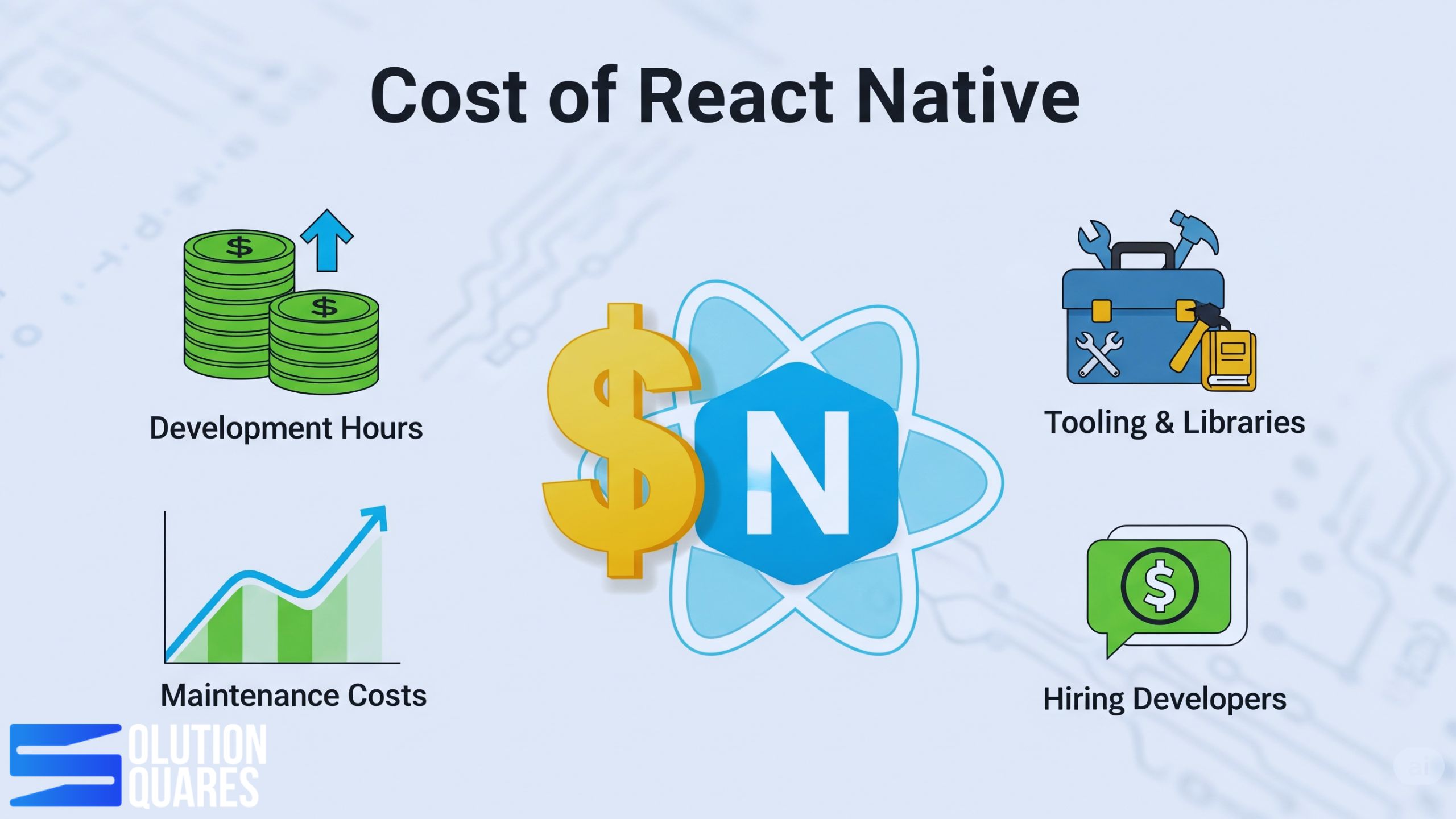
Understanding the React Native App Cost for Mobile Development

When venturing into the world of mobile app development, one crucial aspect that often takes precedence in planning and decision-making is the cost involved. React Native app needs careful consideration to ensure the development process aligns with budget expectations and project goals.
In this comprehensive guide, we will delve into what influences the cost to build a React Native app, compare it with other development frameworks, and provide actionable insights on how to optimise your budget effectively.
Why Budgeting Is Essential in App Development?
Effective budgeting is pivotal in avoiding overruns and ensuring your project remains on track. Here, we will cover several factors like cost drivers, pricing models, and comparisons with other frameworks, which will aid in making informed decisions. For a deeper understanding of the overall cost of developing a mobile app, refer to Decoding the Cost of Developing a Mobile App: Crucial Factors, Hidden Expenses & Expert Insights.
Why Choose React Native for Cost-Efficient App Development?
-
Single Codebase for iOS & Android – Reduces time and cost of development.
-
Faster Time-to-Market – Shared components speed up development.
-
Large Community Support – Easier to find skilled developers and ready-made libraries.
-
Scalable & Flexible – Ideal for startups, SMEs, and enterprises alike.
What Influences the Cost to Build a React Native App?
Generally cost of react native can be estimated with the type of project and the estimated time of work. Here in this table, you will get a rough estimation.
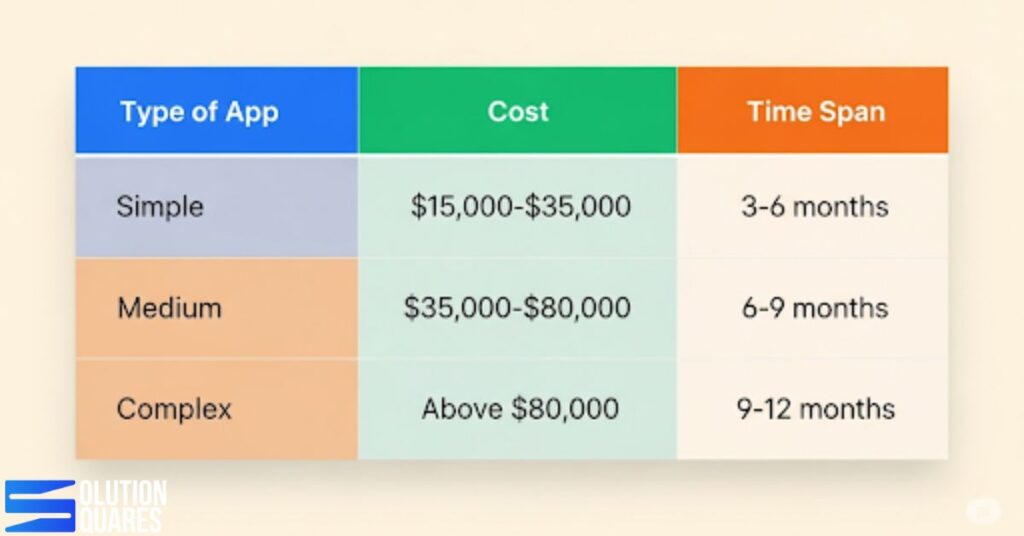
The cost of building a React Native application depends on multiple factors, ranging from the complexity of the app to the level of customisation required. Below are the key elements that influence overall pricing.
1. App Complexity
The complexity of features plays the most important role in determining cost. A simple app with static pages, basic login, and profile management will cost much less compared to a complex application that includes real-time tracking, chat systems, or AR/VR integration.
| App Type | Features Included | Approx. Development Hours | Cost Impact |
|---|---|---|---|
| Basic | Login, profile, static pages | 250–400 hrs | Low |
| Medium | Payment gateway, maps, API integration | 400–800 hrs | Medium |
| Complex | Real-time sync, IoT, AR/VR, advanced animations | 800+ hrs | High |
2. Design and User Experience (UI/UX)
A well-crafted UI/UX is critical for user retention, but it adds to the development cost. If the app uses pre-designed templates, the cost is lower. However, if the client demands custom animations, branding-specific themes, and interactive elements, the pricing will rise.
3. Platform Choice
React Native allows building for both iOS and Android with a single codebase. However, if an app requires platform-specific native modules (like Face ID for iOS or custom Android integrations), additional effort is needed. This increases development time and cost.
4. Third-Party Integrations
Integrating features such as social media login, push notifications, chat systems, or analytics tools directly affects the price. The more integrations needed, the higher the complexity and budget.
5. Backend Development and APIs
Apps that require real-time data synchronization, cloud storage, or custom backend infrastructure will need additional development hours. For instance, building a simple app that connects with Firebase is cheaper compared to creating a custom backend with complex APIs.
6. Team Expertise and Location
The cost of hiring React Native developers varies across regions. Agencies in North America and Europe usually charge more per hour, whereas agencies in Asia and Eastern Europe are comparatively cost-effective. Highly experienced teams, though more expensive, can deliver scalable apps faster.
| Region | Average Hourly Rate |
|---|---|
| North America | $80 – $150 |
| Europe | $60 – $120 |
| Asia/India | $25 – $50 |
7. App Maintenance and Updates
The launch of an app is not the end of the journey. Regular updates, bug fixes, and support for the latest OS versions require ongoing maintenance. This adds a recurring cost that agencies should always communicate to clients.
8. Testing and Quality Assurance
To ensure smooth performance, testing is mandatory. Simple apps may only require basic manual testing, while complex apps with multiple integrations need extensive automated testing. The more testing cycles, the higher the cost—but also the better the final product.
9. Deployment and App Store Publishing
Finally, the cost also includes preparing and submitting the app to the Apple App Store and Google Play Store. If frequent updates or compliance changes are needed, this will add to the long-term expense.

Which Factors Influence the Cost to Build a React Native App?
-
Development Complexity
Complexity in development is a major cost driver. Simple features like user authentication might cost less, while adding real-time chat or third-party integrations can significantly increase the budget.
The integration of third-party services alone can add between $3,000 $15,000 per feature. More details can be found on sources like Netguru, Kumohq, and Tekrevol.
-
Design Requirements
Choosing between a basic template and a custom-designed UI/UX also impacts the cost. Custom designs, requiring more expertise and time, tend to be more expensive. Moreover, specific cost implications of design choices are discussed further in references from Netguru and Tekrevol.
-
Development Team Location
The geographical location of your development team is crucial as it affects hourly rates. For instance, developers in North America might charge about $100–$150 per hour, whereas in Asia, the rates could be as low as $20–$50 per hour.
Additionally, for insights specific to e-commerce app development costs in India, see E-commerce Application Development Cost in India.
-
Project Timeline
Rush projects can also spike the costs since they require more resources over a shorter period. Understanding the nuances of project timelines and their impact on costs can be further explored in sources like Netguru and Tekrevol.

Breakdown of React Native Development Pricing
Hourly Rates vs. Fixed Pricing
Choosing between hourly and fixed pricing models depends on your project’s clarity and scope. Hourly rates provide flexibility, while fixed pricing offers predictability. Moreover, each model’s pros and cons are critical to consider when budgeting.
Typical Pricing Structures
- Simple Apps: Cost between $10,000 and $35,000, taking about 2–6 months to develop. More details can be found at Appinventiv and Tekrevol.
- Medium Complexity Apps: Likely to cost between $35,000 and $80,000, with development times ranging from 4–9 months.
- Complex Apps: These can range from $80,000 to over $300,000, needing 6–12+ months of development time.
Additional Costs
Budgeting for maintenance, updates, hosting, and backend services is crucial. Additionally, maintenance might require an additional 15–20% of the initial development cost annually. Hosting and backend expenses vary significantly based on complexity.
Further reading on this can be found at Kumohq. For comprehensive insights on React Native development services and their costs, visit Harnessing React Native App Development Services for Seamless Multi-Platform Mobile Apps.
Cost to Build React Native App: Detailed Estimates
The costs of building a React Native app can broadly be classified into basic, intermediate, and advanced based on features and integrations. Moreover, estimated costs range from $10,000 for basic apps up to $300,000+ for highly advanced apps with extensive functionalities. More specific estimates are available at sources like Atharva System, Appinventiv, and Tekrevol.
Comparing React Native App Cost with Other Frameworks
The cost-effectiveness of React Native becomes apparent when compared to other development frameworks like Native Development or Flutter/Xamarin.
React Native tends to be 25–50% less costly and allows faster development cycles, benefiting significantly in terms of both cost and time due to its reusable components and single codebase approach. Moreover, comparisons can be explored in greater detail using resources from Kumohq and Appinventiv.
Optimising Your React Native Development Budget
Strategically choosing the features to implement, selecting the right development partner, and employing efficient project management methodologies like Agile can greatly optimise your budget. Prioritising a Minimum Viable Product (MVP) can also help keep initial costs down while allowing room for scalability. Further insights can be gathered from Tekrevol.
Additionally, for advanced budgeting techniques and integrating services like Firebase, refer to Enhancing Mobile Apps: Comprehensive Guide to React Native with Firebase Integration.
Case Studies: Real-World React Native App Costs
Discussing real-world case studies of projects varying in complexity helps illustrate potential cost scenarios and the importance of sound budget management to avoid overruns.
Hidden Costs to Consider
-
App Store & Play Store submission fees
-
Backend infrastructure and hosting (AWS, Firebase, or custom server)
-
Security enhancements (encryption, authentication)
-
Licensing fees for premium plugins or APIs
Breakdown of React Native Development Pricing
Hourly Rates vs. Fixed Pricing
Choosing between hourly and fixed pricing models depends on your project’s clarity and scope. Hourly rates provide flexibility, while fixed pricing offers predictability. Further, each model’s pros and cons are critical to consider when budgeting.
Typical Pricing Structures
- Simple Apps: Cost between $10,000 and $35,000, taking about 2–6 months to develop. More details can be found at Appinventiv and Tekrevol.
- Medium Complexity Apps: Likely to cost between $35,000 and $80,000, with development times ranging from 4–9 months.
- Complex Apps: These can range from $80,000 to over $300,000, needing 6–12+ months of development time.
Additional Costs
Budgeting for maintenance, updates, hosting, and backend services is crucial. Maintenance might require an additional 15–20% of the initial development cost annually. Furthermore, hosting and backend expenses vary significantly based on complexity.
Further reading on this can be found at Kumohq. For comprehensive insights on React Native development services and their costs, visit Harnessing React Native App Development Services for Seamless Multi-Platform Mobile Apps.
Cost to Build React Native App: Detailed Estimates
The costs of building a React Native app can broadly be classified into basic, intermediate, and advanced based on features and integrations. Estimated costs range from $10,000 for basic apps up to $300,000+ for highly advanced apps with extensive functionalities. More specific estimates are available at sources like Atharva System, Appinventiv, and Tekrevol.
Comparing React Native App Cost with Other Frameworks
The cost-effectiveness of React Native becomes apparent when compared to other development frameworks like Native Development or Flutter/Xamarin.
React Native tends to be 25–50% less costly and allows faster development cycles, benefiting significantly in terms of both cost and time due to its reusable components and single codebase approach. Comparisons can be explored in greater detail using resources from Kumohq and Appinventiv.
Optimising Your React Native Development Budget
Strategically choosing the features to implement, selecting the right development partner, and employing efficient project management methodologies like Agile can greatly optimise your budget. Additionally, prioritising a Minimum Viable Product (MVP) can also help keep initial costs down while allowing room for scalability. Further insights can be gathered from Tekrevol.
Additionally, for advanced budgeting techniques and integrating services like Firebase, refer to Enhancing Mobile Apps: Comprehensive Guide to React Native with Firebase Integration.
Case Studies: Real-World React Native App Costs
Discussing real-world case studies of projects varying in complexity helps illustrate potential cost scenarios and the importance of sound budget management to avoid overruns.
Hidden Costs to Consider
-
App Store & Play Store submission fees
-
Backend infrastructure and hosting (AWS, Firebase, or custom server)
-
Security enhancements (encryption, authentication)
-
Licensing fees for premium plugins or APIs

Conclusion
In short, we have covered the critical aspects that determine the React Native app cost and how to efficiently plan and manage your budget. Investing in experienced development teams and thorough planning ensures you produce a scalable and high-quality mobile app. Moreover, we encourage you to reach out with your project specifics for a tailored cost estimate that meets your development needs.
Interested in getting an exact estimate for your React Native app or need consultation on your app development project? Contact us through our contact form or direct contact links provided here. We’re here to help you make your app development journey as smooth and cost-effective as possible.
Additional Resources
For more insights on budgeting and best practices in app development, visit our blog on React Native development pricing. Additionally, utilise tools like cost calculators and check out our planning guides to aid in your app development projects.