


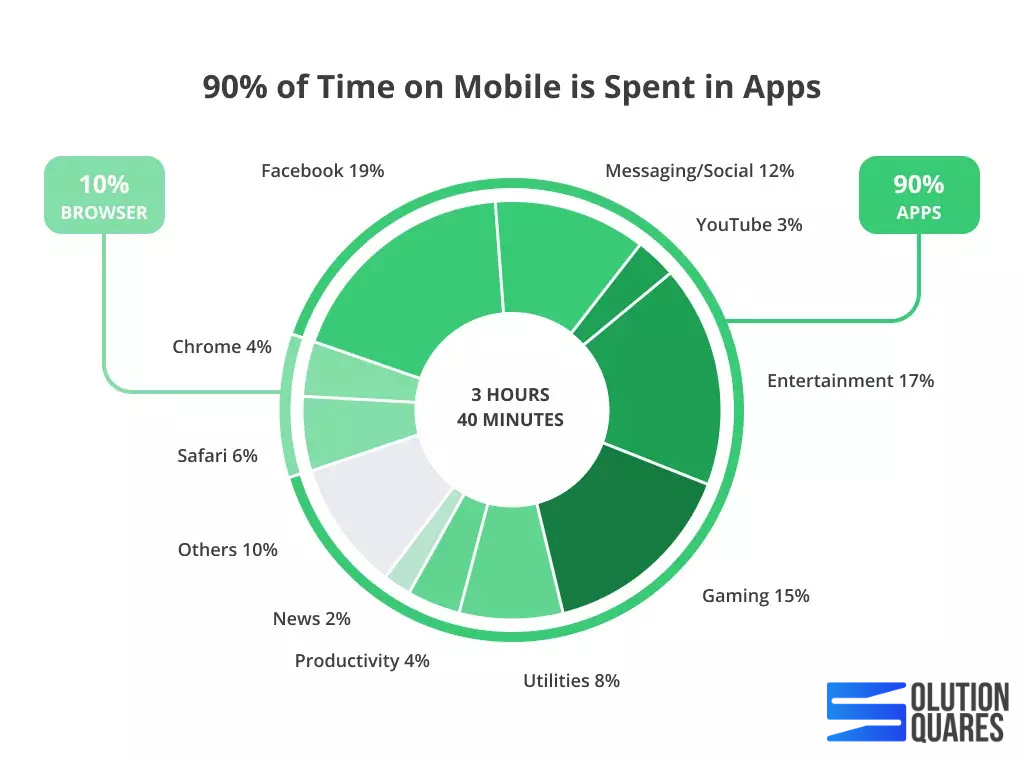
In the midst of a digital revolution, mobile apps have emerged as indispensable tools for businesses across all industries. As we witness a surge in daily reliance on smartphones and apps, it’s clear that understanding the cost of developing a mobile app is paramount for businesses and startups that want to thrive in today’s marketplace. This comprehensive guide will demystify the costs associated with mobile app development, shedding light on what businesses can expect in terms of investment and the benefits they can reap from making such a commitment.
Key Takeaways
- Mobile apps are essential for businesses to enhance customer engagement, accessibility, and brand visibility.
- The cost of developing a mobile app varies depending on design complexity, feature set, development platform, and other factors.
- Businesses should consider cost-saving strategies like prioritizing features for an MVP, utilizing cross-platform development, and outsourcing to cost-effective regions.
- Choosing between native and hybrid app development impacts both cost and functionality.
- Understanding the timeline for app development helps in planning and budgeting effectively.
Why Businesses Need a Mobile App
In the competitive landscape of digital business operations, mobile apps serve as crucial platforms for enhancing customer interaction and brand visibility. Here’s why every business should consider developing a mobile application:
Enhanced Customer Engagement Through Personalized Experiences
- Mobile apps enable businesses to tailor individual customer experiences by sending personalized updates, promotions, and recommendations directly to user devices.
- The use of push notifications can foster real-time interaction and engagement.
By leveraging enhanced customer engagement through personalized experiences, businesses can significantly improve customer satisfaction and loyalty.
Improved Accessibility
- Apps provide users with around-the-clock access to products and services with just a single tap, offering unmatched convenience.
This improved accessibility ensures that customers can interact with your business anytime, anywhere.
Increased Brand Visibility and Recognition
- Having a mobile app ensures that your brand remains visible on consumer devices at all times, reinforcing brand recognition through frequent interaction.
A mobile app can significantly enhance your brand visibility and recognition in the market.
Valuable Data Collection for Better Decision-Making
- Mobile apps are excellent tools for gathering valuable user data, which can be analyzed to adapt and refine business strategies for better outcomes.
Utilizing valuable data collection helps businesses make informed decisions.
Competitive Advantage in a Mobile-First World
- In today’s mobile-first environment, having an app can significantly distinguish your business from competitors.
Gaining a competitive advantage through mobile app adoption is key in staying ahead.
Benefits of Mobile Apps for Startups
Startups particularly can leverage mobile apps to fast-track their growth and establish a strong market presence:
Establish Brand Presence Quickly
- Mobile apps help startups establish a footprint in competitive markets much faster than traditional approaches.
- App store optimization (ASO) plays a key role in improving app visibility.
By focusing on establishing brand presence quickly, startups can gain early traction.
Build Customer Loyalty from the Ground Up
- Integrating loyalty programs and rewards into apps can effectively attract and retain customers from the outset.
Building customer loyalty early can set the foundation for long-term success.
Streamline Operations and Reduce Overhead Costs
- Mobile apps automate numerous business processes like orders, bookings, and customer service, significantly reducing the need for extensive manual work.
By streamlining operations, startups can efficiently manage resources.
Facilitate Rapid Scaling and Growth
- Apps can efficiently manage growing numbers of users and transactions without a corresponding increase in overhead.
- Cloud services enhance scalability by accommodating user growth without the need for physical expansion.
Facilitating rapid scaling is crucial for startups aiming for quick expansion.
Cost of Developing a Mobile App
The investment required to develop a mobile app varies significantly based on several factors:
Design Complexity
- Simple Apps ($5,000 – $50,000): Aimed at basic functionality with minimal user interaction.
- Medium Complexity Apps ($50,000 – $120,000): Incorporates database integrations, API interactions.
- Highly Complex Apps ($100,000 – $300,000+): Features like real-time capabilities, elaborate customizations.
Understanding the impact of app complexity on costs is essential for budgeting.
Feature Set
- Basic Features ($10,000 – $50,000): User registration, basic profiles.
- Advanced Features ($50,000 – $150,000): Includes sophisticated elements like GPS tracking, payment integrations.
- Cutting-Edge Features ($150,000 – $500,000+): Advanced technologies such as AR/VR, AI implementations.
Incorporating advanced features can significantly affect the overall development cost.
Development Platform
- Single Platform ($20,000 – $150,000): Opt for either iOS or Android for targeting a specific user base.
- Cross-Platform ($25,000 – $200,000): Develop applications that function smoothly across multiple platforms.
Choosing the right development platform is crucial for reaching your target audience effectively.
Maintenance and Updates
Expect to spend 15-20% of the initial development cost annually on updates and maintenance to keep the app competitive and up-to-date.
Ongoing maintenance costs are an important consideration for long-term success.
Geographic Location of Developers
The cost can vary dramatically based on whether you employ local developers or outsource to regions with lower cost structures.
Understanding geographic cost variations can help optimize your budget.
Developer Expertise and Experience
Veteran developers often command higher rates but bring in expertise that can significantly elevate the quality and efficiency of the app.
Investing in experienced developers can enhance your app’s success.
Budgeting and Cost-Saving Strategies
- Prioritizing Features for MVP (Minimum Viable Product): Focus on developing core components first, and gradually enhance based on user feedback.
- Utilizing Cross-Platform Development: Minimize expenditure and development time by adopting frameworks that accommodate multiple platforms.
- Outsourcing to Cost-Effective Regions: Consider engaging developers from regions that offer competitive pricing without compromising on quality.
Implementing effective budgeting strategies can help manage costs efficiently.
Native vs. Hybrid App Development
Choosing between native or hybrid app development models impacts both cost and functionality:
Native App Development
- Specified for platforms like iOS/Android using respective development languages.
- Ensures top-notch performance, direct access to hardware features.
Understanding native development costs helps in making informed decisions.
Hybrid App Development
- Utilizes a singular codebase for both iOS and Android platforms.
- Saves time and resources in development but may have compromises in performance.
Considering hybrid development costs is essential for budget-conscious projects.
When to Choose What
- Native: When app performance is crucial and budget is flexible.
- Hybrid: Suitable for simpler apps with tighter budgets and faster timelines.
How Long Does It Take to Develop an App
- Planning and Research (2-4 Weeks): Define objectives and research market competitors.
- Design Phase (4-6 Weeks): Create initial blueprints and user interfaces.
- Development Phase (6-12 Weeks): Construct the app, incorporating all features.
- Testing Phase (2-4 Weeks): Refine the app through rigorous testing phases.
- Deployment Phase (1-2 Weeks): Launch the final product in the relevant app stores.
Understanding the app development timeline aids in effective project planning.
Conclusion
Investing in mobile app development can be significant, but the potential benefits in customer engagement, efficiency, and market penetration typically offset the costs. With strategic planning, a focus on essential features, and the right development approach, your business can substantially benefit from a well-crafted mobile app. Whether you’re looking to enhance your startup’s visibility or streamline enterprise operations, mobile apps provide a robust platform for business growth and customer interaction.
Ready to take your business to the next level with a mobile app? Consider reaching out for a detailed consultation or dive deeper into our resources to start your app development journey today.
Frequantly Asked Questions
1. How much does it typically cost to develop a mobile app?
The cost can range from $5,000 for a simple app to over $300,000 for a highly complex app, depending on various factors like design complexity, features, and development platform.
2. How long does it take to develop a mobile app?
The development timeline can vary from a few months to over a year, depending on the app’s complexity and the development process.
3. Should I choose native or hybrid app development?
If performance and access to device-specific features are critical, native development is preferable. If budget and development speed are priorities, hybrid development may be suitable.
4. What are some cost-saving strategies for app development?
Prioritizing features for an MVP, utilizing cross-platform development, and outsourcing to cost-effective regions are effective strategies to manage costs.
5. Why is ongoing maintenance important for my app?
Regular maintenance ensures your app remains competitive, secure, and compatible with the latest devices and operating systems.