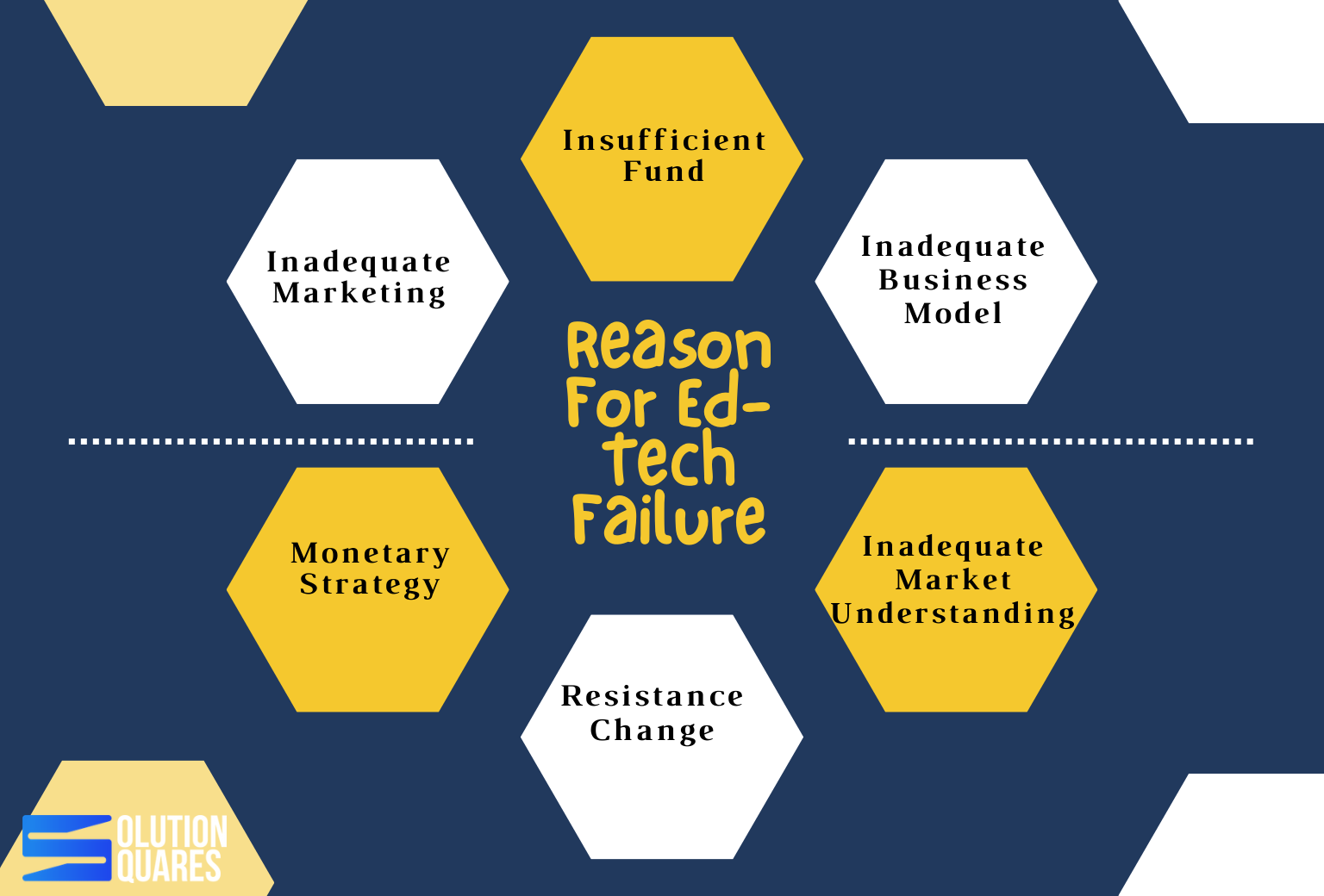
Edtech is one of the highest developing and growing fields of Indian startups. However, one out of four education startup faces failure. There are different reasons for education startup Failure. Let’s get to know about these reasons for education startup failure and strategies to avoid and make your education startup successful.
According to Datalabs by Inc42
Between January 2014 and September 2019, over 4,450 edtech startups were launched in India. Of these, roughly 25% of startups have shut shop while only 4.17% of startups have raised funds
Undoubtedly, success in the education startup space requires a deep understanding of the education sector, a robust business model, a user-centric approach, and the ability to adapt to changing circumstances and regulations. Certainly, by addressing these common reasons for education startup failure, one can increase the chances of your education startup thriving in the market.

Reason for Education Startup Failure
Education startups, like any other business venture, can face various challenges that may lead to failure. However, to avoid these education startup failures, it’s important to understand the common reasons for failure and implement strategies to mitigate those risks. Let’s get to know about the reason for education startup failure in detail.
1. Lack of Market Understanding:
Certainly, a lack of market understanding is a common reason for the failure of ed-tech startups. Failing to understand the needs, preferences, and pain points of your target audience can result in creating products or services that don’t address real problems.
Indeed without a deep understanding of the education market, startups may develop products or services that do not align with the needs and preferences of students, educators, or institutions. Further, in the absence of market insights, ed-tech startups may attempt to solve problems that do not exist or prioritize features that are not valued by their target audience. It is important to note that your product must solve a problem and to fulfill this market understanding is a must.
Obviously, startups that don’t comprehend the end user’s requirements and expectations may create platforms or content that offer a subpar user experience, leading to disengagement and low adoption rates. A lack of market understanding can lead to misguided marketing efforts. Additionally, startups might not effectively communicate the value of their offerings to potential users, leading to poor customer acquisition.
2. Inadequate Business Model:
Inadequate business models are a significant reason for the Education startup’s failure. Undoubtedly, a flawed or unsustainable business model can lead to financial instability and ultimately the demise of the startup. Moreover, there are various reasons responsible for inadequate business models. It can be a lack of market understanding or a lack of a sustainable business model.
Certainly, startups with poorly structured business models may struggle to generate sufficient revenue to cover their costs, leading to financial instability and potential bankruptcy. An inadequate business model can result in pricing strategies that are either too high for the target market, discouraging adoption, or too low, making it difficult to sustain the business.
Besides a narrow or inflexible business model may limit revenue streams and growth opportunities, leaving the startup vulnerable to market changes. Besides inadequate business models may not account for the cost of acquiring and retaining customers. This can lead to unsustainable customer acquisition expenses.
If the business model doesn’t support scaling, the startup may struggle to expand its reach and serve a larger audience. A flawed or unsustainable business model can lead to financial instability. Charging too much or too little for your services, for example, can be detrimental.
3. Insufficient Funding:
According to ed-tech industry expert report
In 2021, edtech became the most-funded startup segment in India, with a total funding of $4.73 Bn which was 1.72X higher than the total funding amount raised between 2014 and 2021. However in winter of 2022,the edtech startups could only raise $2.64 Bn. This is the 44.18% decline in funding.
Besides insufficient funding is a significant reason for the education startups’ failure. Without adequate financial resources, these startups may struggle to develop, scale, and sustain their operations. In the highly competitive field of education technology, securing adequate funding is essential to drive innovation, reach a wider audience, and remain competitive.
Unlike some countries, where government initiatives may provide funding or support for ed-tech startups, such programs in India may be limited. As a result, startups often rely more heavily on private investors and revenue generation. While India has a growing number of venture capital firms and angel investors, access to these funding sources may not be equally distributed. Startups in certain regions or with certain focuses may face difficulties in attracting investment.
4. Lack of Effective Marketing and Distribution:
Usually, One of the most common reasons for the failure of an ed-tech startup is a lack of effective marketing and distribution. The reason for effective marketing and distribution will include poor product market fit, ineffective user engagement etc. Poor product-market fit means that the product or service offered by the startup does not effectively meet the needs and demands of the target market.
Indeed failing to conduct thorough market research can result in developing products that don’t address real problems or pain points in the education sector. Sometimes, startups create products with features or functionalities that are not aligned with the actual requirements of their target audience. Besides overcomplicating or oversimplifying the solution can lead to a lack of adoption.
Additionally, ed-tech startups often fail to iterate and improve their products based on user feedback. In the fast-paced world of education technology, it’s crucial to adapt to the changing needs and preferences of users. Some ed-tech startups may not be prepared to scale their operations to meet the demands of a growing user base. This can result in technical glitches, slow response times, or inadequate customer support.
Besides, some ed-tech startups may not fully understand the education sector’s unique dynamics and challenges. Without a deep understanding of the industry, it’s difficult to craft compelling marketing messages and distribution strategies. Besides India’s diverse population speaks multiple languages and follows different curricula. Tailoring content and marketing materials to various regions and languages is a significant challenge for startups.
On the other hand, Marketing is not only about acquiring users but also about retaining them. Startups must engage users effectively to keep them using their platforms or services, and this often requires ongoing marketing efforts.
5. Resistance to Change:
Resistance to change is a significant reason for the failure of education startups because it can hinder the adoption and implementation of new educational technologies or methodologies. Educational institutions, particularly larger ones, can have complex bureaucracies and decision-making processes. However, this can slow the adoption of new tools and methods, leading to resistance.
The education sector’s needs can change rapidly, especially during global events like the COVID-19 pandemic. Startups that can’t adapt to new challenges or opportunities may find it difficult to survive.
Some schools or districts may lack the financial resources or infrastructure needed to implement new technologies effectively. The perception of resource constraints can lead to resistance. Overcoming the inertia of established educational systems can be challenging. Resistance may arise from the perception that “this is how we’ve always done it.” Generational differences in attitudes toward technology and teaching methods can create resistance. Older educators may be less comfortable with technology than their younger counterparts.
Besides the transition from traditional methods to new approaches can be disruptive and challenging. Educators and institutions may resist change because they fear short-term difficulties. Educational technology should be culturally sensitive and inclusive. Moreover, resistance may occur if new tools or methods do not take into account diverse student populations.
6. Insufficient Monetization Strategy:
An insufficient monetization strategy is a common reason for the failure of ed-tech startups. If your ed-tech startup doesn’t have a clear and effective approach to generating revenue, it can lead to financial instability and ultimately result in the failure of your venture.
- Financial Instability: Without a reliable revenue generation strategy, your startup may struggle to cover operating costs, leading to financial instability and potential closure.
- Lack of Resources: An insufficient monetization strategy can limit your ability to invest in product development, marketing, customer support, and other crucial areas of your business.
- Ineffective Pricing: If you don’t price your offerings properly, you risk either overcharging, which can deter potential customers, or undercharging, which may not cover your expenses.
- Difficulty Scaling: A weak monetization strategy may not scale with the growth of your user base, making it challenging to accommodate more users without increasing costs.
- Competitive Disadvantage: Ed-tech startups with inadequate monetization strategies may struggle to compete with more financially robust competitors, leading to market disadvantages.
Not having a clear and effective monetization strategy can lead to revenue shortfalls.
Strategy to Avoid Reasons for Education Startup Failure
To avoid common reasons for failure in an education startup, it’s crucial to develop a solid strategy. By implementing this comprehensive strategy, you can significantly reduce the risk of failure and increase your chances of success in the competitive and dynamic ed-tech market. Remember that persistence, innovation, and a commitment to providing value to the education sector are key factors in building a thriving ed-tech startup. Here’s a comprehensive plan to help mitigate these risks and set your ed-tech startup on the path to success:
1. Market Understanding:
By prioritizing market understanding and implementing these strategies, ed-tech startups can align their offerings with the real needs of the education sector, resulting in better user engagement, adoption, and long-term success.
Invest time and resources in comprehensive market research to identify the specific needs, pain points, and opportunities in the education sector. This should include understanding the target audience, competitors, and emerging trends. Engage with students, teachers, educational institutions, and other stakeholders to gather feedback on their needs and challenges. Conduct surveys, interviews, and focus groups to gain insights.
Before a full-scale launch, consider running pilot programs or beta tests to validate your concept. This allows you to receive direct feedback from users and make necessary adjustments. Besides, create user personas to represent different segments of your target audience. This helps in tailoring your product or content to specific user needs and preferences.
Education is a dynamic field, and market understanding should be an ongoing process. Keep abreast of evolving trends, technologies, and shifts in educational paradigms. Adopt an iterative development approach, where you regularly gather feedback, make improvements, and refine your product or content based on user insights.
Prioritize user-centered design principles to ensure that your ed-tech solution is intuitive and user-friendly. Collaborate with educators, schools, colleges, and other educational institutions to co-create and test your offerings. Partnering with institutions can provide valuable insights. Leverage data analytics to monitor user behaviour and gather actionable insights. Analyze data to make informed decisions about product enhancements. Establish feedback mechanisms within your platform or content to encourage users to share their thoughts, report issues, and suggest improvements.
2. Adequate Business Models:
Develop a clear and flexible monetization strategy that aligns with your target audience and the perceived value of your offerings. Consider options like subscription models, freemium offerings, pay-as-you-go pricing, or tiered pricing based on user needs.
Test different pricing models and strategies with your target users to determine what resonates best with your audience and maximizes your revenue. Explore multiple revenue streams such as licensing content to educational institutions, offering corporate training solutions, or selling data insights to other organizations in the education sector.
Use data analytics to gain insights into user behaviour, preferences, and consumption patterns. This data can inform pricing decisions, improve user engagement, and enhance the monetization strategy. Develop efficient customer acquisition strategies that balance the cost of acquiring users with the expected lifetime value of those users. Consider referral programs, partnerships, and organic growth methods.
Design your business model with scalability in mind. Ensure that it can accommodate a growing user base and expand into new markets or regions. Offer a range of products or services to meet the diverse needs of your audience, which can open up various revenue opportunities and reduce reliance on a single source of income.
Collect feedback from your users and stakeholders about pricing and monetization. Be open to adjusting your business model based on feedback and changing market conditions. An effective business model is essential for the long-term sustainability and success of an ed-tech startup. By paying attention to these strategies and regularly evaluating and adapting your business model, you can increase your chances of building a financially stable and thriving ed-tech business.
3. Sufficient Monetization Strategies:
Explore multiple revenue streams, such as licensing your content to educational institutions, providing corporate training solutions, or selling data insights to organizations in the education sector. Diversifying your income sources can enhance your financial stability.
Develop efficient customer acquisition strategies that minimize the cost of acquiring users while maximizing their lifetime value. This could include leveraging referral programs, forming strategic partnerships, and harnessing organic growth methods.
Continuously assess the financial health of your startup. Monitor key financial metrics, such as customer acquisition costs, customer lifetime value, and revenue growth, to make informed decisions about your business model.
Analyze user data to gain insights into user behaviour, preferences, and usage patterns. This data can inform your pricing decisions, improve user engagement, and enhance your overall monetization strategy.
Besides continuously monitor the financial health of your startup. Key financial metrics, such as customer acquisition costs, customer lifetime value, and revenue growth, should guide your decisions about your monetization strategy. A robust monetization strategy is vital for the long-term success of your ed-tech startup.
4. Effective Marketing and Distribution
Develop content, materials, and offerings that are localized and tailored to various regions and languages in India. Establish strategic partnerships with educational institutions and organizations to gain access to a wider user base.
Clearly communicate the value and benefits of your ed-tech solution to potential users and stakeholders. Further, utilize digital marketing channels, including social media, content marketing, and search engine optimization, to reach your target audience effectively.
Invest in user engagement and retention strategies to keep users actively using your platform or service. Additionally, stay informed about the regulations governing the education sector and ensure your marketing and distribution efforts are compliant.
By addressing these challenges and adopting effective marketing and distribution strategies, ed-tech startups can improve their visibility, gain wider adoption, and increase their chances of success in India’s education technology market.
5. Adapt Changes In the Market
Adapting to changes in the ed-tech market is essential for the success of an ed-tech startup, given the fast-paced nature of the industry and evolving educational needs. Stay updated on market trends, emerging technologies, and shifting educational needs. Regularly conduct market research and gather insights from users, educators, and educational institutions. Further, actively solicit and incorporate user feedback to enhance your product or service. Regularly iterate and release updates that address user suggestions and concerns.
Be open to pivoting or modifying your product or service to align with changing market demands. Consider creating adaptable solutions that can be easily adjusted based on evolving needs.
Adopt agile development methodologies to quickly respond to market changes. This approach allows you to be more flexible in your development process and adapt to shifting priorities.
Collaborate with educational institutions, content providers, or other ed-tech companies to stay aligned with market trends and gain access to a broader user base.
Leverage data analytics to gain insights into user behaviour, engagement, and preferences. Use this data to make informed decisions and adjustments to your product. Additionally, continuously monitor and analyze the strategies of your competitors. Learn from their successes and failures and adapt your approach accordingly.
Keep your educational content, courses, or materials up-to-date with the latest curriculum standards and educational practices. Further, ensure your offerings remain relevant.
Invest in ongoing professional development for your team. Stay informed about industry trends and best practices, and encourage your staff to acquire new skills.
When expanding to new markets or adding new features, consider gradual scaling. This allows you to test the waters and adapt your approach as you gain insights into local dynamics and user preferences. Stay current with educational regulations and compliance requirements, especially if your startup operates in multiple regions. Adapt to changes in legal and policy frameworks.
Keep your users informed about changes and updates to your product or service. Effective communication helps manage user expectations and build trust. Maintain a clear and flexible long-term vision for your ed-tech startup. While staying adaptable to market changes, ensure that your core mission remains consistent. Usually, develop contingency plans and strategies to mitigate potential risks associated with market changes. Besides, this can help you respond swiftly to unexpected challenges.
Besides, adaptability is a key attribute for success in the ed-tech market. By staying attuned to market dynamics, embracing user feedback, and being flexible in your development and business strategies, your ed-tech startup can not only survive in a dynamic environment but also thrive by meeting evolving educational needs effectively.
6. Sufficient Funding
To avoid the challenge of insufficient monetization strategies in an ed-tech startup, it’s essential to develop a sustainable revenue model that supports the growth and long-term viability of the business. Explore multiple revenue streams beyond just user subscriptions. However, these may include licensing content to schools or businesses, offering premium features or content, providing consulting services, or selling data insights.
Besides consider a freemium model where you offer basic features for free and charge for premium or advanced features. This can attract a broader user base while generating revenue from those who require more advanced functionality. Further, offers tiered subscription plans with varying levels of access and features. This allows users to choose the plan that best suits their needs and budget.
Partner with educational institutions or corporations to provide customized solutions or content for a fee. Tailor your offerings to meet their specific needs. Moreover license your educational content or technology to schools, colleges, or other ed-tech platforms for a fee. This can be a lucrative revenue source, especially if your content is high-quality and in demand.
Partner with other educational websites or platforms and earn a commission for driving traffic or referring users to their services or products. Introduce non-intrusive, relevant advertising or sponsorship opportunities within your platform. Be careful not to overwhelm users with ads, as this can deter engagement.
Additionally, aggregate and analyze user data (anonymously and ethically) to provide valuable insights to educational institutions or companies. Ensure strict data privacy and security measures. Moreover focus on selling your ed-tech solution directly to schools, universities, or educational organizations. Tailor your offerings to meet their specific requirements.
Continuously assess and adjust your pricing strategy based on user feedback, market dynamics, and competitor offerings. Experiment with different price points to find the optimal balance. Create a marketplace where educators can sell their content or courses through your platform, with you earning a commission on each sale.
Offer microtransactions for specific features or content pieces. This can encourage users to pay for the exact resources they need. Seek long-term agreements or contracts with schools or institutions, ensuring a predictable revenue stream over time.
Invest in strategies that keep users engaged and encourage them to stay subscribed. The longer users remain active, the more revenue they generate. Moreover, consider expanding into new markets or regions, where there may be different opportunities for monetization or unmet educational needs.
Final Thoughts
By implementing these strategies, you can significantly reduce the risk of education startup failure and increase your chances of success in the competitive and dynamic ed-tech market. Besides, remember that persistence, innovation, and a commitment to providing value to the education sector are key factors in building a thriving ed-tech startup.