

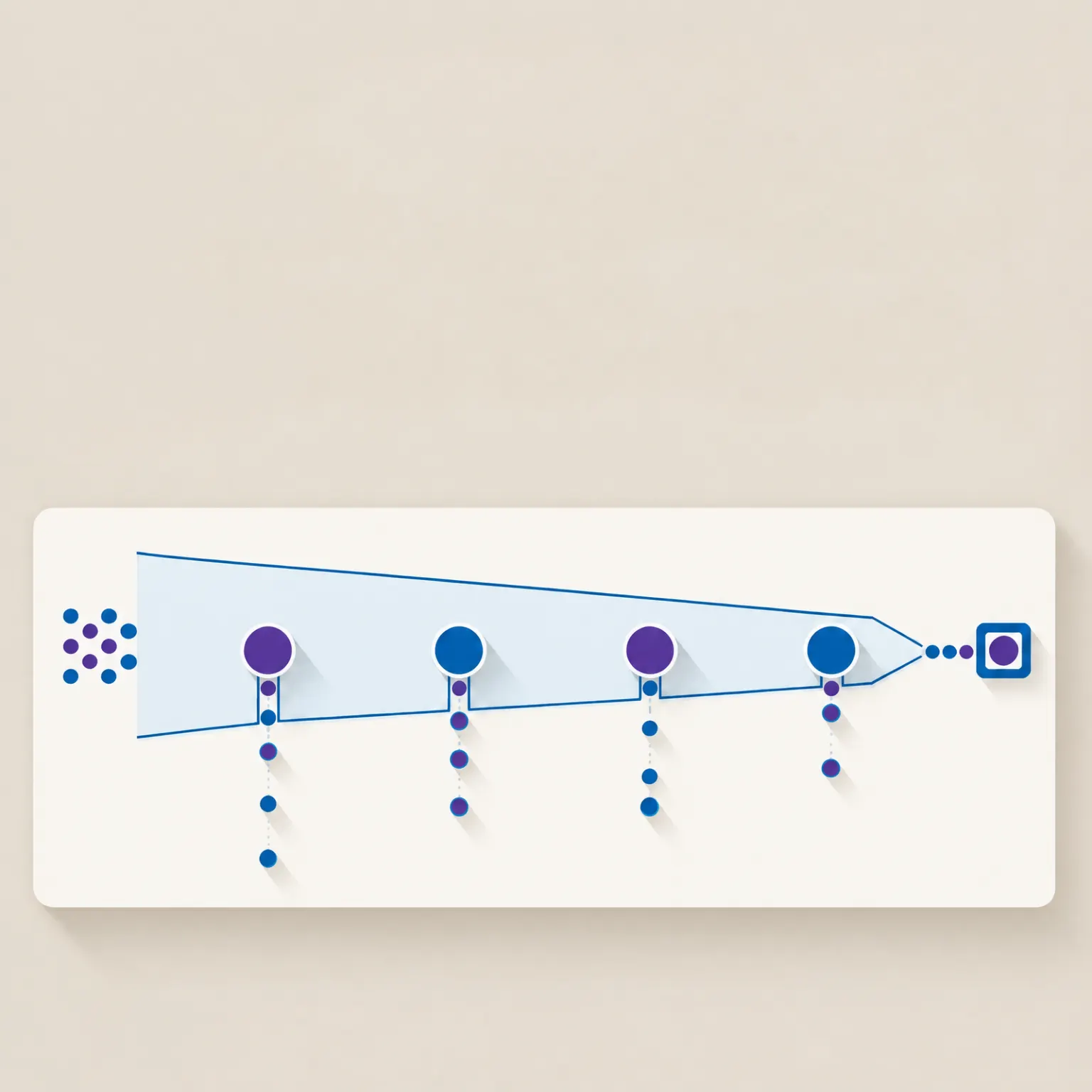
Students slip away at four predictable points between first enquiry and final payment: an enquiry nobody answers, silence after a free demo or class, a checkout started and abandoned, and no reminder before the batch begins. Each one is a timing gap, not a change of mind. Student retention software sends a timed message at each of the four points from one system, so no follow-up waits on someone remembering to do it.
Key Takeaways
- Students leak at four points enquiry, post-demo, checkout, and pre-batch and each is about timing the student was still interested.
- Most people who enquire and never pay were never told no. They just weren’t followed up at the right moment.
- Student retention software sends an automated, timed message at each stage, triggered the moment the event happens rather than when a counsellor finds time.
- You can size your own leak before buying anything: enquiries a month × course price × the share that slips.
- Education Squares runs enquiry follow-up and batch reminders alongside payments and student records in one system, and has done so every day since January 2026.
Where do students drop between enquiry and payment?
In a business that sells courses online, students rarely vanish in one place. They leak at four points, in order:
- The unanswered enquiry. A form fill, a WhatsApp message or an app sign-up that no one replies to within the hour. By evening the student has moved to the next tab.
- Silence after the demo or trial class. The student attended, liked it, and then heard nothing for three days. Interest cools fast.
- The abandoned checkout. They reached the payment page and left a distraction, a failed card, a second thought about the price.
- No reminder before the batch starts. They paid weeks ago, forgot the start date, and never logged in. A no-show today is a refund request next week.
Three of these four happen after the student has already raised a hand. The work isn’t chasing new interest. It’s holding on to the interest you already have.
Why do interested students still not pay?
Because the follow-up depended on a person, and the person was busy.
That is exactly what enquiry follow up software is for. A counsellor handling dozens of enquiries a day cannot reliably message each one twenty minutes after a demo, again the next morning, and once more before the batch fills. The intent is there; the time is not. The message that would have closed the student is the one that never got sent. Price and trust play a part too but an objection can only be answered if someone follows up; silence closes the door before the question is ever asked.
A bigger team won’t fix this. Put the predictable follow-ups on a trigger and they stop depending on who’s free that day. The enquiry arrives, the demo ends, the checkout is abandoned, the batch date nears each event fires its own message, every time, at the same interval.
How much does the leak cost you?
You can size it from your own numbers, before you buy any software. The formula is simple:
{enquiries per month} * {course price} *{share that slips} = {revenue sitting in the leak}Here is one worked example. It is an illustration, not a forecast for your business:
| Input | Example Figure |
| Enquiries a month | 200 |
| Course price | ₹15,000 (plus 18% GST) |
| Reach checkout but leave without paying | 1 in 10 enquiries → 20 |
| Started-but-unpaid payments that month | 20 × ₹15,000 = ₹3,00,000 |
Put your own three numbers in and you have the revenue moving through the leak each month. Whether a timed message recovers any part of it depends on your course, your price and your audience so run the arithmetic on your figures, not on anyone else’s result. That share that slips is your enquiry-to-enrolment drop-off rate the one number worth watching month to month.
What does student retention software actually do?
Student lifecycle management is the plain name for tracking one person across every stage enquiry, paid student, returning buyer on a single record, instead of across separate tools that lose the thread between stages.
In practice it does four things, and if you are weighing up options, these are the four to check for one for each leak point:
- Replies to a new enquiry automatically, the moment it lands, on the channel the student used.
- Follows up after a demo or trial on a fixed schedule, without a counsellor queuing reminders by hand.
- Chases an abandoned cart with a direct link back to payment.
- Reminds a paid student before the batch starts, so a booked seat becomes a filled seat.
This isn’t extra headcount. It just makes the follow-ups you already planned go out on time.
How this runs on one system
Education Squares is the operating system for edtech companies. CRM is one module. It is built for edtech companies that sell courses through their own website and app, around five modules: enquiries, payments, students, mock tests, and faculty attendance and salary. The enquiry reply, the abandoned-checkout message and the pre-batch reminder all run inside the enquiries and payments modules, reading from the same student record not a separate retention tool bolted on top.
It sits behind the website and app you already have nothing gets rebuilt. The platform has been running every day since January 2026.
See how the enquiry and follow-up flow connects to payments and student records inside admission and enquiry management, part of the operating system for edtech companies.
Conclusion
The pattern is the same across edtech businesses: four points between enquiry and payment where students slip, almost always because the follow-up was late. Student retention software sends the right message at the right moment, triggered automatically the moment the event happens. Size the leak on your own numbers first, then decide what it is worth closing.
Frequently Asked Questions
What is student retention software for online courses?
Student retention software for online courses automates the follow-up between a first enquiry and a paid enrolment. It sends a timed message at each drop-off point an unanswered enquiry, silence after a demo, an abandoned checkout, and before a batch starts so no sale waits on someone remembering.
Where do most students drop off before paying?
At four points: an unanswered enquiry, silence after a demo or trial, an abandoned checkout, and a missing reminder before the batch starts. Three of the four happen after the student has already shown interest, which is why timing matters more than volume.
How is this different from enquiry follow up software?
Enquiry follow up software covers the first stage replying to and chasing new enquiries. Student retention software covers the whole lifecycle, including the demo, the checkout, and the period after payment. In Education Squares the two are the same flow, not two tools.
Does student lifecycle management need a separate CRM?
No. Student lifecycle management is one part of Education Squares, not a product bought on its own. CRM is a single module that sits alongside payments, students, mock tests, and faculty attendance and salary.
Can I measure my own drop-off before buying anything?
Yes. Multiply your enquiries a month by your course price by the share that reaches checkout and leaves without paying. That figure is the revenue moving through the leak each month, worked out from your own numbers.
Is this the same as the student retention software universities use for at-risk students?
No. That kind watches already-enrolled students for falling attendance and academic risk. This works at the stage before payment keeping an enquiry alive from first contact through to a paid enrolment. For a business selling courses online, most of the money slips away here, before the classroom, not inside it.
Which channel does the follow-up go out on WhatsApp, SMS or email?
Whichever the enquiry arrived on. If a student messaged on WhatsApp, the reply and the reminders go to WhatsApp; an email enquiry is answered by email. The message fires from the event, so the channel is already decided no one picks it by hand.