


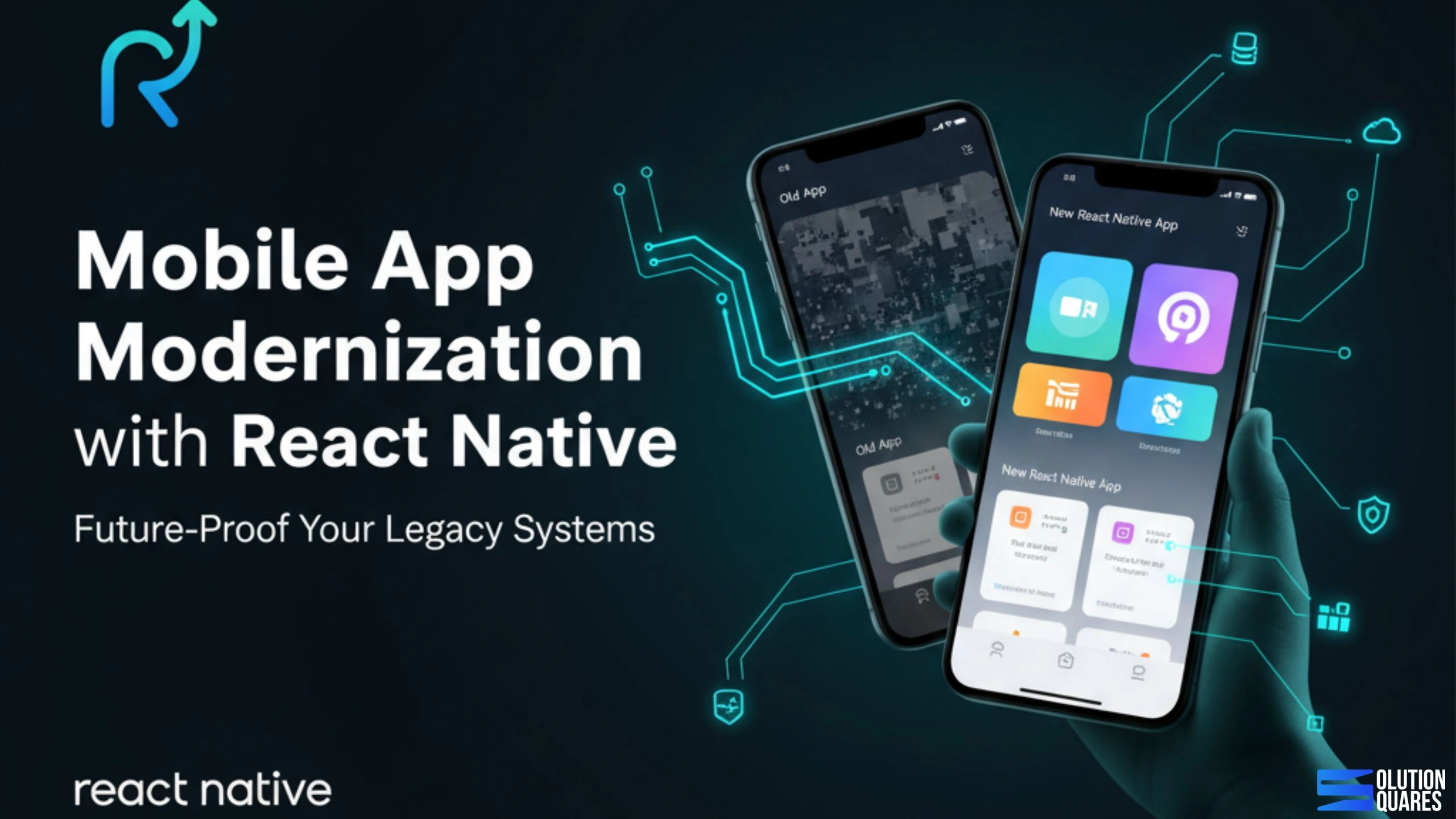
“`html
Mobile App Modernization with React Native: A Strategic Approach for Businesses
Introduction
In a rapidly evolving digital landscape, outdated mobile applications can hold businesses back — leading to poor performance, security risks, low engagement, and high maintenance costs. Mobile app modernisation is no longer optional; it’s a strategic necessity.
React Native, backed by Meta and used by leading global brands, has emerged as a powerful solution for modernizing legacy apps, enabling businesses to migrate faster, enhance performance, and scale across platforms — all with a single codebase.
Understanding App Modernization
What is App Modernization?
App modernization refers to the process of revamping old software applications to scalable, efficient systems that leverage modern technological capabilities . It transforms legacy systems into assets that support modern user interfaces, integrate smoothly with other business systems, and scale as market demands change.
Why Modernize Your Mobile App?
| Problem with Legacy Apps | Impact on Business |
|---|---|
| Slow Performance & Crashes | Frustrates users → High uninstall rate |
| Outdated UI/UX | Lower engagement & poor brand perception |
| High Maintenance Costs | Multiple native codebases drain resources |
| Security Vulnerabilities | Data risk & compliance failure |
| Lack of New Features Support | Can’t integrate AI, biometrics, or cloud |
Benefits of Modernizing Mobile Applications
- Improved Performance: Modern apps load faster and perform better, enhancing user satisfaction (Athenagt).
- Enhanced Scalability: Keeps pace with business growth without the need for constant redesigns.
- Lower Maintenance Costs: Streamlined apps reduce ongoing support requirements, cutting down operational costs (Decoding the Cost of Developing a Mobile App).
- Future-Proofing: Prepares businesses for future technological shifts, ensuring that the app remains relevant and competitive.
Why React Native for Mobile App Modernization?
Overview of React Native
React Native is an innovative open-source framework designed by Facebook for creating native-style apps using JavaScript. It allows developers to reuse code across iOS and Android platforms, making it a popular choice among businesses aiming to update their apps efficiently.
Core Features of React Native
- Cross-Platform Development: Developers can write one codebase and deploy on both iOS and Android.
- Hot Reloading: This feature allows programmers to see code changes in real-time, speeding up the development process.
- Access to Native Components: React Native integrates with native device functionality, offering a user experience that rivals native applications.
Key Reasons to Choose React Native
- Fast Development and Quicker Time-to-Market: Using component-based architecture, developers can reuse code and pre-built elements, which speeds up the development cycle.
- Rich Ecosystem and Community Support: Offers a wide range of libraries and tools, continually supported and expanded by a vast community of developers.
| Benefit | Description |
|---|---|
| Single Codebase for iOS & Android | Eliminates duplicate development and speeds up delivery |
| Improved Performance Over Hybrid/WebView Apps | Near-native speed with access to native modules |
| Modern UI/UX Ready | Works seamlessly with Material Design, SwiftUI-like patterns, and custom animations |
| Easy Integration with Existing Native Code | You can upgrade the module by module instead of a full rebuild |
| Scalable and Future-Proof | Supports AI, AR/VR, push notifications, cloud sync, biometrics, and more |
Key Benefits of Mobile App Modernization with React Native
- Enhanced User Experience: React Native apps are responsive and deliver a smooth user experience.
- Cost-Effectiveness: Maintaining a single codebase for both iOS and Android reduces development and maintenance costs.
- Accelerated Market Reach: Faster development cycles enable quicker updates and feature rollouts, keeping users engaged.
Mobile App Modernization Strategies with React Native
| Strategy | Description | Best For |
|---|---|---|
| Full Rebuild | Recreate the entire app in React Native | Severely outdated or unmaintainable apps |
| Incremental Migration | Modernize feature-by-feature using native bridges | Complex enterprise apps |
| UI/UX Overhaul Only | Keep backend logic, refresh front-end experience | Apps with good functionality but outdated design |
| Performance Refactoring | Optimize image caching, state management, and navigation | Slow or unstable apps |

Steps to Modernize Your App with React Native
Assessment and Planning
Start by analyzing the current state of your app in terms of performance, technology stack, and user feedback. This assessment will help identify key areas for improvement.
Choosing the Right Architecture and Development Path
Opt for a flexible, modular architecture like microservices to ensure smooth upgrading and feature expansion. Begin the migration with less critical features to minimize risk.
Testing and Deployment
Implement comprehensive testing to ensure the updated app performs well across all target devices. Use automated CI/CD pipelines for efficient and reliable app deployment.
Overcoming Modernization Challenges with React Native
React Native simplifies mobile app modernization by providing a unified codebase that reduces complexity and streamlines updates. Incremental migration minimizes downtime, ensuring that fundamental app functions remain uninterrupted during the transition.
Success Stories — Brands That Modernized with React Native
| Company | Previous Issues | Modernization Outcome |
|---|---|---|
| Airbnb (Partial Migration) | Native complexity | Faster prototype cycles & hybrid code reuse |
| Walmart | Performance bottlenecks | React Native boosted speed by 2x |
| Discord (iOS App) | Native maintenance overhead | Switched to React Native to simplify updates |
| Bloomberg | Fragmented native builds | Unified development → Faster releases |
Key Best Practices for React Native Modernization
- Audit your current app — identify modules to migrate first
- Reuse existing APIs & backend to save time
- Maintain a parallel release strategy for a smooth transition
- Adopt TypeScript for cleaner, maintainable code
- Ensure robust testing (Jest, Detox, Appium)
When NOT to Use React Native for Modernization?
-
If your legacy app heavily relies on platform-specific hardware features (e.g., advanced ARCore/ARKit, real-time audio processing).
-
If JavaScript expertise is unavailable, or your team is deep into native Swift/Kotlin development.
Want to Modernize Your Legacy App?
We specialize in migrating outdated mobile apps to React Native with minimal downtime.
Book a free consultation today to get:
✔ App audit
✔ Migration roadmap
✔ Cost & timeline estimate
Let’s turn your old app into a high-performing, future-ready product!
Conclusion
Mobile App Modernization with React Native is not just an upgrade; it’s a transformation that brings substantial business benefits. By enhancing user experiences, reducing costs, and preparing your app for future advancements, React Native sets the stage for sustained competitive advantage.
React Native is one of the smartest modernization choices for businesses aiming to retain their existing users while upgrading performance, UX, and scalability — without starting from scratch. It combines speed, flexibility, and cost-efficiency, making it ideal for enterprises, SaaS platforms, and consumer-facing apps.
Ready to modernize your mobile app? Contact our React Native experts today for a free consultation and explore our case studies and services to see how we can revitalize your mobile applications. Take the first step towards a future-proof mobile presence and ensure your business stays ahead in the digital era.
“`