
Category: App Development

You desire, and we deliver. Our app development service covers all kinds of app development react native, React, Flutter, iOS, Android and much more.

  • Transforming Careers, Cultivatin: Empower Your Journey With Unparalleled  Job Portal Expertise

    Transforming Careers, Cultivatin: Empower Your Journey With Unparalleled Job Portal Expertise

    Embark on the journey of job portal development with a clear understanding of costs, features, and benefits to create a platform that not only meets current needs but is also poised for future success.

    Cost of Job Portal Development:

    Determining the exact cost of crafting a smartphone application is a meticulous process. App developers often find it challenging to provide an upfront estimate due to the variability in expenses linked to feature integration. Developing an app is a multifaceted and time-consuming endeavour that necessitates careful consideration of numerous factors.

    Usually, the standard billing approach for most software development firms involves hourly rates. The number of hours required is contingent upon the complexity of the application. According to industry standards, the creation of a digital job search and recruitment app may incur costs ranging from $40 to $60 per hour. This translates to an estimated expense of $45,000 to $60,000 for developing a basic job portal application. It’s essential to note that this cost encompasses UI/UX design and comprehensive testing of the smartphone application.

    However, Geographical location significantly influences the expense of product development. For instance, a company based in the United States may charge between $200 and $250 per hour, significantly elevating the overall cost. Similarly, development rates in Europe and neighbouring regions typically fall within the range of $125 to $170 per hour.

    In contrast, India stands out as a hub for skilled software developers offering exceptional services at markedly lower costs. Reputable software development companies in India commonly charge rates ranging from $20 to $25 per hour. This cost advantage makes India an attractive destination for cost-effective and high-quality app development services.

    • Basic Job Portal:

    This includes essential features like user registration, job search, and application submission. Depending on the complexity and features, development costs range from $50,000 to $100,000.

    • Advanced Job Portal with AI Matching:

    For a more sophisticated platform incorporating AI-driven job matching, personalized dashboards, and additional advanced features, costs can range from $100,000 to $200,000.

    Note: Costs may vary based on factors like the chosen technology stack, the geographical location of the development team, and specific customization requirements.

    Factors Affecting Cost Of Job Portal

    Several factors contribute to the cost of developing a job portal. The complexity and features of the portal, as well as the geographic location of the development team, play significant roles. Here are the key factors that can affect the cost of job portal development:

    1. Features and Functionality:

      • The number and complexity of features integrated into the job portal significantly impact the development cost. Basic features like user registration, job search, and application submission may have lower associated costs, while advanced features such as AI-driven matching algorithms, personalized dashboards, and advanced analytics can increase the overall expense.
    2. Design and User Experience:

      • The level of design sophistication and user experience (UI/UX) considerations influence the development cost. A well-designed and user-friendly portal often requires additional resources and expertise.
    3. Platform (Web, iOS, Android):

      • Developing the job portal for multiple platforms (web, iOS, Android) increases the complexity and, subsequently, the cost. Each platform requires unique development and testing efforts.
    4. Technology Stack:

      • The choice of technology stack, including programming languages, frameworks, and third-party integrations, can impact development costs. Some technologies may have higher licensing or development expenses.
    5. Geographical Location of Development Team:

      • The location of the development team is a crucial cost factor. Development rates vary significantly based on the region. For example, development costs in countries with a higher cost of living, such as the United States or Europe, tend to be higher than in countries like India, where skilled developers are available at a lower cost.
    6. Testing and Quality Assurance:

      • Rigorous testing is essential to ensure the reliability and security of the job portal. The more comprehensive the testing procedures, the higher the associated costs.
    7. Deployment and Maintenance:

      • Costs related to deploying the job portal and ongoing maintenance should be considered. Regular updates, bug fixes, and security patches contribute to the total cost of ownership.
    8. Scalability:

      • If the job portal is designed to handle a large volume of users and data, scalability becomes a factor. Developing a scalable architecture may require additional investment.
    9. Security Requirements:

      • The level of security required for the job portal can impact costs. Implementing advanced security measures to protect user data and sensitive information may require additional resources.
    10. Legal and Compliance:

      • Ensuring compliance with data protection regulations and obtaining necessary licenses can contribute to costs. Legal considerations, such as privacy policies and terms of service, should be factored in.
    11. Integration with External Systems:

      • If the job portal needs to integrate with external systems, such as social media platforms, payment gateways, or other third-party services, development and integration costs may increase.

    Considering these factors and defining the specific requirements of the job portal in detail will help in obtaining a more accurate and tailored cost estimate for development.

    Why To Develop A Job Portal?

    The rise of job portal development services is evident in the growing online recruitment market, as indicated by the report from Fortune Business Insights. According to the report, the online recruitment market is expected to reach a substantial size of USD 43.39 billion by the year 2027.

    This projection represents a significant increase compared to the market size of USD 28.68 billion just two years ago. The data suggests a robust growth trajectory, with the global online recruitment market expanding at a Compound Annual Growth Rate (CAGR) of 7.1% during this period.

    This growth can be attributed to several factors, including the increasing adoption of online platforms for job searches, the evolving dynamics of the job market, and the continuous innovation in technology facilitating more efficient and user-friendly recruitment processes.

    Businesses and job seekers alike are recognizing the benefits of leveraging online recruitment platforms, leading to a surge in demand for job portal development services. The trend is expected to continue as the job market becomes more competitive, and organizations seek effective and tech-driven solutions for talent acquisition and job placement.

    Must-Have Features Of Job Portal Development:

    It’s important to conduct thorough market research and consider the most recent developments when entering or investing in the job portal development market in India. Moreover, the landscape is dynamic, and staying informed about industry trends and user preferences is crucial for success.

    • User Registration and Profiles:

    This allows users to create accounts, build profiles, and manage their job-seeking journey effectively.

    Advanced Job Search and Filters:

    Provide a robust search functionality with filters for location, industry, experience level, and more.

    Company Profiles with Reviews:

    Enable users to explore detailed company profiles and access reviews from current and former employees.

    Personalized User Dashboards:

    Offer personalized dashboards for users to manage applications, save preferences, and track job searches.

    Application Submission and Tracking:

    Streamline the application process, allowing users to apply to jobs seamlessly and track their application status.

    AI-driven Job Matching Algorithms:

    Implement artificial intelligence to enhance job matching, providing users with personalized job recommendations.

    Salary Information Integration:

    Provide insights into salary information to empower job seekers with transparent compensation details.

    • Employer Accounts for Job Postings:

    Enable employers to create accounts, post job openings, and manage the recruitment process efficiently.

    • Mobile Responsiveness:

    Ensure cross-platform access with a responsive design for web and mobile devices.

    Benefits Of Job Portal Development:

    The development of a job portal offers a wide range of benefits for both job seekers and employers, creating a dynamic platform that fosters efficient, transparent, and effective interactions between the two parties.

    For Job Seekers:

    Job portal development offers numerous benefits for job seekers, enhancing their overall job search experience. Here are some key advantages:

    • Access to Diverse Opportunities:

    Job seekers gain access to a wide range of job opportunities from various industries and sectors, expanding their choices and increasing the likelihood of finding a suitable position.

    • Efficient Job Search:

    With advanced search filters and algorithms, job portals enable efficient and targeted job searches. Users can customize their searches based on factors such as industry, location, experience level, and more.

    • Transparent Company Information:

    Job portals often provide detailed company profiles, reviews, and ratings. This transparency empowers job seekers to make informed decisions about potential employers, fostering a better understanding of workplace culture and reputation.

    • Application Tracking:

    Job seekers can track the status of their job applications in real-time. This feature enhances transparency in the recruitment process and helps applicants stay organized throughout their job search.

    • Personalized User Dashboards:

    Job portals often offer personalized dashboards where users can save preferences, manage applications, and receive relevant job recommendations. This personalized experience enhances user engagement and satisfaction.

    • Salary Insights:

    Many job portals provide insights into salary ranges for different positions and industries. This information helps job seekers evaluate and negotiate compensation packages effectively.

    • Skill Enhancement Opportunities:

    Some job portals offer resources for skill development, training programs, and certifications. This encourages continuous learning and skill enhancement for job seekers looking to stay competitive in the job market.

    • Mobile Accessibility:

    Job portal apps ensure accessibility on mobile devices, allowing job seekers to browse and apply for jobs on the go. This flexibility is particularly beneficial for those with busy schedules.

    • Networking Opportunities:

    Some job portals incorporate networking features, enabling job seekers to connect with professionals in their industry, join relevant groups, and participate in discussions. Networking can open doors to new opportunities and insights.

    • Notifications and Alerts:

    Job portals often send notifications and alerts based on user preferences, keeping job seekers informed about relevant job openings, application status updates, and industry trends.

    In summary, job portal development significantly improves the job search experience for individuals by providing a user-friendly platform with diverse job opportunities, transparent company information, and tools for efficient and organized job hunting.


    For Employers:

    Job portal development offers several advantages for employers, streamlining the hiring process and enhancing their ability to attract and manage talent effectively. Here are the key benefits:

    • Wider Candidate Pool:

    Job portals provide access to a vast and diverse pool of potential candidates. Employers can reach a broader audience, increasing the chances of finding qualified and suitable candidates for their job openings.

    • Cost-Efficient Recruitment:

    Online job portals often offer cost-effective solutions compared to traditional recruitment methods. Employers can save on advertising costs and reach a large number of candidates without significant expenses.

    • Efficient Job Posting:

    Employers can easily create and post job openings on job portals, ensuring that their vacancies are visible to a wide audience. This streamlines the process of advertising job opportunities and attracting relevant applicants.

    • Targeted Candidate Search:

    Advanced search and filtering options on job portals enable employers to search for candidates based on specific criteria such as skills, experience, and qualifications. This targeted approach helps identify candidates who closely match the job requirements.

    • Brand Visibility:

    Employers can create and maintain detailed company profiles on job portals, showcasing their brand, values, and workplace culture. This visibility can attract top talent who align with the company’s ethos.

    • Applicant Tracking System (ATS):

    Many job portals come equipped with ATS features, allowing employers to manage the entire recruitment process efficiently. This includes tracking applications, scheduling interviews, and communicating with candidates seamlessly.

    • Real-Time Interaction:

    Job portals facilitate real-time communication between employers and candidates. This instant interaction expedites the hiring process, enabling quick responses to candidate queries and updates on application status.

    • Data-Driven Decision-Making:

    Employers can leverage analytics and insights provided by job portals to make informed decisions. Data on candidate engagement, application trends, and other metrics assist in refining recruitment strategies.

    • Reduced Time-to-Hire:

    The streamlined processes and efficient tools provided by job portals contribute to a reduced time-to-hire. Employers can quickly identify, assess, and hire suitable candidates, ensuring that critical positions are filled promptly.

    • Integration with Recruitment Software:

    Job portals often integrate with various recruitment and HR software, enabling seamless data transfer and synchronization. This integration enhances workflow efficiency and minimizes manual data entry.

    • Customized Employer Branding:

    Employers can use job portals to showcase their employer brand through multimedia content, employee testimonials, and company updates. This branding helps attract candidates who resonate with the company culture.

    In summary, job portal development provides employers with a range of tools and features to streamline the recruitment process, attract top talent, and make data-driven decisions. It is a valuable resource for companies seeking efficient and cost-effective solutions for talent acquisition.

    How Does Job Portal Make Money?

    Job portals generate revenue through various monetization strategies. Here are some common ways job portals make money, along with real-life examples:

    1. Job Posting Fees:

      • How it works: Employers pay a fee to post job openings on the portal, ensuring visibility to a large pool of potential candidates.
      • Example: Many job portals, including Indeed and Naukri.com, charge employers for posting their job listings. Prices may vary based on factors like job duration, visibility, and additional features.
    2. Resume Database Access:

      • How it works: Employers subscribe to access the portal’s resume database, allowing them to search and view resumes of potential candidates.
      • Example: LinkedIn offers a premium service called LinkedIn Recruiter, where recruiters pay a subscription fee for advanced search and access to a larger pool of candidate profiles.
    3. Featured Job Listings:

      • How it works: Employers can pay an additional fee to highlight their job listings for better visibility on the portal.
      • Example: Glassdoor offers a feature called “Sponsored Jobs,” where employers can boost the visibility of their job postings to attract more candidates.
    4. Premium Employer Services:

      • How it works: Job portals offer premium services to employers, including enhanced company profiles, branding opportunities, and additional recruitment tools.
      • Example: Indeed has a service called “Indeed Employer,” providing advanced features like enhanced job visibility, sponsored postings, and employer branding options at a premium cost.
    5. Advertising Revenue:
      • How it works: Job portals display targeted advertisements to users, generating revenue through pay-per-click (PPC) or impression-based models.
      • Example: Google AdSense is commonly used by job portals to display relevant ads to users based on their search and browsing behavior, generating revenue for each click or impression.
    6. Subscription Services for Job Seekers:

      • How it works: Job seekers may opt for premium subscriptions that offer additional features, such as resume visibility to more employers, personalized insights, or priority support.
      • Example: LinkedIn Premium is a subscription service that offers benefits to job seekers, including increased profile visibility and access to learning resources.
    7. Affiliate Marketing:

      • How it works: Job portals may earn commissions by referring users to external services or educational programs.
      • Example: A job portal might partner with an online course provider and earn a commission for each user who enrolls in a course through their referral link.
    8. Freemium Models:

      • How it works: Job portals may offer basic services for free while charging for premium features or additional functionalities.
      • Example: LinkedIn operates on a freemium model, where users can access basic features for free, but premium services come with a subscription fee.
    9. Event Sponsorship and Recruitment Fairs:

      • How it works: Job portals organize or sponsor job fairs, events, or webinars, charging employers for participation.
      • Example: Monster India, for instance, has organized career fairs where employers pay for booths to interact with potential candidates.

    These monetization strategies allow job portals to offer valuable services to both job seekers and employers while generating revenue to sustain and grow their platforms. The specific revenue mix may vary among different portals based on their business models and target audiences.

  • How To Develop Fleet Management Software in 2025?

    How To Develop Fleet Management Software in 2025?

    Fleet management is one of those crucial aspects of business that requires operational competency to manage and track daily activities easily. Efficiently managing a complex system of vehicles that keeps increasing every week requires an exponentially viable and seamless management system.

    A fleet management software can digitize your fleet operations while simultaneously allowing you to automate route optimization, tracking consignments, bookkeeping, communication, etc. This article will help you get a clear idea of the fleet management software cost and the factors affecting the same.

    The demand for fleet management software has increased with the expansion of international land and sea trade routes. On average, a simple fleet management software would cost around $7,000 to $ 35,000, depending on the overall software complexity, feature list, location as well as the hourly rates of developers.

    Some Interesting Market Statistics to Understand the Popularity of Fleet Management Software

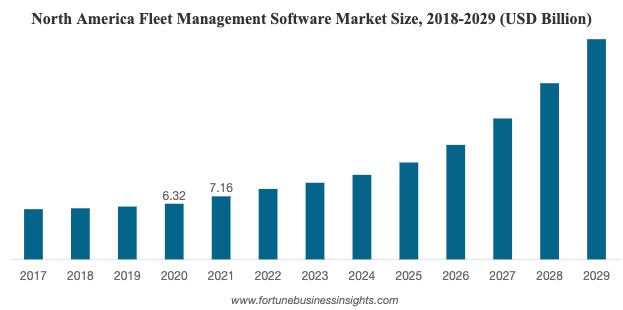
    As per the latest reports from PRNewswire, the global fleet management market is expected to witness a market volume of $52.50 billion by 2030, registering a CAGR of 10.6% from 2021 to 2030. Fleet management app has gained a trajectory in the past when it comes to streamlining hectic business processes. Here are a few notable market statistics emphasising the growing demand for enterprise fleet management apps.

      • The overall market share of worldwide fleet maintenance software is expected to reach approximately $18.1 billion in the next ten years.

      • The passenger car segment, the most significant contributor to the global fleet management software market, will witness a growth rate of 9% from 2022 to 2032.

      • The United States fleet maintenance software market still occupies the most significant share worldwide and will have a projected volume share of $4.7 billion by the end of 2022.

    data for fleet management software

    However big or small the enterprise is, investing in fleet management software is essential to manage the business’s bottom line and the safety of the drivers and the fleet. A customised fleet management system can help you keep track of every aspect of your fleet. Furthermore, it can notify you of imminent issues and help resolve them before they become exorbitantly costly.

    Simply put, dedicated software for managing fleets can help you automate your workflows, optimise operations costs, eliminate bottlenecks, and increase overall productivity.

    Get Assistance about fleet management software

    A Valuable Insight Into the Fleet Management Software Cost

    The overall cost of developing fleet management software depends on the complexity of the software, the feature list, the technology stack used for the development process, the development team’s location, the developers’ hourly rates, team size, etc.

    With so many factors affecting the overall cost of the process, the easiest way to get a precise estimate of the cost is to contact a reliable software development company specialising in fleet management software development.

    Here is our unerring formula to determine the overall development cost for custom software:

    custom software development process

    The development process affecting the cost of the software usually includes the time taken for building an MVP, UI/UX design, coding hours, backend server hours, etc.

    On average, the cost of a simple fleet management system can vary between $7,000 -$20,000. The software in this category will include features like a simple admin and driver dashboard, fleet and fuel tracking, and route optimisation.

    On the other hand, the overall cost of developing a medium complex fleet software can vary between $15,000- $25,000. The features of such software categories will be an interactive dashboard for drivers and admins, dispatch management, accident management, geofencing, etc.

    The third-tier fleet management software will include every feature, from the most basic to the most complex. The development cost for such software can vary between $20,000 $35,000. The extensive feature list will include effective real-time reports, compliance management, vehicle management and maintenance, accident protection, etc.

    Summarised Version of the Fleet Management Software Development Cost:

    Software Type Estimated Cost Timeframe
    Simple $7,000 to $20,000 2 to 3 months
    Medium Complex $15,000 to $25,000 3 to 6 months
    Complex $20,000 to $35,000 Up to 9 months

    Factors Affecting the Cost of Fleet Management System Development

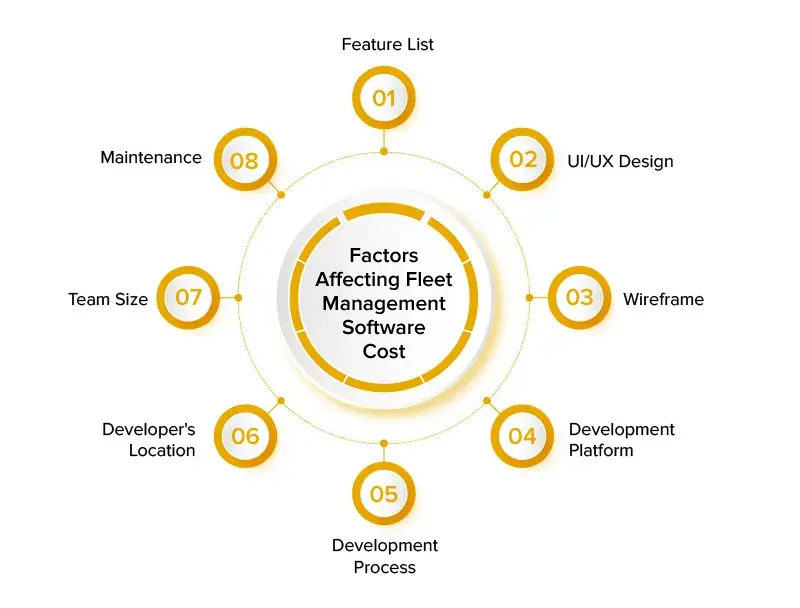
    There are several factors of significance that affect the overall cost of developing fleet management software. Diving into the logistics that determine the development cost can help you make effective decisions based on your budget and get a guaranteed ROI.

    Factors Affecting Fleet Management Software Cost

    Feature List

    The total cost of fleet management software is usually defined by the number of features integrated into it. A simple fleet management software with a staple feature list is bound to cost around $7,000 to $15,000. The gross price will continue to increase with the increasing number of features and functionalities. A custom software capable of handling every aspect of fleet management can help enterprises gain traction in the rapidly growing market.

    UI/UX Design

    The user interface design of the software captures the overall essence of the brand’s individuality, while an interactive user experience design ensures seamless functioning. Since realising the custom design requirements takes ample time and effort from the designing team, the cost of the overall software can vary according to it. The more perfect and flawless the design of the software, the higher the overall cost.

    Wireframe

    The entire map of software development is presented with the help of a wireframe. The cost of wireframe development can be included in the total development cost if the client doesn’t have a wireframe ready beforehand. Since a suitable wireframe requires the use of tools such as Photoshop, Figma, and more, the cost of the process can vary according to the tool used. In addition to this, the multiple testing stages of the wireframe can also increase the overall charges. Usually, a wireframe for fleet management software development can cost around $500 to $1,500.

    Development Platform

    The platform of the software can further impact the overall cost. If the enterprise is looking for an on-demand fleet management app development, the price can vary according to Android and iOS requirements. Moreover, if the organisation wishes to choose a web app or software, the underlying operating system can affect the overall cost of development. Getting an app for both Android and iOS platforms can increase the overall impending cost. Thus, it is advisable to choose a single platform at the initial stage and shift towards expanding the platform range once the software takes off.

    Development Process

    Coding is one of the significant factors that affect the cost of the fleet management system. The coding cost can vary as per the hourly rate of developers as well as their location. In addition to these, the total cost of fleet management software development services can be influenced by the time taken to write the code, the technology stack used, and the backend statistics.

    Developer’s Location

    The location of the developers or the development team is one of the vital factors affecting the overall fleet management software cost. For instance, if organisations or enterprises are hiring a development team from Asia, the cost of development might be less as compared to hiring developers from other parts of the world. The currency rates of multiple geographical locations mainly affect the total charges of the development process.

    Connect with us to get estimated cost of software development

    Team Size

    The team size is another factor that affects the cost of the entire software development process. If you are looking to hire a freelancer or a startup that wants to build a portfolio, the total charges for the fleet management software will be less. Furthermore, if you hire a dedicated organization, the development project will be run by a group of developers, designers, tech experts, and analysts, all managed by a project developer. The latter will offer you the best of everything but at an additional cost.

    Maintenance

    From system updates to accommodating changing requirements, the overall maintenance cost of the software can sneak up on you at any time. Since maintenance of the software is one of the inescapable stages of the development process. Every enterprise has to bear its cost.

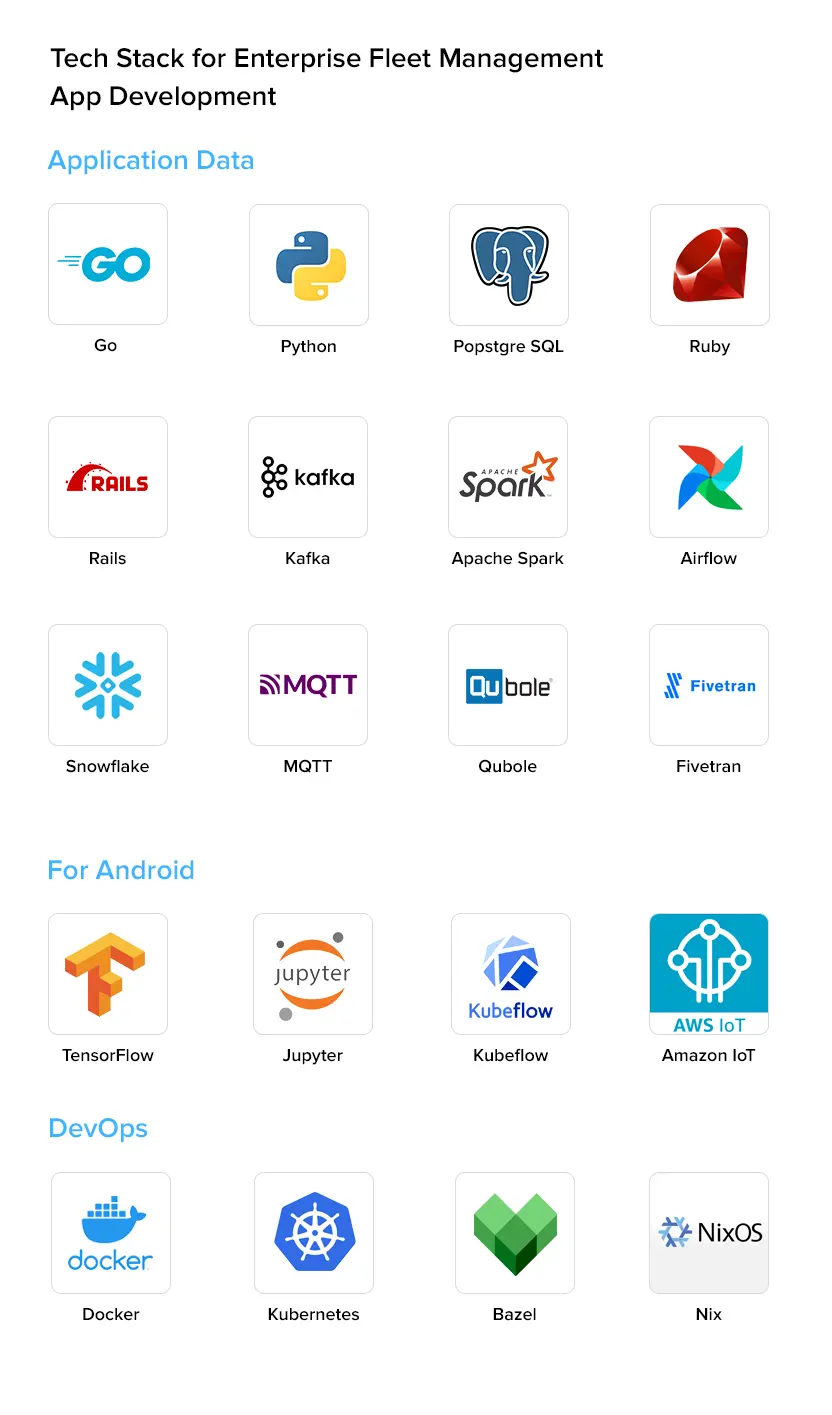
    Tech Stack

    The underlying technology used for developing the fleet management software can also affect its overall cost. If you need a robust system that can handle multiple processes at the same time. While offering real-time data analytics and reports, the cost of the software or the app will vary per your custom requirements. Still, we have created a general tech stack that is used across organizations for developing fleet management software.

    tech stack for developing fleet management software

    Features of a Fleet Management Software and How They Impact Total Cost

    The extensive feature list of the fleet management software usually varies its overall cost. More features simply mean more expense. Here are a few notable fleet management software features that ensure smooth management of fleets across multiple locations.

    Real-Time Fleet Tracking

    The feature allows you to track all information regarding the fleets. For instance, it will enable you to see the fleet’s location, driving speed, route, and direction followed by the fleet, fuel consumption, traffic at the site, the temperature of the engine, etc.

    GPS Vehicle Tracking

    A mobile app, especially curated for fleet management, is downloaded on the GPS hardware devices. Our app allows you to check the functionality of the vehicles at all times. A professional telematic solution can help you trace the vehicle across a specific area, decipher its routes, starting and ending points of the journey, complete stops, and more.

    Maintenance Tracker

    Since every vehicle requires adequate maintenance for smooth operations. Fleet management software with a maintenance tracker offers you timely notifications on the same. For instance, the sensor in the app can send signals to the fleet managers regarding the fuel change requirements, maintenance of the fleet’s tires, mirrors, etc.

    Fuel Management

    Another vital feature of the fleet management software is the fuel management sensor. It allows the admin to get a clear look at the total fuel consumption for every fleet along the route. Furthermore, it also helps notify the authorities of engine malfunctions, unexplainable fuel consumption, etc.

    Driving Behavior Analysis and Report

    The software allows you to keep an eye on the driver’s behavior which further determines. If he/she is fit for driving or not. Furthermore, the feature will enable you to monitor several aspects of driving, such as harsh braking, overspeeding, over idling, etc. This can help in efficient employee management at minimal costs.

    Geofencing

    Geofencing allows effective route planning for the fleets beforehand. The features will enable you to get an insight into the total area to be covered in real-time. Thereby saving time and costs with efficient planning.

    Fleet Alarms

    Fleet alarms are one of the most sought-after features of a coherent fleet management system. They can notify you immediately about issues like excessive speeding, lower fuels as well as engine malfunctions. Paying heed to these alerts helps in the cost-effective management of fleet operations.

    Dashboards

    Systematic dashboards for both admin and drivers can offer you the very best in fleet management software. From providing real-time information on every delivery and operation being carried out by the fleets. We effectively create summaries and reports, the dashboards can help save ample time and cost for enterprises.

    [Also Read: How to Build a Transportation App Like Moovit?]

    Some Hidden Costs Associated with the Fleet Management Software Development

    There are several hidden costs associated with the development process. Understanding them while taking appropriate measures can help you reduce their overall impacts and underlying costs.

    Quality Assurance

    Depending on the platform chosen for the software development, the testing and quality assurance costs might sneak up. For instance, if your software requires stringent testing techniques and protocols, your overall development budget can increase.

    IT Costs

    These are the costs that pile up when the app or the software requires an update or bug fixing. In addition to these, maintaining the APIs or integrating third-party APIs can also increase the impending cost.

    Security

    Another factor that can affect the cost of fleet management software is adhering to security constraints. Since the software is required to be installed for multiple devices and will collect personal data from the drivers, security protocols have to be put into place to avoid malware and theft.

    Few best industry practices and tricks can help enterprises reduce the overall cost of fleet management software. For example, opting to build an MVP first can help you understand how the software can help you streamline processes. After calculating the overall benefits, you can then opt for a complete software development process. On average, the cost of MVP development can vary between $12,000 to $16,000.

    How Can Solution Squares Help You Determine the Fleet Management Software Cost?

    Fleet management software has the ultimate potential to positively impact your business processes while streamlining complex tasks. Building custom software that adheres to your specific requirements is a complex process, but a professional organization like Solution Squares can help you assess the actual value of your business.

    Our fleet management software development services speak volumes when it comes to launching the most innovative software integrated with custom features and modern technologies. If you are looking to get a precise estimate of the fleet management software cost with a feature-by-feature breakdown, get in touch with us now!

    FAQs

    A. A simple fleet management software can cost around $7,000 to $20,000. The overall cost of the software can vary with increased complexity, the number of features, location, and hourly rates of the development team, etc.

    A. Fleet management software uses GPS technology to offer real-time data on the fleets, such as their location, speed, driver’s behavior, fuel consumption, etc.

    A. The top 5 benefits that can further reduce the operational overhead associated with the business are details on engine idle time, distracted driving events, speeding events, average time spent on the site, and unscheduled maintenance.

  • How To Build An MVP That Raises Money Mobile App?

    How To Build An MVP That Raises Money Mobile App?

    Most businesses these days have an idea for a product, but building a product or a service costs money, and not all businesses have the capital to get their idea off the ground. This is where MVPs come in handy – by designing and building an MVP for a mobile app, businesses can test their concept with real users and raise money to fund further MVP development. 

    According to Statista, 25% of apps get abandoned after being used just a single time. At the same time, other apps grow in number, and the competition gets tougher and tougher. 

    Building an MVP is a great way to test your business idea without spending a lot of money. In this blog post, let’s look at how to build an MVP for a mobile app and its benefits for investors. We’ll also discuss how to raise money from investors. So, without further ado, let’s get started!

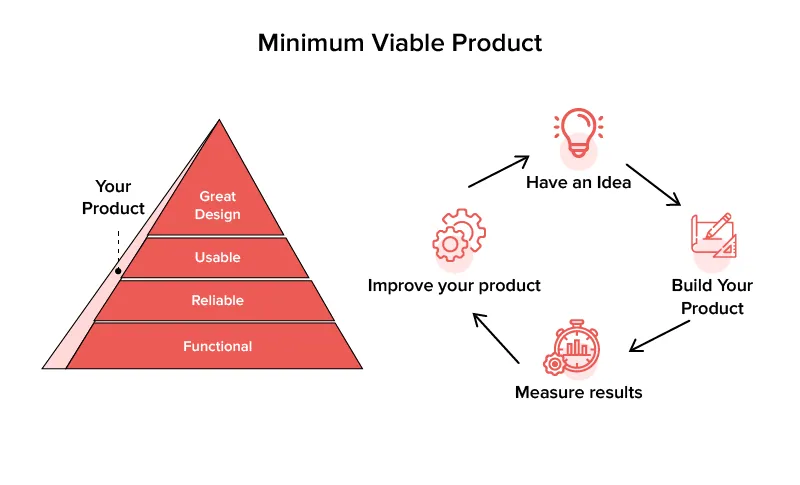
    What is a minimum viable product?

    Minimum viable product is a concept taken from the Lean Startup methodology. The idea is to launch a product with a minimum number of features to get users’ feedback as quickly as possible. And also to validate the product idea early in the product development life cycle.

    Minimum Viable Product for mobile app

    Undoubtedly, having an MVP solution is beneficial in reducing risk, saving money, and getting funding.

    Benefits of developing an MVP For A Mobile App

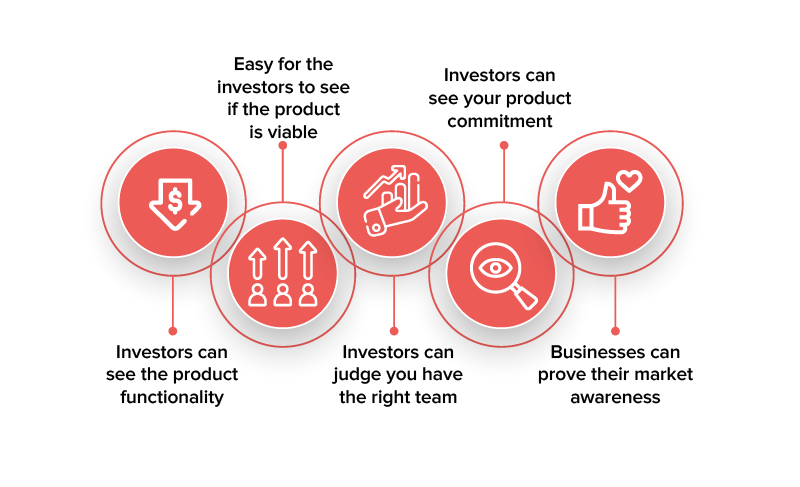
    Several benefits that come with MVP development for fundraising include:

    Benefits of developing an MVP

    Investors can see the product functionality

    When it comes to product development, the minimum viable product framework is essential to secure investment funding. Why? Because it allows MVP investors to see the product’s functionality and how it can be used to solve a real-world problem. By contrast, products that are still in the early stages of development can be much harder to sell to investors, as they may not be able to see the potential value in the product. 

    Additionally, MVPs can help ensure that products are developed in a customer-centric way, as they allow for feedback from real users to be gathered and incorporated into the final product. In short, MVPs are an integral part of the product development process and should not be overlooked when seeking investment.

    Easy for the investors to see if the product is viable 

    The main purpose of an MVP for a mobile app is to test whether the product is viable in the marketplace. This means testing whether there is a demand for the product and whether users are willing to pay for it. An MVP also allows for user feedback, which can be used to improve the product before launching it to the wider market. 

    With the help of a minimum viable product, startups can reduce the risk of failure and increase their chances of success. For investors, an MVP is essential as it provides a way to assess whether the product is likely to be successful. This information is vital in making investment decisions.

    Investors can judge that you have the right team

    As any experienced investor knows, one of the most important aspects of any new venture is the team behind it. A strong team can make even the most challenging project a success, while a weak team is likely to fail no matter how good the underlying idea may be. 

    This is why many MVP investors place such a high importance on seeing a minimum viable product before committing to a new project. MVP app development can help judge whether the team behind a new venture has the skills and experience necessary to succeed. 

    MVP development companies like Solution Squares have a wealth of experience in MVP building and can help give investors the confidence they need to invest in the product. So, if you’re looking to raise funding for your new project, make sure you partner with a company that offers MVP development services to help you create a minimum viable product that will impress even the most sceptical investors.

    Investors can see your product commitment

    Many investors are reluctant to invest in new products or companies because they fear that the team behind the venture will not be committed to seeing it through to completion. However, a minimum viable product allows businesses to gauge investor interest in the product and get funding to continue developing the product. The cost to build an MVP is typically lower and are less risky than traditional product development, making them appealing to investors.

    Minimum viable product also allows businesses to gather feedback from customers and make necessary changes before launching a full-fledged product. This feedback is essential for making a product that meets customer needs and stands out in the marketplace. By clearly demonstrating their commitment to the product, MVP for startups can increase their chances of securing funding and achieving success. 

    Businesses can prove their market awareness

    As market analysis is an important part of the MVP software development, it also helps investors know that the team is aware of the market conditions and is capable of adapting to them. Minimum viable product is essential in seeking MVP investment as it allows businesses to test their product hypothesis with real customers and gather feedback to validate idea. This feedback is essential for refining the products and business model before seeking MVP seed funding from investors.

    The minimum viable product also provides a proof of concept that investors can use to assess market opportunity and potential return on investment. MVP is a key step in securing funding from investors and proving market awareness. By taking the time to develop an MVP, businesses can increase their chances of success in the long run. Also, an MVP strategy could be a great option if you are thinking about MVP development.

    Now that we know the benefits of having minimum viable product for the investors, let’s take a look at the steps to build an MVP. 

    How to build an MVP?

    As business owners, you must have searched MVP in the search results, and yes, Google autocompletion says “MVP is dead,” “MVP is low” and so on. But we strongly disagree.

    Google autocompletion

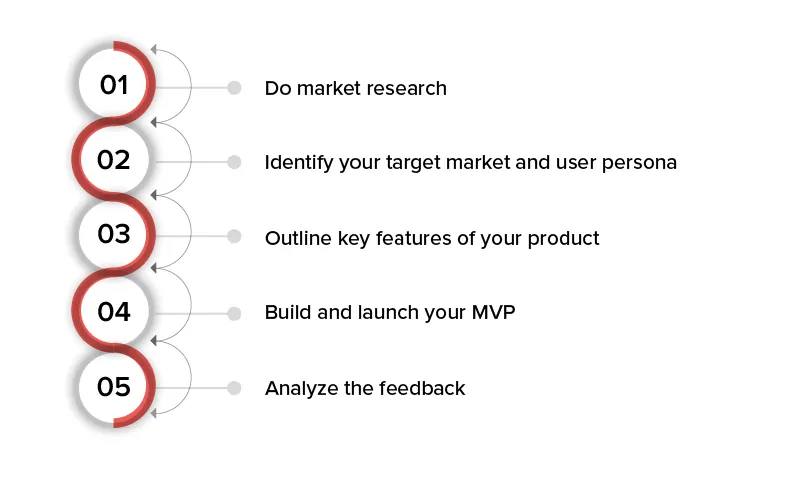
    MVP building requires some MVP planning and thoughtful efforts, but it is a straightforward process. So, let’s move further to know the steps to build an MVP:

    Do market research

    The first step is to do your market research. This will help you understand the needs of your target market and what they’re looking for in a product or service. Many platforms that conduct paid surveys and can help target the right respondents for your MVP in business.

    Identify your target market and user persona

    Once you’ve conducted your market research, it’s time to identify your target market and user persona. This includes identifying the demographics of your target market and what their needs are. Various questions, like 

    Who is your target user? What are their needs? Why would they use this solution? need to be answered at this stage. If all replies are found correctly, it will help determine who your minimum viable product is for and what needs it should address.

    Outline key features of your product

    Now that you know who your target market is and what their needs are, it’s time to outline the key features of your product. This includes identifying the core MVP features that your product or service will offer. Remember, less is more when it comes to a minimum viable product. You want to focus on the essential features that will address the needs of your target market.

    Build and launch your MVP

    Once you’ve decided on the features list, it’s time to build and launch your MVP. This involves developing the actual product or service and making it available to your target market. When launching your minimum viable product, it’s important to focus on creating a great user experience

    This means ensuring your product or service is easy to use and offers a great user experience. It’s also important to promote your minimum viable product and get feedback from users. The feedback you receive will be invaluable as it will help determine what features to add or remove, and how to improve your product or service.

    Analyze the feedback

    Once you’ve launched a minimum viable product, it’s time to analyze the feedback and data. This will help understand what’s working and what’s not. It’s important to remember that minimum viable product will have flaws, and there will be areas that need improvement. However, the feedback and data you receive will help determine how to improve your product or service.

    how to improve your product

    There’s no one-size-fits-all answer to building an MVP, but the above steps will give you a good starting point. Remember, the goal is to develop a minimum viable product that meets the needs of your target market. Now that you know how to build an MVP, the aftermath is to think about raising MVP investments for your app or a product.

    Get service assistance

    How to find investors after you have developed an MVP?

    The first and the foremost thing that comes to an entrepreneur’s mind during tough times is about how to raise money. So, if you have developed a minimum viable product and are now looking for potential investors, here’s what you need to do.

    Research about potential investors

    In today’s economy, it can be difficult to raise money for new products, mobile apps or services even if it is a great idea. One way to increase your chances of success is to research potential investors thoroughly. This means not only knowing their MVP investment history, but also understanding their goals and objectives. 

    By presenting a product in a way that aligns with their interests, you are more likely to secure pre MVP funding. Additionally, during times of economic downturn, it is even more important to be aware of the needs of potential investors. They may be more conservative with their money and more risk-averse than during boom times.  

    Focus on the future, not the past

    When pitching your product to potential investors, it’s important to focus on the future, not the past. This means highlighting the potential of your product and its ability to grow in the future. 

    For example, if you pitch a new social media app, you should focus on the potential user base and how the platform can be used to connect people. The key is to convince investors that your product has the potential to be successful in the future and that their investment will pay off.

    Create a pitch that resonates with potential investors

    Once you have identified potential investors, it’s time to create a pitch that resonates with them. This means focusing on the aspects of your product that are most likely to appeal to investors and emphasizing the potential return on MVP investment.

    For example, if your product is a food delivery app, you may want to focus on the growing online ordering and delivery trends. You can also highlight the potential for repeat customers and the loyalty of customers to businesses that offer convenient delivery options. 

    This can give investors confidence in your ability to launch the product successfully. By crafting a pitch that resonates with potential MVP investors, you will be in a better position to raise the money you need to bring your product to market.

    Be prepared to answer tough questions

    When pitching minimum viable product to potential investors, be prepared to answer tough questions. This means being honest about the risks and challenges associated with your product. 

    For example, if you are pitching a new food delivery app, you should be prepared to answer questions about the competitive landscape, the potential for customer attrition, and the scalability of your business model. By being honest and transparent about the risks involved, you will be in a better position to secure MVP funding.

    Optimize your cash position

    Finally, it’s important to  optimize your cash position before pitching your product to potential investors. This means having a clear understanding of your burn rate and ensuring that you have enough cash in hand to sustain your business in the event that you are not able to raise money. 

    Additionally, it’s important to have a clear plan for how you will use the funds you are seeking. This will give investors confidence in your ability to launch and grow your business successfully.

    To move forward, after having a good knowledge of the tips for success while pitching to MVP investors, it is important to have a look at the funding partners for the post-MVP stages.

    Talk to our experts

    Funding partners for post-MVP stages

    Undoubtedly, the MVP stage is the most crucial for any business. But it’s not the end. To take your business to the next level and achieve long-term success, let’s look at the main type of MVP funding sources that are helpful to approach during the pre-seed funding and seed funding  rounds.

    Non-profit community development finance institutions

    Many CDFIs have been created to invest in businesses in low to moderate-income (LMI) communities. While their primary focus is on economic development, they also have a mandate to invest in businesses that will create jobs and spur economic growth. As such, they can be a good source of funding that are looking to launch in LMI communities.

    Government agencies and programs

    Federal, state, and local governments offer a variety of programs and incentives to promote entrepreneurship and economic development. These can include loans, grants, and other forms of financial assistance. 

    Angel investors and venture capitalists

    Angel investors and venture capitalists are typically high-net-worth individuals who invest in early-stage companies in exchange for equity. While they are typically focused on high-growth companies, they can also be a source of funding for a minimum viable product with high potential.

    Crowdfunding

    Crowdfunding is a way of raising capital by pooling small amounts of money from a large number of people. It can be a good source of funding for MVPs that have a compelling story and are able to generate interest and excitement among potential investors.

    Friends and family

    Friends and family can also play an integral part in MVP fundraising, particularly if they are supportive of your business idea and believe in your ability to succeed. However, it’s important to remember that they are also taking a risk by investing in your company, and as such, you should treat them as you would any other investor.

    Closing thoughts

    Building an MVP is a critical step in the process of raising money for your mobile app. By following the tips we’ve outlined in this post, you can create a product that will resonate with investors and help secure the funds you need to take your app to the market. Also, let’s not miss out that great companies like Uber, Airbnb, and WhatsApp started as MVP and now are the most successful ones. So, don’t let little things discourage you from seeking out investors for your minimum viable product.

    FAQs

    Q. Do you need an MVP to get funding?

    A. While an MVP can be a helpful tool for attracting investors, it is not always necessary. In some cases, a well-developed prototype may be enough to demonstrate the app’s potential and persuade investors to provide funding.

    However, there are also situations where an MVP can be essential. For example, suppose the app requires significant investment in order to get off the ground. In that case, an MVP may be the only way to convince investors to provide the necessary capital. Ultimately, whether or not you need an MVP to get funding will depend on your specific situation and the type of app you are developing.

    Q. What is an MVP funding?

    A. MVP funding refers to the money invested in a product or service to create a minimum viable product. This is often done in the early stages of product development when the team is trying to determine whether or not the product is worth pursuing.


    The MVP funding allows the team to create a prototype or beta version of the product, which can then be tested with customers. If the product is well-received, it may receive additional funding to help it reach its full potential. However, an MVP may be scrapped altogether if it fails to impress customers.

    Q. How do you pitch MVP?

    A. When pitching MVP, it’s important to keep a few things in mind. First, it is meant to solve a specific problem or meet a particular need. This means that your pitch should focus on how your MVP will address this problem or need. Second, MVP is typically very basic in terms of features and functionality.


    This means that you should emphasize simplicity when pitching your app. Finally, MVP app development is typically much faster and cheaper than traditional app development. This means you can bring your app to market quickly and without breaking the bank. By keeping these things in mind, you can ensure that your MVP pitch is professional and effective.

    Q. What is an MVP in business?

    A. In business, MVP stands for a minimum viable product. This refers to the initial version of a product or service created to test a business idea with the minimum amount of resources and effort. The goal is to validate the concept with customers and gather feedback in order to improve the product before making a major investment. MVPs are often used in the tech industry when launching new websites or apps.

    Q. How long does it take to build an MVP?

    A. On an average, building an MVP may take approximately 3-4 months but this timing can vary as per the project and business requirements.