


In today’s digital ecosystem, mobile apps face constant threats — data theft, unauthorized access, token hijacking, and API misuse. Whether you’re building a travel app, fintech app, healthcare platform, or on-demand service, security is no longer optional. It’s a core requirement.
At SolutionSquares, we help businesses build future-ready React Native apps that are fast, scalable, and — most importantly — secure. Two of the most powerful tools in modern mobile security are:
- JSON Web Tokens (JWT)
- Biometric Authentication (Fingerprint/Face ID)
Together, they form an unbeatable security layer for protecting sensitive user data
JWT (JSON Web Token) is a secure and compact method for verifying user identity between the client and server. It replaces outdated session-based authentication with a stateless, scalable, and API-friendly approach.
Benefits of Using JWT in React Native Apps
- Fast, Stateless Authentication
No server memory is used to store sessions — making JWT ideal for large apps with thousands or millions of users.
- Perfect for Microservices & APIs
Most modern apps rely on multiple APIs. JWT handles multi-service authorization seamlessly.
- Works Smoothly with Offline-First Apps
Tokens remain valid even when the user drops internet for a while — essential for travel, delivery, and field-operation apps.
- Prevents Unauthorised Access
JWT signatures cannot be tampered with, making them safe against:
- token forgery
- cookie theft
- session replay attacks
- Easy Integration with React Native Libraries
Libraries like react-native-keychain or expo-secure-store Make token storage secure and efficient.
| Feature | Advantage |
|---|---|
| Stateless authentication | No dependency on server-side sessions |
| Faster response time | Ideal for mobile apps with API-heavy interactions |
| Supports role-based access | Secure permission control for different user types |
| Easy integration | Works with Node.js, Laravel, Django, Firebase, and more |
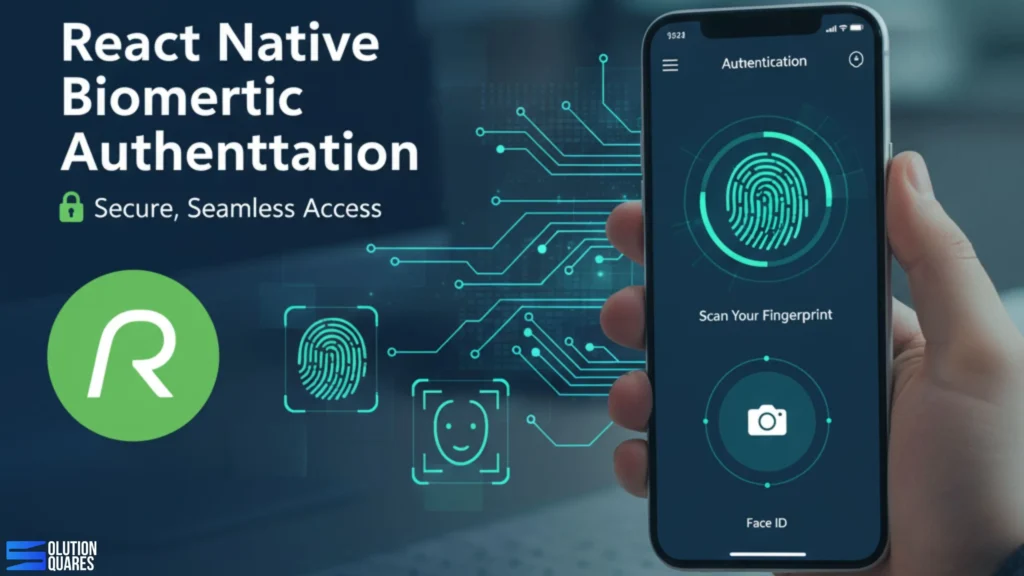
Why Biometric Authentication is a Game-Changer?
Face ID and Fingerprint unlock are becoming a default expectation for modern mobile users — especially when handling sensitive data.
Advantages of Biometrics in React Native Apps
- Instant & Frictionless Login
Users can log in with a single tap — boosting engagement and retention.
- Best Defence Against Password Hacks
No password? No risk of password theft, shoulder surfing, phishing, or brute-force attacks.
- Ideal for High-Security Apps
Biometrics are a must-have for:
- travel & boarding pass apps
- fintech & banking apps
- e-commerce apps
- healthcare and insurance apps
- private social or community platforms
- Pairs Perfectly With JWT
Biometrics authenticate the user locally, and JWT verifies them on the server.
Two layers. Zero compromise.
Advantages of Biometric Authentication:
| Biometric Layer | Protection Benefit |
|---|---|
| Face ID / Touch ID / Fingerprint | Adds instant identity verification |
| Prevents token abuse | Even if JWT is leaked, the attacker can’t log in |
| Eliminates password fatigue | Boosts user experience and login speed |
| Device-based encryption | Stores keys in Secure Enclave / Keystore |
JWT + Biometrics = Enterprise-Level Security
When you combine both:
1️⃣ JWT secures all communication between app and server
— preventing unauthorized API access.
2️⃣ Biometrics guarantees the right person is accessing the app
— preventing unauthorized device access.
3️⃣ Together, they deliver seamless login + strong protection
— exactly what modern high-scale apps need.
This combination dramatically reduces risks such as:
-
Token interception
-
Password phishing
-
Unauthorized logins
-
Session hijacking
-
Data leakage

How SolutionSquares Implements Secure React Native Apps
We follow a robust security architecture:
- Secure Token Storage (Encrypted Keychain)
Using Keychain/Keystore for preventing token theft.
- Backend Token Refresh Strategy
Using short-lived access tokens + long-lived refresh tokens.
- API Rate Limiting & IP-Level Protection
To block malicious requests.
- End-to-End Encryption for Sensitive Data
Protecting user identity, payments, and travel information.
- Biometric Gate for High-Risk Screens
(Example: Wallet, Booking Confirmation, Payment Page)
- Penetration Testing + Vulnerability Audits
Ensuring the app is production-ready and breach-resistant.
Real-World Use Cases
Protect boarding passes, itineraries, wallet credits, and user identity.
Secure KYC documents, transactions, and personal financial data.
Save payment information behind a biometric barrier.
Protect patient records and privacy-sensitive medical data.

At SolutionSquares, we specialize in crafting secure, scalable, and stunning React Native apps trusted by businesses across industries.
Let’s Build Your Next Secure Mobile App With Confidence.
Get expert guidance on app architecture, security, and development.
Your idea deserves bulletproof security — we’ll build it for you.
Conclusion
Implementing JWT and biometric authentication in React Native not only enhances application security but also provides a more user-friendly authentication experience.
Frequently Asked Questions
1. What is JWT, and how does it work in securing React Native apps?
JWT stands for JSON Web Token, a compact and secure way to transmit information between parties as a JSON object. In React Native apps, JWT can be used to authenticate users by generating a token upon successful login, which is then included in subsequent API requests to verify the user’s identity and permissions.
2. How do biometrics enhance security in mobile applications?
Biometric authentication leverages unique physiological or behavioural characteristics, such as fingerprints or facial recognition, to verify a user’s identity. This adds layer of security beyond traditional passwords, making it harder for unauthorized users to gain access.
3. Can JWT and biometrics be used together in a React Native app?
Yes, combining JWT and biometric authentication provides a robust security framework. JWT handles secure token-based authentication for API interactions, while biometrics add an extra layer of device access protection, ensuring that only authorised users can access sensitive data and functionalities within the app.
4. Is JWT safe enough for commercial apps?
Yes — when combined with secure storage, HTTPS, and refresh tokens, JWT is one of the safest authentication methods available.
5. What biometric methods can React Native apps support?
-
Face ID
-
Touch ID
-
Fingerprint
-
Android Biometrics API
All major devices are supported.
6. Can we use JWT without biometrics?
Yes, but biometrics add an extra protection layer and improve user experience.
7. Does biometric authentication require the internet?
No — it works locally on the device. It’s extremely fast and private.
8. Is biometric login expensive to implement?
Not at all. With the right expertise, it’s cost-efficient and quick to integrate.
9. Why not just use passwords?
Passwords cause friction and are easily hacked.
Biometrics + JWT = secure + seamless.