Category: General

  • Unlock E-commerce Triumph: A Masterful Blueprint for Crafting a Cutting-Edge Application that Delivers Unprecedented Success

    Unlock E-commerce Triumph: A Masterful Blueprint for Crafting a Cutting-Edge Application that Delivers Unprecedented Success

    The process of e-commerce application development involves several distinct phases, from the initial idea to the final product. The process of an e-commerce application development is a complex and multifaceted process that requires attention to detail, a focus on user experience, and ongoing maintenance and improvement to ensure the success and longevity of the platform.

    What is An E-commerce Application Development?

    E-commerce app development refers to the process of creating mobile applications that facilitate online buying and selling of products or services. These apps are designed to provide a user-friendly interface for customers to browse products, make purchases, and manage their accounts, while also providing a platform for businesses to showcase and sell their products.

    Process of E-commerce Application Development?

    The process of an e-commerce app development requires a multidisciplinary team, including project managers, designers, front-end and back-end developers, quality assurance testers, and potentially marketing specialists. The choice of technology stack, platform (iOS, Android, or both), and development approach (native or cross-platform) depends on factors such as budget, target audience, and project requirements.

    Steps of The Process of E-commerce Application Development

    The process of e-commerce application development is iterative, and it requires ongoing efforts to maintain and enhance the platform to meet evolving user needs and market dynamics. Successful development and maintenance of the application lead to a competitive and user-friendly e-commerce platform.

    1. Research & Feature Plan
    Process of e-commerce Application Development

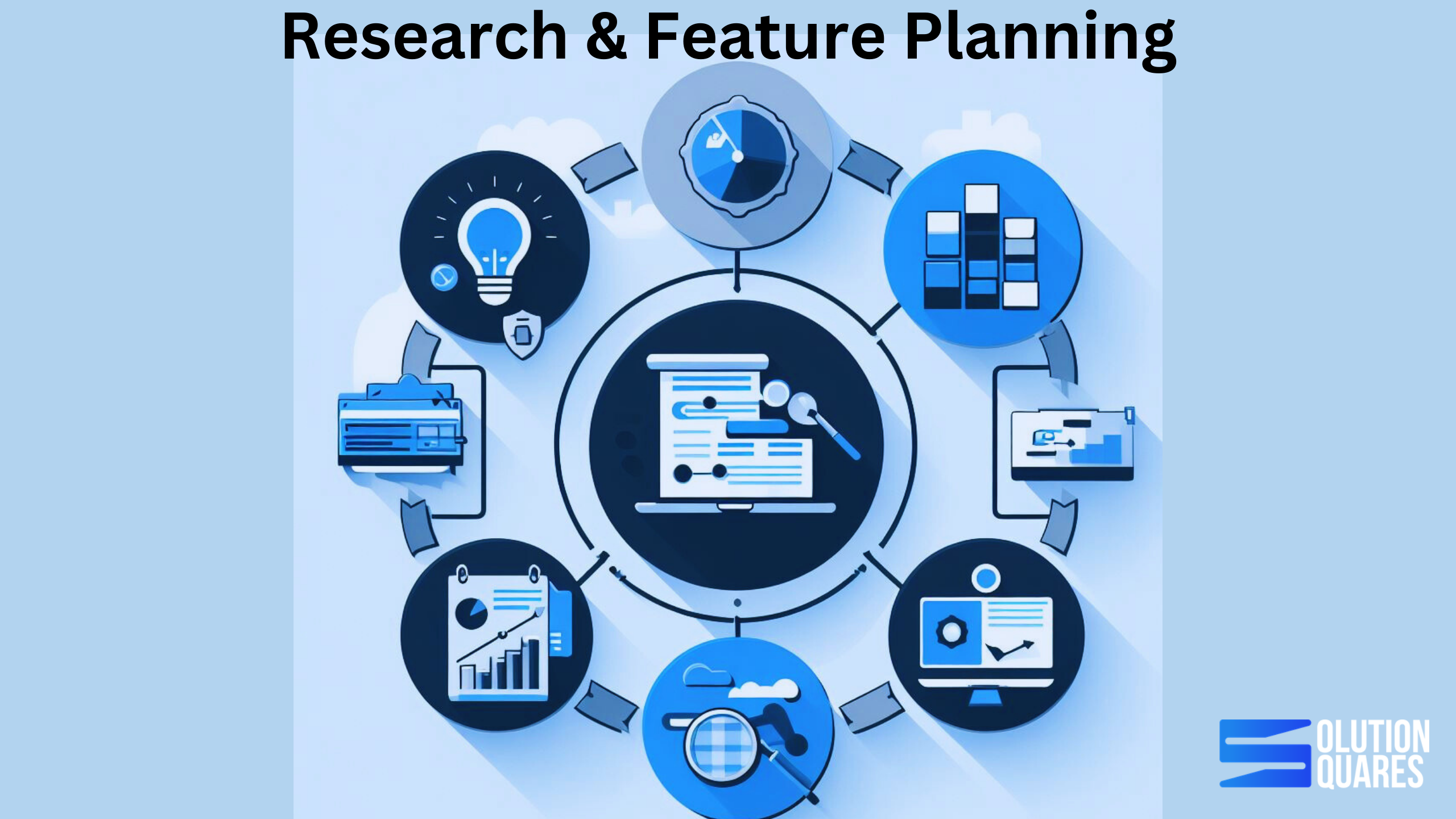
    Indeed the Research & Feature Plan is a vital foundation for the successful process of e-commerce application development. By following these steps and continually iterating based on user feedback and market changes, you can create a robust, user-friendly, and competitive e-commerce platform.

    The development of an e-commerce application requires thorough research and careful planning to ensure its success in a competitive market. This Research & Feature Plan outlines the essential steps and considerations for building a robust and user-friendly e-commerce application.

    Research may include various fields such as market research, UX research, Feature selection, and Technical research. This is a vital and important step of application development.

    2. Wireframing & Design
    process of e-commerce application development

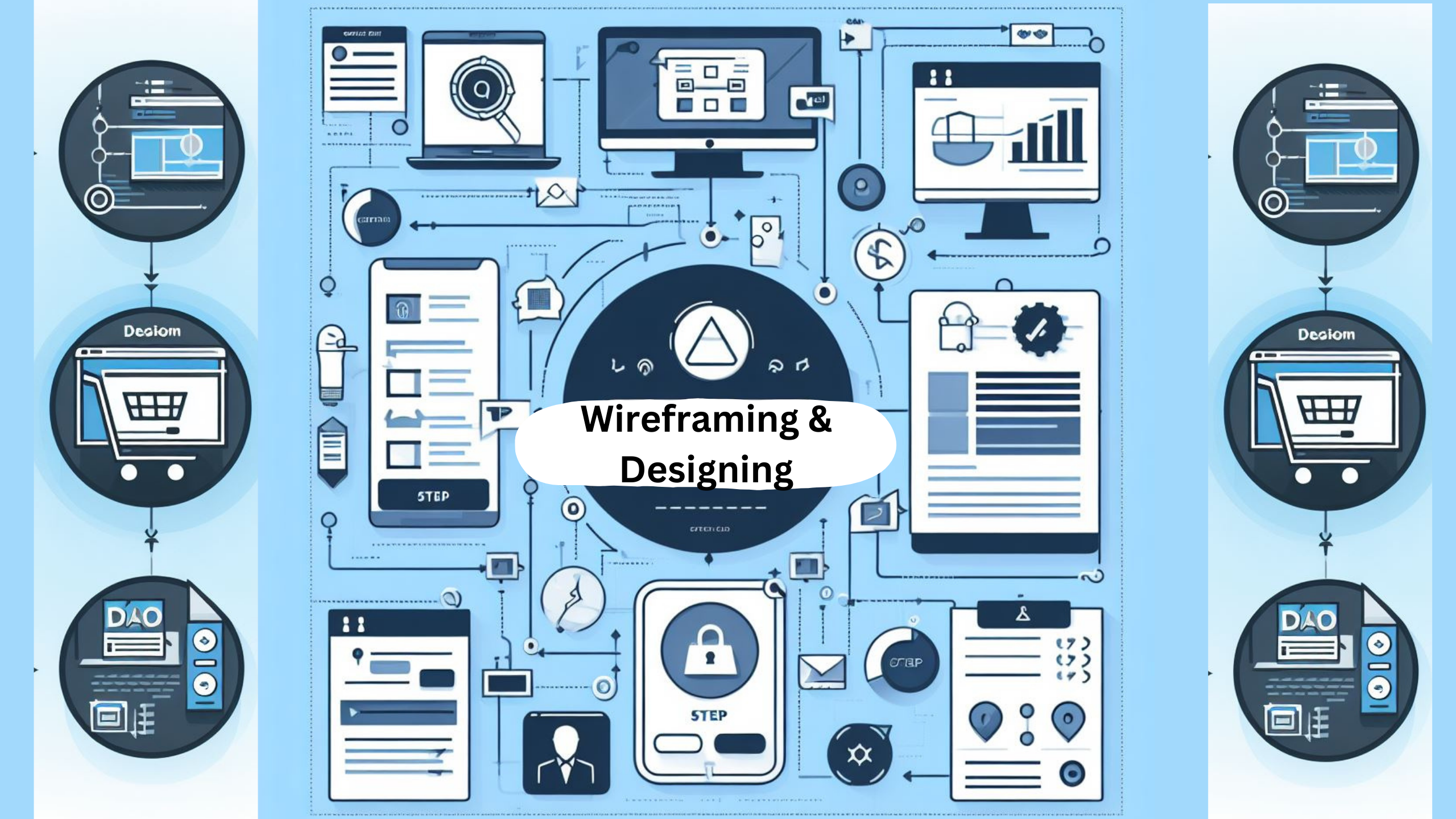
    Wireframing is the process of creating a basic visual representation of the app’s structure, layout, and functionality. It serves as a blueprint or skeletal framework that outlines the app’s key components and their relationships. Wireframes are typically created using simple shapes, lines, and placeholders to represent different elements such as navigation menus, buttons, content sections, and forms.

    The purpose of wire framing is to focus on the app’s structure and content organization, without getting into detailed design elements. It helps in visualizing the overall user flow, information hierarchy, and screen layout. By creating wireframes, you can quickly iterate and make changes to the app’s structure before moving on to the detailed design phase.

    The design phase involves creating the visual elements and aesthetics of the e-commerce app, including the user interface (UI) and user experience (UX). It encompasses the visual design, branding, typography, colour scheme, iconography, and overall look and feel of the app.

    By wireframing and designing an e-commerce app, you can establish a solid foundation for its visual appeal, user experience, and overall usability. A well-designed app can enhance user engagement, build trust, and drive conversions for your e-commerce business.

    3. Technology Stack Selection

    Usually, Selecting the right technology stack is a critical step in the process of an e-commerce application development. The technology stack consists of various software, frameworks, and tools that you’ll use to build and run your application.

    Making the right choices in this phase can significantly impact the performance, scalability, security, and overall success of your e-commerce platform. Ensure that the selected technology stack supports compliance with legal requirements, including data protection and consumer rights.

    By carefully considering these factors, one can create an e-commerce application that is not only functional and secure but also well-prepared for future growth and changes in the e-commerce landscape.  Additionally, your technology stack should align with the skills and expertise of your development team to ensure successful implementation and maintenance.

    4. Back-end Development

    Back-end development is a critical component in the process of e-commerce app development. It involves building the server-side infrastructure and logic that powers the application, manages data, and ensures the seamless functioning of the online store.

    To start one can begin by defining the specific requirements for the back-end system. This includes understanding the business logic, data storage needs, and the types of features and functionality required for the e-commerce platform.

    Now one needs to choose the appropriate programming languages, frameworks, and databases for your back-end development. Common choices include Node.js, Ruby on Rails, Django, Express.js, and various relational or NoSQL databases like MySQL, PostgreSQL, or MongoDB.

    At present, implement secure user authentication and authorization mechanisms to protect user accounts and sensitive data. Common methods include JWT (JSON Web Tokens) for user sessions and OAuth for third-party authentication.

    Undoubtedly, develops the core business logic of the e-commerce application. This includes creating functions and processes for tasks such as product catalogue management, shopping cart functionality, order processing, and payment handling.

    5. Front-end Development

    Usually, Front-end development is a crucial phase in the process of e-commerce app development. It focuses on creating the user interface and user experience of the application, making it visually appealing, intuitive, and responsive.

    Firstly, one can begin by understanding the specific requirements and design objectives for the front end of your e-commerce application. Consider the target audience, the brand’s identity, and the desired user experience.

    Undoubtedly, Ensure that the application is designed to be responsive, meaning it adapts to different screen sizes and devices (desktop, tablet, mobile) for an optimal user experience.

    Besides, Use responsive web design techniques with HTML5 and CSS3 to ensure your application looks and works well on different devices. Besides employ JavaScript frameworks (e.g., React, Angular, or Vue.js) for interactive and dynamic user interfaces.

    One can use JavaScript to add interactivity and dynamic features to the application. This includes functions like product filtering, image galleries, and interactive forms. If you choose to use a front-end framework (e.g., React, Angular, Vue.js), build the application’s components and views, enabling modularity and reusability.

    Importantly, ensure that your e-commerce app is accessible to all users, including those with disabilities. Implement accessibility best practices, such as providing alternative text for images and ensuring keyboard navigation.

    6. Testing & Quality Check
    testing & quality check process of e-commerce app development

    Generally, Testing and quality checks are integral processes in the development of an e-commerce app. They ensure that the application is robust and secure, and provides a seamless user experience.

    However, Effective testing and quality assurance help ensure that your e-commerce app is reliable, secure, and capable of delivering a great user experience. By following these processes, you can identify and address issues early in the development cycle, resulting in a more successful and customer-friendly e-commerce application.

    These steps may include various types of testing. These may include:

    • Functional Testing:

    Verify that all features and functions of the app work as intended. This includes testing product searches, adding items to the cart, order processing, and user account management.

    • Usability Testing:

    Here assess the user-friendliness of the app by observing real users’ interactions. This helps identify any usability issues and opportunities for improvement.

    • Performance Testing:

    Measure the app’s response times and scalability to ensure it can handle peak loads without slowdowns or crashes. This includes load testing, stress testing, and scalability testing.

    • Security Testing:

    Identify and address vulnerabilities such as SQL injection, cross-site scripting (XSS), and data breaches. Test authentication, authorization, and data encryption.

    • Compatibility Testing:

    Ensure the app functions correctly on various web browsers (Chrome, Firefox, Safari, Edge) and across different devices (desktop, mobile, tablet).

    • Regression Testing:

    Verify that new code changes haven’t introduced bugs or issues in existing functionalities. Run automated tests to catch regressions.

    • Cross-Border and Cross-Currency Testing:

    If your app is global, test for compliance with international regulations, currency conversion accuracy, and regional-specific features.

    • Accessibility Testing:

    Ensure that the app is accessible to users with disabilities. Test with screen readers, keyboard navigation, and other assistive technologies.

    • Mobile App Testing:

    If you have mobile apps, conduct mobile-specific testing to ensure compatibility with different devices and operating systems.

    • A/B Testing:

    Experiment with different versions of features or layouts to determine which design or functionality performs better with users.

    • Automation Testing:

    Consider automating repetitive and time-consuming tests, such as regression tests and load tests. Automation tools like Selenium, Appium, and JMeter can be beneficial.

    • Test Execution:

    Execute the test cases following the test plan. Document the results and identify any defects or issues that need to be addressed.

    • Security Assessment:

    Conduct penetration testing and security audits to identify vulnerabilities and security weaknesses. Address any findings to ensure data protection.

    • Release Candidate Testing:

    Conduct a final round of testing on the release candidate to ensure all issues are addressed before deployment.

    7. Deployment

    Deployment is a critical phase in the e-commerce app development process that involves making the application accessible to users. It encompasses various activities, from preparing the production environment to releasing the app for public access.

    Deployment is a crucial phase that marks the transition from development to the live environment. By following a well-defined deployment process, you can ensure a smooth and reliable launch of your e-commerce app and provide users with a secure and high-performance platform.

    Here various important steps are involved to make an e-commerce application development successful.  However, it may be possible that as per your goal and design you need to skip one or more steps. Here’s an overview of the deployment process for an e-commerce app:

    • Production Environment Setup:

    Prepare the production environment where the e-commerce app will be hosted. This environment should mirror the testing environment but on a larger scale. Ensure the environment is secure, scalable, and optimized for performance.

    •  Database Migration:

    Migrate the database from the testing environment to the production environment. Ensure data consistency and integrity during the migration process.

    • Version Control and Continuous Integration:

    If you’re using version control systems (e.g., Git), ensure that the production environment is synchronized with the latest code from the repository. If you have a continuous integration/continuous deployment (CI/CD) pipeline in place, use it to automate the deployment process.

    •  Configuration and Environment Variables:

    Configure the app to use production-specific environment variables, such as database connection details, API keys, and other settings that may differ from the testing environment.

    • Application Deployment:

    Deploy the application to the production servers. This can be done manually, but automation is preferred for consistency and reliability. Ensure that the deployment process is well-documented.

    • Load Balancing and Scalability:

    Implement load balancing and scaling strategies to handle high-traffic loads. Distribute incoming requests across multiple servers to ensure high availability and performance.

    • SSL/TLS Certificate Installation:

    Install SSL/TLS certificates to enable secure communication between the app and users’ browsers. This is crucial for securing sensitive information, such as payment details.

    • Domain Name System (DNS) Configuration:

    Configure DNS settings to associate the app with a custom domain name (e.g., www.yourstore.com). Set up domain records and ensure that they point to the correct servers.

    •  Data Backup and Disaster Recovery:

    Implement a data backup and disaster recovery plan to protect against data loss and ensure data integrity. Regularly back up the database and files, and have a plan for restoring data in case of unforeseen events.

    •  Monitoring and Alerts:

    Set up monitoring tools and alerts to track the health and performance of the app. Monitor server metrics, error logs, and user interactions to detect and address issues proactively.

    • Quality Assurance Testing:

    Conduct one final round of testing in the production environment to ensure that everything works as expected. Test critical functionality, security measures, and performance under real-world conditions.

    • User Acceptance Testing (UAT):

    Have a selected group of users or stakeholders perform UAT in the production environment to validate that the app meets their requirements and expectations.

    • Pre-Launch Checklists:

    Use a pre-launch checklist to ensure that all aspects of the production environment, including security, performance, and configuration, are in order.

    • Data Migration (if applicable):

    If you’re migrating from an existing system or have a legacy database, plan and execute data migration carefully to ensure data continuity and accuracy.

    • Content and Product Import:

    Import product information and content (such as images and descriptions) into the production database. Ensure that the imported data is accurate and consistent with the testing environment.

    • Soft Launch (Optional):

    Consider a soft launch to a limited audience or in a specific market to gather feedback and make any necessary improvements before the full public launch.

    • Public Launch:

    Once all preparations are complete and the app is thoroughly tested, make the e-commerce app available to the public. Announce the launch through marketing channels and encourage users to explore and use the platform.

    • Post-Launch Monitoring:

    Continuously monitor the app’s performance and user feedback after the public launch. Address any issues or improvements promptly.

    8. Launch & Marketing
    launch and marketing process of app development

    Usually, the launch and marketing phase of an e-commerce app development project is crucial for making your application known, driving user adoption, and ultimately achieving success. Here are key steps and strategies to consider during this phase.

    1. Prelaunch  Preparation
    2. Launch Strategy
    3. App Store Presence
    4. Social Media Marketing
    5. Content Marketing
    6. Affiliate Marketing

    1. Prelaunch Marketing

    This step will include Beta testing and Quality Assurance. Here conduct beta testing with a selected group of users to identify and address any last-minute issues.

    Thoroughly tests the app for functionality, security, and performance, addressing any bugs or issues.

    2. Launch Strategy

    • Soft Launch: Consider a soft launch in a limited market or with a small user group to gather feedback and make improvements.
    • Marketing Timeline: Plan a launch date, taking into account seasonality and market trends.
    • Launch Event: Create a buzz by organizing a launch event or promotion to attract initial users.

    3. App Store Presence

    • App Store Optimization (ASO): Optimize your app’s listing on platforms like the Apple App Store and Google Play Store with keywords, appealing visuals, and engaging descriptions.
    • Ratings and Reviews: Encourage users to leave positive reviews and ratings to boost your app’s credibility.
    • App install campaigns: Consider running app install campaigns on the app stores to promote your app within their ecosystem.

    4. Social Media Marketing

    • Social Media Presence: Establish and maintain active profiles on popular social media platforms such as Facebook, Instagram, Twitter, and LinkedIn.
    • Engagement: Engage with your audience through posts, stories, and live sessions, promoting your app’s features and benefits.
    • Rewards or Discounts: Encourage users to refer friends and family to your app by offering rewards or discounts for successful referrals.

    5. Content Marketing

    • Blogging: Create high-quality blog content related to your industry, products, and trends. Share this content through your website and social media channels.
    • Email Marketing: Build an email list and send newsletters to keep potential and existing customers informed about your app’s launch and updates.

    6. Affiliate Marketing

    • Establish an affiliate program where individuals or businesses can earn a commission for driving sales or installs to your app.
    • Partner with influencers in your niche to promote your app through sponsored posts and reviews.
    • Develop a PR strategy to garner media attention. Press releases and media outreach can help increase your app’s visibility.

    7. Analytics and Iteration:

    • Marketing Strategy: Continuously analyze user data and app performance to make informed decisions for marketing strategy adjustments and app improvements.
    • Performance Monitoring: Monitor the app’s performance, server uptime, and response times to ensure a smooth user experience.

    The launch and marketing phase is an ongoing process. It requires a well-thought-out strategy, monitoring, and adaptation based on user behaviour and market dynamics. By following these steps and continually optimizing your marketing efforts, you can increase user adoption and drive the success of your e-commerce app.

    [also_read slug =”e-commerce-application-development-cost-in-india”]

    Final Thoughts

    Generally, it’s essential to work with a reputable development team or agency that can provide a detailed proposal and cost breakdown based on your specific requirements.

    However, keep in mind that e-commerce application development is an ongoing investment, and you should also consider factors like marketing, SEO, and ongoing operational costs to ensure the success of your e-commerce business.

  • How To Create a Mobile App Without Coding?

    How To Create a Mobile App Without Coding?

    In today’s digital era, where the app market is evolving and booming very fast you can make a mobile app without coding. If I had talked about 25 years ago, a talk like this could have been insane or just a dream. However with the help of no-code app builder platforms, one can easily make a mobile app without coding.

    What Is No Code App Builder?

    A no-code application builder would be the one through which a user could create a mobile app without coding with zero knowledge of any codes. Further, there would only be intuitive drag-and-drop interfaces, built with a set of pre-built templates and wide arrays of further customizable components, that shall be furnished with the users for designing, developing, and deploying apps with quick ease.

    Why to Use No Code App Builder?

    No-code app makers let people and businesses with meagre technical knowledge create their applications. Moreover, they support broad functionality, simple forms, data collection, complex workflows, and many integrations with other services.

    Why build a Mobile App?

    In the modern-day marketplace, mobile applications can never be ignored simply because everybody is using them and engaging customers directly. Additionally, with billions of smartphone subscribers all over the world, apps easily access services and information while a person is on the go, improving the user experience in terms of front-ends, which are user-friendly and have offline capabilities.

    They increase brand loyalty and recognition by providing customized and unified interaction. Moreover, being channels of direct marketing, they also help businesses push very focused promotions and extract lots of useful data about users for further insights and improvements.

    Mobile applications make the process of purchasing easier and increase sales, subsequently boosting revenues. Further, integration with emerging technologies like AR, VR, and IoТ attracts tech-savvy users and provides them with innovative experiences.

    Moreover, the global mobile application development market size was estimated at USD 240.4 billion in 2023; it is expected to reach almost USD 666.1 billion at the end of the period, growing with a CAGR of 12.1 per cent during the forecast period, 2024-2032. Global in-app spending, according to a prediction by Sensor Tower, is predicted for 12 per cent compound yearly growth over the next five years.

    How Does No-Code Builder Work?

    A no-code builder allows users to create applications, websites, or software without needing to write any code for a website or mobile application.

    Usually, no-code builders empower non-technical users to create functional and sophisticated applications quickly and efficiently, democratizing the development process and reducing the dependency on traditional software developers.

    Additionally, no-code app development provides a practical and efficient solution for creating mobile app without coding, making them accessible to a broader audience and enabling faster, more cost-effective development cycles. Here is a List of the top no-code app builders that you can use while building a mobile app without coding:

    1. AppGyver
    2. Adalo
    3. Thunkable
    4. Bubble
    5. AppyPie
    6. Glide
    7. GoodBarber
    8. Kodular
    9. Zoho Creator
    10. AppSheet

    Details Of Various Platform For Mobile App Without Coding


    No-Code Platform Features Platforms Use Cases
    AppGyver A broad variety of pre-built components, logic flows, and visual development environment Android, iOS, Web Building simple and complex apps alike
    Adalo Drag-and-drop interface with customizable components, built-in database, and pre-built templates Android, iOS, Web MVPs, prototypes, small business apps
    Thunkable Visual programming blocks, real-time testing on devices, extensive documentation Android, iOS Educational purposes, simple utilities, hobby projects
    Bubble Drag-and-drop editor, built-in database, integration with a huge number of APIs, responsive design Web, Mobile-friendly Web apps requiring mobile-friendly design, MVPs, startups
    Appy Pie Variety of templates, drag-and-drop interface, integration with various services, real-time updates Android, iOS, PWA Small business apps, event apps, e-commerce
    Glide Google Sheets has a backend, a user-friendly interface, wide variety of templates Android, iOS via PWA Data-driven apps, internal tools, simple directory apps
    GoodBarber Customizable design, push notifications, user authentication, rich set of add-ons Android, iOS, PWA Content-driven apps: news and media, events, tourism
    Kodular Block-based programming, customizable components, real-time testing Android Educational apps, simple games, prototypes
    Zoho Creator Drag-and-drop, multi-platform, various integrations, strong backend support Android, iOS, Web Business apps, internal tools, enterprise solutions
    AppSheet Connects to various data sources (Google Sheets, Excel, etc.) Android, iOS Data-driven apps, business process automation

    Which is the Right Platform For Your Mobile App Without Coding?

    The decision concerning the perfect no-code platform in developing a mobile app without coding depends on many key factors. Clearly, consider all the factors and see which one among them best fits your needs. Moreover, you are then in a position to zero in on the no-code platform that fits your needs and goes for a successful mobile app development process.

    • Identify Your Needs:

    Mobile application requirements will involve application complexity, features one wants to add, and the platforms it is available on. Firstly, you have to decide on your application complexity: it could be simple, moderately complex, or highly complex, depending on your app requirements.

    First list the features that you would want to have in your mobile application calmly. Additionally, the research here is diligently done; see what others have included and what else you can offer.

    Lastly, before you develop a mobile app without coding, decide on which platform your app shall be available on – either Android, iOS, or Windows –, and consider if a web version is required too.

    • Assess Platform Features:

    Now you are going to benchmark a few no-code application builder platforms against your requirements. Moreover,  all no-code app builder platforms are drag-and-drop interfaces and user-friendly tools. You would like to check whether the platform provides some pre-built components and templates that will serve your app’s purpose. 

    It shall be verified that the extent of room provided for customization by the platform is enough to make your app outstanding and different from others. 

    • Integration Features

    Integrating your app with a third-party application or service is another important part of app development. 

    Check if the platform supports the use of desired data sources, including Google Sheets, APIs, databases, payment gateways, email services, and analytics tools.

    • Scalability

    This involves establishing if the platform is designed to accommodate increases in users and app features. As per the Sensor Tower, mobile apps generated more than $133 billion in revenue last year, thus defining growth potential.

    • Update ability:

     Maintaining and updating your application is a required step. Consider how easy it would be within the time you use the platform.
     Also, Gartner predicts that low-code and no-code platforms will make up more than 65% of all mobile apps without coding by 2024.

    • Performance and Security

    Determine to what degree the platform will allow delivery of a fast and reliable user experience.  Look for robust security features, such as those responsible for protecting users’ data and conformance with the relevant regulations.

    • Community and Support

    Evaluate what kind of community support your platform is offering. Good community support can lead to a good engagement rate of tour applications.  Check if there are community forums, tutorials, and thorough documentation available to help one in troubleshooting and learning.

    • Cost:

    Make sure that the pricing plans will not burden your budget and ensure that you are getting good value for money for features.

    Where an application could have traditionally cost between $ 50,000 and $ 500,000, no-code platforms cut down most of such costs. See whether the features offered value for money.

    • Reputation of the Platform through Case Studies:

    Go through the reviews and case studies to understand others’ experiences of using the platform. Check if it has any recognitions or recommendations from industry authorities.

    By carefully considering all the above factors, you can choose a no-code platform that best serves your purpose and be successful in developing a mobile app without coding.

    Steps to Create an App Using No-Code Platforms:

    This is a general guideline of how you can use your no-code platform while developing a mobile app without coding. It may be possible that a platform you selected may have some different process.

    1. Choose a Platform: Select a no-code platform that best fits you and the type of app you want to make without giving up on your needs and the performance of the app.
    2. Signup/Log In: Here you need to create an account or log in to the platform after providing the necessary pieces of information.
    3. Select Template: You can get to pick from multiple templates or start from scratch. You will have the option of choosing to work with free templates or paid templates. After that, you can then make your decision on which template you want to go for by considering the budget cost.
    4. Design Your App: Drag and Drop to Add and Arrange Elements, Customize Design, and Set up Navigation.
    5. Add Features: Integrate functionalities such as forms, user authentication, databases, push notifications, and third-party services. Your functionalities will depend on your target audience.
    6. Test Your App: Use the platform’s preview mode to test your app and make any necessary adjustments.
    7. Publish Your App: Follow the platform’s guidelines to publish your app to the desired platform such as Google Play Store, Apple App Store, or as a PWA.

    These no-code platforms make it accessible for anyone, even those without technical skills, to build functional and visually appealing mobile apps.

    What Kind of Mobile Apps We Can Build Without Coding?

    You can prototype nearly a vast number of mobile apps using no-code platforms. Such versatile tools and templates offered across different app types and industries respectively are found to be very helpful. 
    Some common genres of mobile apps developed without coding, which you can create easily, are the broad areas under which fall. The applications that we can develop can generally be classified as 

    1. Gaming Apps
    2. No Gaming Apps

    Gaming apps are normally built for entertainment purposes. The non-gaming apps are used for some other purposes excluding entertainment. They can be providing solutions to a problem, educating users, converting complex steps into simple touch etc. Let’s get to know about this in detail.

    Gaming Application

    The gaming application is also called a video game or a mobile game. It is a software program that is to be used for entertainment purposes.

    Mostly, they involve user interaction with the user interface components or elements to generate visual feedback on a video display device, two- or three-dimensional, like the touchscreen on mobile devices.

    The game applications can vary between simple puzzles or light games and complex simulations or even role-playing games. If we are witnessing some prospects regarding revenue, then let me share this data with you about the mobile gaming application market.


    Prospect of Revenue:


    The gaming market is likely to grow at a huge pace from $244.22 billion in 2024 to $397.21 billion by 2029, growing at a CAGR of 10.17% during the forecast period, according to estimates.

    It’s estimated that by 2025, there will be 216 million users of AR and VR games worldwide. As many as 59 per cent of tech leaders believe that one of the largest investment areas for VR technology is going to be gaming.

    They also tend to fuel gaming, since developers get them in for in-app purchases or barter. Regional gamers, on average, spend 7.11 hours a week on gaming. The Europeans seem to be leading the way at an average of almost 7.98 gaming hours per week. For India in isolation, gamers in 2023 played for 4.7 hours a week on real-money gaming, indicating massive engagement.

    Advantages Of A Gaming App without Coding


    1. Speed to Market: Drag-and-drop interfaces with pre-built templates allow one to bring an app to life faster. These easily test and iterate game ideas without any elongated work on coding.
    2. Accessibility: No-code platforms are supposed to be user-friendly, even for persons who do not have technical backgrounds. It helps to let hobbyists, educators, and entrepreneurs be in a position to develop gaming applications with no coding skills.
    3. Design Flexibility: Build and customize game templates pre-designed to bring any idea to life. Stay focused on designing games and user experiences, not spending all days drowning in code.
    4. Reduced Maintenance: Most no-code platforms handle updating and maintenance, lightening the workload on the developer. Resources from customer support and community groups are used in troubleshooting and guidance.
    5. Experimentation and InnovationSince there is no need to write new code, new game mechanics and ideas are tested rapidly. Change and improvise according to user feedback with minimum effort.
    6. Integration with Third-Party Tools: Integrate with analytics, advertising, and other third-party services to make your game better. From the inbuilt platform tools, embed in-app purchases, ads, and other monetization techniques.
    7. Cross-platform deployment: Most no-code platforms permit publishing on multiple platforms—the share of iOS and Android together forms the lion’s share of the market, not counting the Web. This means that, besides getting access to a wider audience by publishing your game on multiple devices and operating systems, less risk is involved.

    Since much less is invested financially in comparison to traditional development, it becomes much easier to take risks and try out new ideas and concepts. It is possible to launch MVPs and test the market’s viability before jumping into full-scale development.

     The Cons of Game Apps with No Coding


    While no-code game development platforms can make building a gaming app the easiest, in the least amount of time with little or no technical knowledge, there are limitations and drawbacks involved as well.

    1. Customization at a limited level: Pre-set templates and components do not give too much uniqueness and advanced design capabilities.
    2. Non-Optimized: Not much attention goes into making the games optimized, which might lead to potential problems in performance and resource management.
    3. Scalability Limitations: Handling big user bases and expanding features could be quite a challenge. The developers have limited control and flexibility over the gameplay and are bound to the ecosystem of the platform.
    4. Difficult to integrate: advanced features are difficult to implement such as third-party integration. Ensuring robust data security and protection against hacks is a bit hard.
    5. Dependent on the provider: at the will of the provider in terms of his stability and long-term viability.
    6. Cost implications: subscription fees and, most importantly, revenue-sharing implications on profitability.
    7. Less Professional Perception: Games may be viewed as less professional compared to the traditionally coded ones.

    2. Non-Gaming Application

    The sole purpose of any non-gaming application is to solve the problem of a market or industry. Creating a mobile application without coding is now more accessible than ever, thanks to no-code app development platforms.

    Developing a non-gaming app without coding can be a good idea, especially for entrepreneurs and small businesses looking to minimize costs and speed up development. 

    While there are some limitations and complexities, the advantages often outweigh the drawbacks, particularly for simpler applications. With careful planning and a clear understanding of your app’s requirements, you can successfully leverage no-code platforms to build and monetize your app.
    Revenue Prospect:

     Many successful apps built with no-code platforms generate revenue through various monetization strategies such as in-app purchases, subscriptions, advertisements, and paid downloads.

    The no-code approach significantly lowers development costs, increasing potential profit margins. According to Sensor Tower, non-game apps are projected to account for over 57% of the revenue share in the app marketplace by 2026.
    By that time, total spending on both non-game and game apps across Apple’s App Store and Google Play is expected to reach $233 billion.

    Advantages of Developing Non-Gaming Apps Without Coding


    1. Cost-Effective: No-code platforms reduce the need for hiring expensive developers, making app development more affordable.
    2. Speed: Rapid development cycles allow for quicker time-to-market, which is crucial in a competitive landscape.
    3. Accessibility: These platforms democratize app development, enabling individuals with no technical background to create functional applications.
    4. Flexibility: Iterating and making changes is often easier and faster compared to traditional coding.
    5. Focus on Design and User Experience: Developers can spend more time refining the user interface and experience rather than debugging code.
    6. Lower Maintenance: No-code platforms often handle updates and maintenance, reducing the long-term burden on app creators.

    Complexities of Developing Non-Gaming Apps Without Coding


    1. Limited Customization: No-code platforms can be restrictive in terms of customization and functionality, making it difficult to implement highly specialized features.
    2. Scalability Issues: Handling a large user base or complex data operations might be challenging.
    3. Performance Limitations: No-code apps may not be as optimized as traditionally coded apps, potentially leading to performance issues.
    4. Dependency on Platform: Your app’s success and functionality are tied to the no-code platform’s reliability and long-term viability.
    5. Security Concerns: Ensuring robust security can be more challenging, especially for apps that handle sensitive data.
    6. Integration Challenges: Limited ability to integrate with certain third-party services or APIs.

    Benefits Of Making A Mobile App Without Coding

    Creating a mobile app without coding offers several benefits, making the app development process accessible and efficient for a wide range of users. Here are some of the key benefits:

    1. Accessibility

    People without coding knowledge can create apps, democratizing app development. Intuitive drag-and-drop interfaces make it easy to learn and use no-code platforms.

    2. Cost-Effectiveness

    Hiring developers can be expensive, but no-code platforms often come with affordable subscription plans. Many no-code platforms handle updates and maintenance, reducing ongoing costs.

    3. Speed

    Quickly create prototypes and MVPs to test ideas and gather user feedback. Pre-built templates and components significantly speed up the development process.

    4. Flexibility

    Making changes to the app is straightforward and doesn’t require extensive redevelopment. Many platforms offer a variety of templates that can be customized to fit specific needs.

    5. Reduced Dependency

    Businesses and individuals can build and manage apps without relying on external developers. Teams within a company can develop and maintain apps, ensuring better control over the project.

    6. Integration Capabilities

    Many no-code platforms offer easy integration with popular third-party services (e.g., payment gateways, and analytics tools). Extend app functionality with various APIs and plugins available on the platform.

    7. Scalability

    No-code platforms often allow apps to scale as user demand grows. New features can be integrated without major rework.

    8. User-Friendly

    User-friendly design interfaces make it easy to create and modify app layouts and functionalities. Test apps in real time on different devices to ensure functionality and usability.

    9. Focus on Design and User Experience

    Use pre-designed elements to create visually appealing and consistent user interfaces. Focus more on user experience and design rather than technical coding challenges.

    10. Community and Support

    Many no-code platforms have active user communities and forums where users can seek help and share knowledge. Access to platform-specific support and resources to resolve issues quickly.

    Example Of Best Mobile App Without Coding

    With the advent of no-code app development platforms, individuals and businesses now have unprecedented access to tools that allow them to create robust, feature-rich mobile app without coding.

    These platforms leverage intuitive interfaces, drag-and-drop functionalities, and pre-built components to democratize app development, empowering innovators to bring their app ideas to life swiftly and efficiently.

    Here are some of the great examples of the best mobile app without coding in table format:

    Examples of the great Mobile app without Coding:


    No-Code App

    Description Founder(s) Website Category No-Code Tools Used Build Time
    MyHabeats A behavioral vaccine app for post-surgery obesity patients, focusing on diet and lifestyle management. Katie Milioni myhabeats.co Healthcare Alliance 12-15 Weeks
    Love Island Mobile app enhancing viewer engagement with the TV show, featuring voting, updates, and e-commerce. Kaius Meskanen Choicely’s Case Study Entertainment Choicely 9-12 Weeks
    Plannly HR-focused app for workplace wellness, offering tailored health solutions and integrations with wellness services. Alisha M. H. plann.ly HR & Healthcare Natively 15-18 Weeks
    BizBot Streamlined business administration app for managing shares and shareholders, with web and mobile versions. Didrik Martens bizbot.com Business Finance MARS 12 Weeks
    SaaSPirate Marketplace app offering lifetime access deals on cloud-powered software, built for entrepreneurs. Alston Antony saaspirate.com Business Finance Gappsy 4 Weeks
    Miss Universe App supporting the Miss Universe competition with voting, updates, and merchandise sales. Pacific Mills Corp. missuniverse.com Entertainment Choicely 8-12 Weeks
    Tezfly Travel app enabling users to search, compare, and book flights from various airlines, commission-based revenue model. Coskun Aksu tezfly.com Travel Natively 12-15 Weeks
    WeHive Social media platform for businesses with custom UI, real-time messaging, and integrated third-party offers. Ariel DeFrancesco App Download Social Media & Productivity Dittofi 4-8 Weeks
    Box Express Logistics app for scheduling deliveries, tracking orders, and customer support, adopted by 75% of its customer base. Rodrigo Rincon boxexpresscr.net Logistics Appy Pie 8-12 Weeks
    PoliticalMeetings App for political event management and user meet-ups, with a membership subscription revenue model. Sue R. politicalmeetings.com Productivity & Politics Appy Pie 12-15 Weeks
    Galaxy CRM CRM app tailored for live streaming sales model, offering real-time customer management solutions. Danny Quick & Nathan McCartney shopgalaxy.com Live Streaming & Ecommerce Dittofi 7 Weeks
    Washy Mobile car wash booking app allowing users to schedule services and manage bookings, popular in the UK. Unknown App Download Automotive Natively 8-10 Weeks
    International Judo Federation Sports app for live judo tournament updates, scores, and competitor insights, supporting thousands of users. Aldo Torti, Vlad Marinescu ijf.org Sports Choicely 16-20 Weeks
    Nightingales Care Home Healthcare app for tracking resident and staff isolation during the pandemic, developed in 24 hours. Jenny Pattinson nightingales.co.uk Healthcare Softools 24 Hours
    La Metro Public services app for enterprise-scale project tracking in water provision, enhancing infrastructure management. Hugo Bonomi grenoblealpesmetropole.fr Public Services Bubble 6 Weeks

    Frequently asked questions


    No-code app makers are brilliant for small projects and prototyping mobile app without coding. Still, large-scale, complex and highly customized application development requires the presence of a professional developer. Both approaches can co-exist and complement each other in the app development ecosystem.

    Usually, no-code app maker costs will be in two ways.

    1. Price per user
    2. Price per App


    Anytime you want to feel a No-Code App Builder, try out these features that would make the builder for your needs. 

    • Simplicity: After all, the number one selling point of all no-code platforms is the ease of use. Look out for a Drag-and-Drop interface with simple, intuitive tools.
    • Functionality: Check whether it caters to the explicit needs of your app, such as user authentication, data storage, integration with third-party services, or responsiveness on mobile devices.
    • Customization: A very good no-code builder should be able to customize the look and feel of an app, personalize workflows, and configure functionalities to make them align with your business logic.
    • Integration: Know if the platform is capable of integrating with other tools and services your application may want to communicate with, from databases and APIs to payment gateways or analytics platforms. 
    • Performance and Scalability: Make sure the developed apps are fast-loading, smoothly handling user interactions, and scaling when your user base grows or the intricateness of an app increases.
    • Documentation and Support: Other than all of these, it is detailed documentation, tutorials, community forums, and other forms of help or resources you are expecting in such a no-code maker. 
    • Security: No-code applications generally hold sensitive data; hence, a good builder will have done everything possible to make sure best practices are followed while securing users’ data, authenticating them, and protecting them against common security threats.
    • Cost: Free, trial, demo version—use all the features and then buy. Otherwise, know your pricing tiers and precisely what is included in them.
    • Updates and Maintenance: Your app will always be secure, and new features ensure you are not left behind.
    • User Feedback and Reviews: Check the reviews and feedback from the people who have ever used it.

    Final Thought

    If you are planning to have a mobile app without coding, then rest assured that it is quite possible and even easier today with the help of advanced no-code platforms. They have empowered people and business entities to turn app ideas into real apps with much ease and an affordable price.

    Successful entry to the app market requires you to define clearly the idea of the app, select the right platform, make a user-friendly interface, develop the app’s logic, test it rigidly, prepare the launch of your app, and control user feedback. It democratizes application development everyone can build innovative, high-impact mobile app without coding or independent of deep technical knowledge in this area.

  • What is the E-commerce Application Development in India?

    What is the E-commerce Application Development in India?

    Nowadays, the Internet has experienced fast growth and development. This has provided high growth in the e-commerce sector. There is a wide opportunity for e-commerce application development as the development of the internet has changed business models.  Presently, various business segment such as B2B, B2C, C2C etc has witnessed changes. This change has provided a  perfect opportunity for e-commerce application development in order to grow your business effectively and efficiently. Let’s get to know about it in detail with the best E-commerce Application Development.

    What is E-commerce Application Development?

    Generally, E-commerce Application Development refers to the process of creating software applications that facilitate the online buying and selling of goods and services.  Additionally, these applications are designed to provide a seamless and user-friendly experience for both customers and businesses involved in electronic commerce (e-commerce) transactions.

    Scenario of E-commerce Sector in India

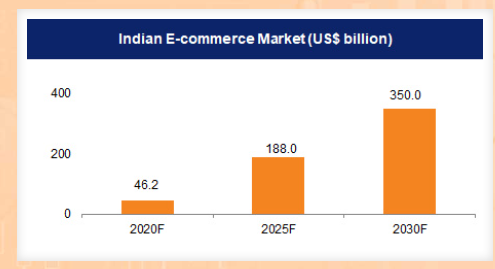
    As per the data of IBEF (Indian Brand Equity Foundation) India’s e-commerce market is expected to reach US$ 111 billion by 2024 and US$ 200 billion by 2026. Moreover, India has gained 125 million online shoppers in the past three years, with another 80 million expected to join by 2025. After China and the US, India had the third-largest online shopper base of 150 million in FY21 and is expected to be 350 million by FY26.

    E-commerce market size

    As the Indian E-commerce market is constantly showing growth developing an e-commerce application and growing business is a perfect opportunity as well as a need. Apart from this Indian government is also initiatives namely Digital India, Make in India, Start-up India, Skill India and Innovation Fund to strengthen the e-commerce sector. There is continuous growth in e-commerce sector investment in India.

    Must have features of an E-commerce Application

    Generally, a practical e-commerce application should include a range of features to provide a seamless and satisfying experience for both customers and businesses. Here are some must-have features for e-commerce application development:

    User Registration and Login:

    Allow users to create accounts and log in using their credentials or social media profiles. This enables personalized experiences, order tracking, and saved preferences. Normally, User experience (UX) is a critical aspect of an e-commerce application that directly impacts customer satisfaction, engagement, and conversion rates. Besides, a positive user experience can lead to higher sales, repeat customers, and positive word-of-mouth.

    Search Functionality:

    Provide a robust search feature that allows users to search for products using keywords, filters, and categories. Normally, integrating an audio experience feature in an e-commerce application can provide a unique and engaging way for customers to interact with products and content.

    Secure Payment Gateway:

    Implement a secure and trusted payment gateway to ensure the safety of customer payment information. Remember that security is an ongoing effort. Regularly monitor your application for security vulnerabilities and stay updated on industry best practices to ensure your payment gateway remains secure for both you and your customers. Integrate various payment methods such as credit/debit cards, digital wallets, PayPal, and other local payment systems.

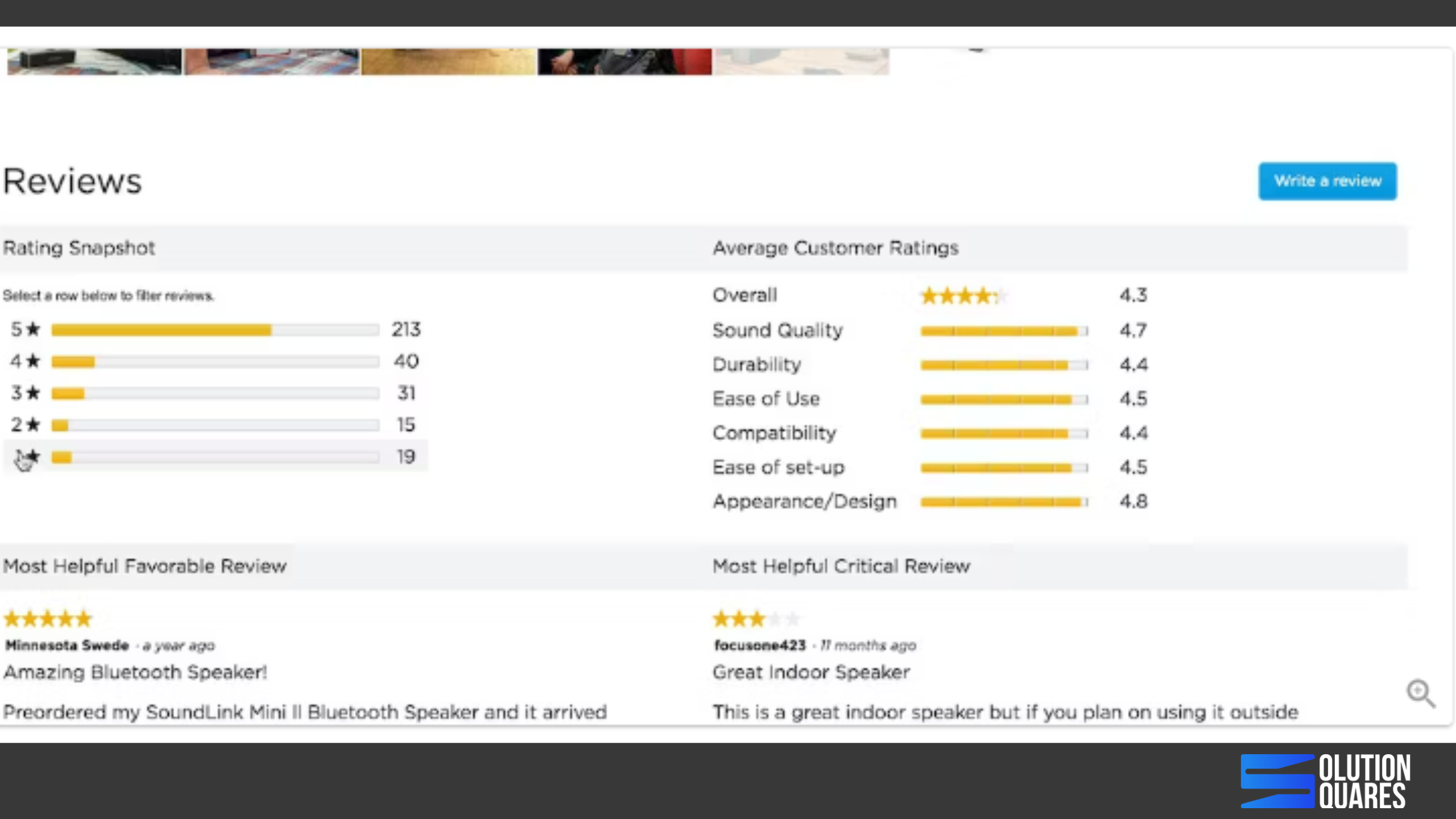
    Reviews and Ratings:

    Generally, implementing a robust review and rating system in an e-commerce application development is crucial for building trust, encouraging customer engagement, and helping shoppers make informed purchasing decisions.

    Allow customers to leave reviews and ratings for products, helping other shoppers make informed decisions. A well-implemented review and rating system can contribute to building customer trust, boosting sales, and fostering a sense of community around your e-commerce platform. However, it’s important to actively manage and monitor the reviews to ensure a positive user experience and maintain the integrity of the system.

    review in e-commerce application development

    Responsive Design:

    Ensure the application is optimized for various devices and screen sizes, including smartphones, tablets, and desktops. Designing an e-commerce application involves creating a user-friendly and visually appealing interface that enhances the shopping experience for your customers. Create a responsive design that adapts to various devices and screen sizes, ensuring a consistent experience on desktops, tablets, and smartphones.
    Remember that the design should be centred around providing value to your customers, making their shopping journey enjoyable, convenient, and secure. Regularly test and refine your design based on user feedback and evolving industry trends.

    Personalization:

    Offer personalized product recommendations based on user browsing and purchase history to enhance the shopping experience. Indeed you can also add features of a wish list and favourite list option. Besides this option will boost your sales as well as provide a personalised feeling to the user. Create a responsive design that adapts to various devices and screen sizes, ensuring a consistent experience on desktops, tablets, and smartphones.

    Mobile App Support:

    If feasible, offer a dedicated mobile app for enhanced convenience and engagement. Incorporating robust mobile app support features into your e-commerce application is essential for providing a seamless and responsive experience for users on mobile devices. 

    Remember that mobile app support features should be designed with user convenience and ease of use in mind. Regularly gather user feedback and monitor app analytics to refine and enhance the support features based on user needs and preferences.

    Customer Support:

    Implementing a customer support feature in an e-commerce application is crucial for providing excellent customer service and enhancing the overall user experience. Additionally, provide responsive customer support channels for inquiries, issues, and feedback.

    Remember that customer support plays a significant role in customer retention and brand loyalty. Prioritize providing timely, helpful, and friendly assistance to create a positive impression and turn customers into advocates for your e-commerce business.

    In order to provide complete customer satisfaction in e-commerce application development one can include various functions;

    • Live chat
    • 24*7 support
    •  Frequently Asked Questions
    • Ticketing System
    • Email support
    • Chat support
    • Social Media Support
    • Personalisation

    Returns and Refunds:

    Clearly outline the return and refund policies, and provide a straightforward process for initiating returns or requesting refunds. Implementing a seamless and customer-friendly return and refund feature in your e-commerce application is essential for building trust and providing a positive shopping experience.

    Inventory Management:

    For businesses, having tools to manage inventory, track stock levels, and update product availability is crucial. Implementing a robust inventory management feature in your e-commerce application is crucial for efficient operations, accurate product availability, and seamless order fulfilment. 

    For effective inventory management, one can maintain a centralized database that stores all product information, including SKU, description, price, quantity, and variations. However, implement automation to update inventory levels automatically when orders are placed, returns are processed, or new stock arrives.

    Analytics and Reporting:

    Integrate analytics tools to track user behaviour, sales trends, and other key metrics to make data-driven decisions. Generate detailed inventory reports that provide insights into stock levels, turnover rates, and trends.

    Buy Now and Pay Later:

    When implementing the BNPL feature, it’s wise to partner with established and reputable BNPL providers and clearly present the terms and conditions to customers during the checkout process. This can help enhance transparency, customer trust, and satisfaction with e-commerce applications.Buy now and pay later e-commerce app developmentRemember, the specific features you need will depend on the nature of your business, target audience, and industry.  It’s essential to continually gather user feedback and adapt your e-commerce application to meet changing customer expectations and market trends.

    Social Media Integration

    Usually, social media integration in an e-commerce application can offer several benefits, enhancing customer engagement, marketing efforts, and brand visibility. Remember that the key to successful social media integration is providing value to your users while maintaining a consistent brand presence across different platforms. Make sure your integration efforts align with your overall marketing and branding strategies.

    Social Media IntegrationRemember that the key to successful social media integration is providing value to your users while maintaining a consistent brand presence across different platforms. Make sure your integration efforts align with your overall marketing and branding strategies.

    Stages of E-commerce Application Development

    Developing an e-commerce application is a comprehensive process that involves various stages and considerations. Here’s a general outline of the steps you would need to take to develop an e-commerce application:

    Idea and Planning:

    Define your business model:

    1. Decide what you’re selling, whether it’s physical products, digital goods, or services.
    2. Identify your target audience and market niche.
    3. Plan your product catalogue and categories.
    4. Determine the key features your application needs.

    Platform Selection:

    Choose whether you’ll build a custom application or use an existing e-commerce platform like Shopify, WooCommerce, Magento, etc. Evaluate the pros and cons of each platform based on your business needs, budget, and technical expertise.

    Design and User Experience:

    Design the user interface (UI) with a focus on user experience (UX).
    Create wireframes or prototypes to visualize the application’s layout and flow.
    Design product pages, checkout processes, and other key screens.

    Development:

    Develop the front end: Implement the UI design using HTML, CSS, and JavaScript.
    Develop the backend: Create the server-side logic, database, and API endpoints.
    Implement features like user registration, product catalogue, shopping cart, and checkout.

    Payment Integration:

    Integrate with payment gateways to enable secure online transactions.
    Ensure PCI DSS compliance to protect customer payment data. Integrating payment methods into your e-commerce application is a critical stage that ensures secure and smooth transaction processing for your customers

    Usually, Payment integration requires attention to detail and a thorough understanding of the payment gateway’s API documentation. Prioritize security and user experience to build trust with your customers during the checkout process.

    Security and Data Privacy:

    Implement security measures to protect user data, including SSL encryption, secure login, and data validation.
    It is important to comply with data protection regulations like GDPR if applicable.

    Testing:

    Perform rigorous testing of the application, including functional testing, usability testing, security testing, and performance testing.
    Identify and fix any bugs or issues.

    Launch:

    The launch stage of an e-commerce application development marks the point at which your application goes live and becomes accessible to your target audience. It’s a crucial phase that requires careful planning and execution to ensure a successful launch.  Deploy the application to a live server or a cloud platform.
    Configure domain names, SSL certificates, and other necessary settings.

    Further, The launch of your e-commerce application development is a significant milestone, but it’s not the end of the journey. Continuous monitoring, optimization, and adaptation are essential to ensure the success and growth of your e-commerce venture.

    Marketing and Promotion:

    Develop a marketing strategy to attract customers to your e-commerce site.
    Utilize online and offline channels, including social media, search engine optimization (SEO), email marketing, and paid advertising.

    Maintenance and Updates:

    Continuously monitor the application’s performance and user feedback.
    Regularly update the application to introduce new features, fix bugs, and enhance security. Usually, the maintenance and update stage of an e-commerce application is an ongoing process that involves ensuring the application’s continued functionality, security, and user experience. Regular updates and maintenance are essential to keep your application relevant, secure, and optimized for your users.

    Remember that maintenance and updates are ongoing efforts that require attention and dedication. Regularly assess the application’s performance and gather user feedback to make informed decisions about improvements and enhancements. Staying proactive in maintenance ensures that your e-commerce application remains competitive and provides a positive user experience over time.

    Analytics and Optimization:

    Implement analytics tools to track user behaviour, sales, and other important metrics. Use data insights to optimize the application’s performance and user experience. However, it’s important to note that e-commerce application development can be complex, and it may require a team of skilled professionals, including UI/UX designers, frontend and backend developers, testers, and possibly marketing experts. If you’re not experienced in software development, you might consider hiring a professional development team or agency to assist you throughout the process.

    Conclusion

    In short E-commerce application development is a complex process that requires collaboration among designers, developers, testers, and marketing teams. Prioritize security, user experience, and scalability to ensure the success of your e-commerce venture.

  • How To Develop Fleet Management Software in 2025?

    How To Develop Fleet Management Software in 2025?

    Fleet management is one of those crucial aspects of business that requires operational competency to manage and track daily activities easily. Efficiently managing a complex system of vehicles that keeps increasing every week requires an exponentially viable and seamless management system.

    A fleet management software can digitize your fleet operations while simultaneously allowing you to automate route optimization, tracking consignments, bookkeeping, communication, etc. This article will help you get a clear idea of the fleet management software cost and the factors affecting the same.

    The demand for fleet management software has increased with the expansion of international land and sea trade routes. On average, a simple fleet management software would cost around $7,000 to $ 35,000, depending on the overall software complexity, feature list, location as well as the hourly rates of developers.

    Some Interesting Market Statistics to Understand the Popularity of Fleet Management Software

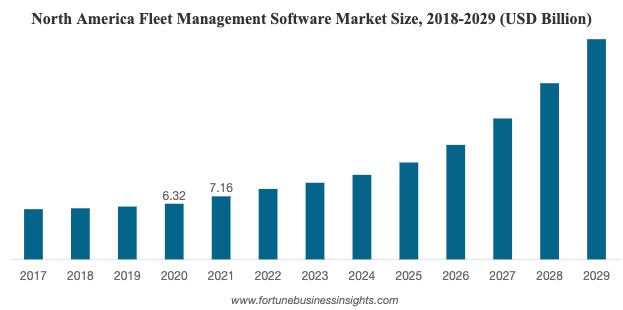
    As per the latest reports from PRNewswire, the global fleet management market is expected to witness a market volume of $52.50 billion by 2030, registering a CAGR of 10.6% from 2021 to 2030. Fleet management app has gained a trajectory in the past when it comes to streamlining hectic business processes. Here are a few notable market statistics emphasising the growing demand for enterprise fleet management apps.

      • The overall market share of worldwide fleet maintenance software is expected to reach approximately $18.1 billion in the next ten years.

      • The passenger car segment, the most significant contributor to the global fleet management software market, will witness a growth rate of 9% from 2022 to 2032.

      • The United States fleet maintenance software market still occupies the most significant share worldwide and will have a projected volume share of $4.7 billion by the end of 2022.

    data for fleet management software

    However big or small the enterprise is, investing in fleet management software is essential to manage the business’s bottom line and the safety of the drivers and the fleet. A customised fleet management system can help you keep track of every aspect of your fleet. Furthermore, it can notify you of imminent issues and help resolve them before they become exorbitantly costly.

    Simply put, dedicated software for managing fleets can help you automate your workflows, optimise operations costs, eliminate bottlenecks, and increase overall productivity.

    Get Assistance about fleet management software

    A Valuable Insight Into the Fleet Management Software Cost

    The overall cost of developing fleet management software depends on the complexity of the software, the feature list, the technology stack used for the development process, the development team’s location, the developers’ hourly rates, team size, etc.

    With so many factors affecting the overall cost of the process, the easiest way to get a precise estimate of the cost is to contact a reliable software development company specialising in fleet management software development.

    Here is our unerring formula to determine the overall development cost for custom software:

    custom software development process

    The development process affecting the cost of the software usually includes the time taken for building an MVP, UI/UX design, coding hours, backend server hours, etc.

    On average, the cost of a simple fleet management system can vary between $7,000 -$20,000. The software in this category will include features like a simple admin and driver dashboard, fleet and fuel tracking, and route optimisation.

    On the other hand, the overall cost of developing a medium complex fleet software can vary between $15,000- $25,000. The features of such software categories will be an interactive dashboard for drivers and admins, dispatch management, accident management, geofencing, etc.

    The third-tier fleet management software will include every feature, from the most basic to the most complex. The development cost for such software can vary between $20,000 $35,000. The extensive feature list will include effective real-time reports, compliance management, vehicle management and maintenance, accident protection, etc.

    Summarised Version of the Fleet Management Software Development Cost:

    Software Type Estimated Cost Timeframe
    Simple $7,000 to $20,000 2 to 3 months
    Medium Complex $15,000 to $25,000 3 to 6 months
    Complex $20,000 to $35,000 Up to 9 months

    Factors Affecting the Cost of Fleet Management System Development

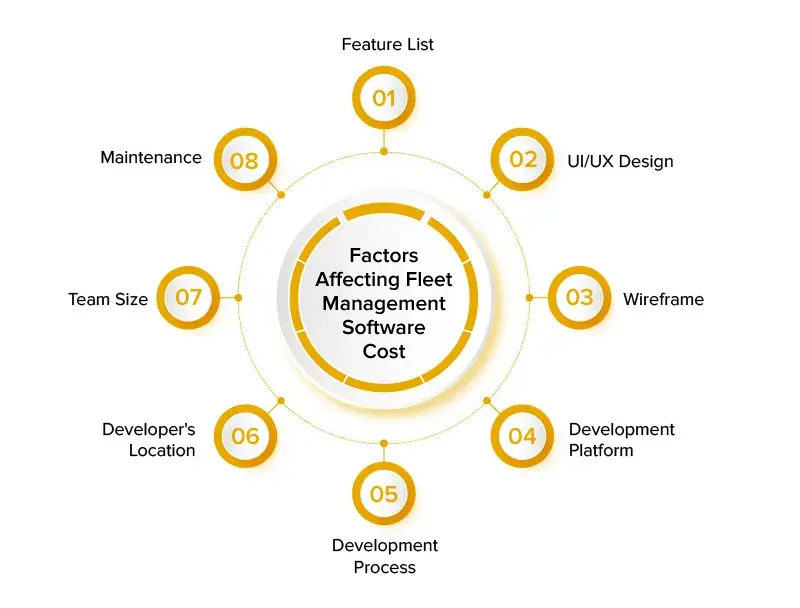
    There are several factors of significance that affect the overall cost of developing fleet management software. Diving into the logistics that determine the development cost can help you make effective decisions based on your budget and get a guaranteed ROI.

    Factors Affecting Fleet Management Software Cost

    Feature List

    The total cost of fleet management software is usually defined by the number of features integrated into it. A simple fleet management software with a staple feature list is bound to cost around $7,000 to $15,000. The gross price will continue to increase with the increasing number of features and functionalities. A custom software capable of handling every aspect of fleet management can help enterprises gain traction in the rapidly growing market.

    UI/UX Design

    The user interface design of the software captures the overall essence of the brand’s individuality, while an interactive user experience design ensures seamless functioning. Since realising the custom design requirements takes ample time and effort from the designing team, the cost of the overall software can vary according to it. The more perfect and flawless the design of the software, the higher the overall cost.

    Wireframe

    The entire map of software development is presented with the help of a wireframe. The cost of wireframe development can be included in the total development cost if the client doesn’t have a wireframe ready beforehand. Since a suitable wireframe requires the use of tools such as Photoshop, Figma, and more, the cost of the process can vary according to the tool used. In addition to this, the multiple testing stages of the wireframe can also increase the overall charges. Usually, a wireframe for fleet management software development can cost around $500 to $1,500.

    Development Platform

    The platform of the software can further impact the overall cost. If the enterprise is looking for an on-demand fleet management app development, the price can vary according to Android and iOS requirements. Moreover, if the organisation wishes to choose a web app or software, the underlying operating system can affect the overall cost of development. Getting an app for both Android and iOS platforms can increase the overall impending cost. Thus, it is advisable to choose a single platform at the initial stage and shift towards expanding the platform range once the software takes off.

    Development Process

    Coding is one of the significant factors that affect the cost of the fleet management system. The coding cost can vary as per the hourly rate of developers as well as their location. In addition to these, the total cost of fleet management software development services can be influenced by the time taken to write the code, the technology stack used, and the backend statistics.

    Developer’s Location

    The location of the developers or the development team is one of the vital factors affecting the overall fleet management software cost. For instance, if organisations or enterprises are hiring a development team from Asia, the cost of development might be less as compared to hiring developers from other parts of the world. The currency rates of multiple geographical locations mainly affect the total charges of the development process.

    Connect with us to get estimated cost of software development

    Team Size

    The team size is another factor that affects the cost of the entire software development process. If you are looking to hire a freelancer or a startup that wants to build a portfolio, the total charges for the fleet management software will be less. Furthermore, if you hire a dedicated organization, the development project will be run by a group of developers, designers, tech experts, and analysts, all managed by a project developer. The latter will offer you the best of everything but at an additional cost.

    Maintenance

    From system updates to accommodating changing requirements, the overall maintenance cost of the software can sneak up on you at any time. Since maintenance of the software is one of the inescapable stages of the development process. Every enterprise has to bear its cost.

    Tech Stack

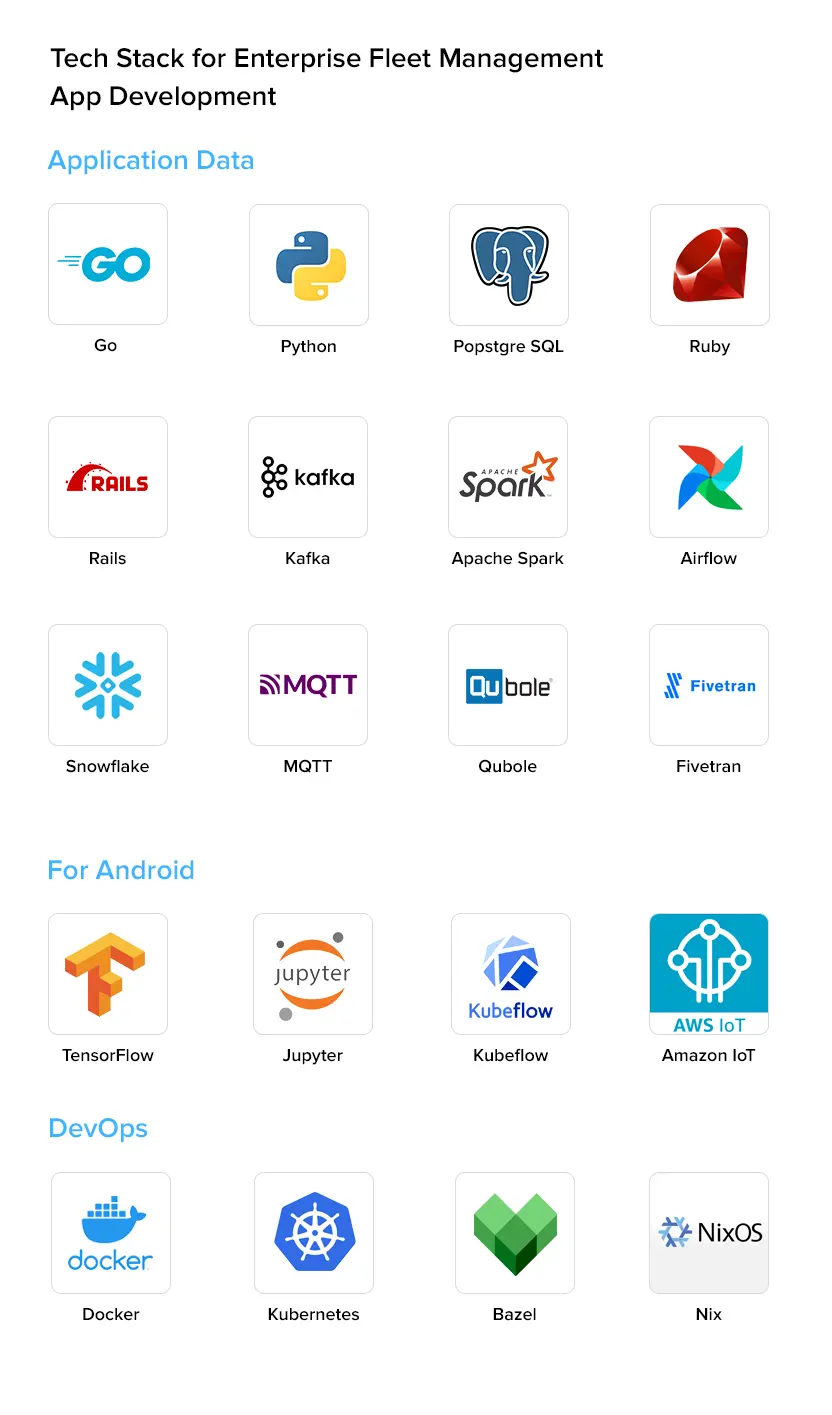
    The underlying technology used for developing the fleet management software can also affect its overall cost. If you need a robust system that can handle multiple processes at the same time. While offering real-time data analytics and reports, the cost of the software or the app will vary per your custom requirements. Still, we have created a general tech stack that is used across organizations for developing fleet management software.

    tech stack for developing fleet management software

    Features of a Fleet Management Software and How They Impact Total Cost

    The extensive feature list of the fleet management software usually varies its overall cost. More features simply mean more expense. Here are a few notable fleet management software features that ensure smooth management of fleets across multiple locations.

    Real-Time Fleet Tracking

    The feature allows you to track all information regarding the fleets. For instance, it will enable you to see the fleet’s location, driving speed, route, and direction followed by the fleet, fuel consumption, traffic at the site, the temperature of the engine, etc.

    GPS Vehicle Tracking

    A mobile app, especially curated for fleet management, is downloaded on the GPS hardware devices. Our app allows you to check the functionality of the vehicles at all times. A professional telematic solution can help you trace the vehicle across a specific area, decipher its routes, starting and ending points of the journey, complete stops, and more.

    Maintenance Tracker

    Since every vehicle requires adequate maintenance for smooth operations. Fleet management software with a maintenance tracker offers you timely notifications on the same. For instance, the sensor in the app can send signals to the fleet managers regarding the fuel change requirements, maintenance of the fleet’s tires, mirrors, etc.

    Fuel Management

    Another vital feature of the fleet management software is the fuel management sensor. It allows the admin to get a clear look at the total fuel consumption for every fleet along the route. Furthermore, it also helps notify the authorities of engine malfunctions, unexplainable fuel consumption, etc.

    Driving Behavior Analysis and Report

    The software allows you to keep an eye on the driver’s behavior which further determines. If he/she is fit for driving or not. Furthermore, the feature will enable you to monitor several aspects of driving, such as harsh braking, overspeeding, over idling, etc. This can help in efficient employee management at minimal costs.

    Geofencing

    Geofencing allows effective route planning for the fleets beforehand. The features will enable you to get an insight into the total area to be covered in real-time. Thereby saving time and costs with efficient planning.

    Fleet Alarms

    Fleet alarms are one of the most sought-after features of a coherent fleet management system. They can notify you immediately about issues like excessive speeding, lower fuels as well as engine malfunctions. Paying heed to these alerts helps in the cost-effective management of fleet operations.

    Dashboards

    Systematic dashboards for both admin and drivers can offer you the very best in fleet management software. From providing real-time information on every delivery and operation being carried out by the fleets. We effectively create summaries and reports, the dashboards can help save ample time and cost for enterprises.

    [Also Read: How to Build a Transportation App Like Moovit?]

    Some Hidden Costs Associated with the Fleet Management Software Development

    There are several hidden costs associated with the development process. Understanding them while taking appropriate measures can help you reduce their overall impacts and underlying costs.

    Quality Assurance

    Depending on the platform chosen for the software development, the testing and quality assurance costs might sneak up. For instance, if your software requires stringent testing techniques and protocols, your overall development budget can increase.

    IT Costs

    These are the costs that pile up when the app or the software requires an update or bug fixing. In addition to these, maintaining the APIs or integrating third-party APIs can also increase the impending cost.

    Security

    Another factor that can affect the cost of fleet management software is adhering to security constraints. Since the software is required to be installed for multiple devices and will collect personal data from the drivers, security protocols have to be put into place to avoid malware and theft.

    Few best industry practices and tricks can help enterprises reduce the overall cost of fleet management software. For example, opting to build an MVP first can help you understand how the software can help you streamline processes. After calculating the overall benefits, you can then opt for a complete software development process. On average, the cost of MVP development can vary between $12,000 to $16,000.

    How Can Solution Squares Help You Determine the Fleet Management Software Cost?

    Fleet management software has the ultimate potential to positively impact your business processes while streamlining complex tasks. Building custom software that adheres to your specific requirements is a complex process, but a professional organization like Solution Squares can help you assess the actual value of your business.

    Our fleet management software development services speak volumes when it comes to launching the most innovative software integrated with custom features and modern technologies. If you are looking to get a precise estimate of the fleet management software cost with a feature-by-feature breakdown, get in touch with us now!

    FAQs

    A. A simple fleet management software can cost around $7,000 to $20,000. The overall cost of the software can vary with increased complexity, the number of features, location, and hourly rates of the development team, etc.

    A. Fleet management software uses GPS technology to offer real-time data on the fleets, such as their location, speed, driver’s behavior, fuel consumption, etc.

    A. The top 5 benefits that can further reduce the operational overhead associated with the business are details on engine idle time, distracted driving events, speeding events, average time spent on the site, and unscheduled maintenance.

  • How To Build An MVP That Raises Money Mobile App?

    How To Build An MVP That Raises Money Mobile App?

    Most businesses these days have an idea for a product, but building a product or a service costs money, and not all businesses have the capital to get their idea off the ground. This is where MVPs come in handy – by designing and building an MVP for a mobile app, businesses can test their concept with real users and raise money to fund further MVP development. 

    According to Statista, 25% of apps get abandoned after being used just a single time. At the same time, other apps grow in number, and the competition gets tougher and tougher. 

    Building an MVP is a great way to test your business idea without spending a lot of money. In this blog post, let’s look at how to build an MVP for a mobile app and its benefits for investors. We’ll also discuss how to raise money from investors. So, without further ado, let’s get started!

    What is a minimum viable product?

    Minimum viable product is a concept taken from the Lean Startup methodology. The idea is to launch a product with a minimum number of features to get users’ feedback as quickly as possible. And also to validate the product idea early in the product development life cycle.

    Minimum Viable Product for mobile app

    Undoubtedly, having an MVP solution is beneficial in reducing risk, saving money, and getting funding.

    Benefits of developing an MVP For A Mobile App

    Several benefits that come with MVP development for fundraising include:

    Benefits of developing an MVP

    Investors can see the product functionality

    When it comes to product development, the minimum viable product framework is essential to secure investment funding. Why? Because it allows MVP investors to see the product’s functionality and how it can be used to solve a real-world problem. By contrast, products that are still in the early stages of development can be much harder to sell to investors, as they may not be able to see the potential value in the product. 

    Additionally, MVPs can help ensure that products are developed in a customer-centric way, as they allow for feedback from real users to be gathered and incorporated into the final product. In short, MVPs are an integral part of the product development process and should not be overlooked when seeking investment.

    Easy for the investors to see if the product is viable 

    The main purpose of an MVP for a mobile app is to test whether the product is viable in the marketplace. This means testing whether there is a demand for the product and whether users are willing to pay for it. An MVP also allows for user feedback, which can be used to improve the product before launching it to the wider market. 

    With the help of a minimum viable product, startups can reduce the risk of failure and increase their chances of success. For investors, an MVP is essential as it provides a way to assess whether the product is likely to be successful. This information is vital in making investment decisions.

    Investors can judge that you have the right team

    As any experienced investor knows, one of the most important aspects of any new venture is the team behind it. A strong team can make even the most challenging project a success, while a weak team is likely to fail no matter how good the underlying idea may be. 

    This is why many MVP investors place such a high importance on seeing a minimum viable product before committing to a new project. MVP app development can help judge whether the team behind a new venture has the skills and experience necessary to succeed. 

    MVP development companies like Solution Squares have a wealth of experience in MVP building and can help give investors the confidence they need to invest in the product. So, if you’re looking to raise funding for your new project, make sure you partner with a company that offers MVP development services to help you create a minimum viable product that will impress even the most sceptical investors.

    Investors can see your product commitment

    Many investors are reluctant to invest in new products or companies because they fear that the team behind the venture will not be committed to seeing it through to completion. However, a minimum viable product allows businesses to gauge investor interest in the product and get funding to continue developing the product. The cost to build an MVP is typically lower and are less risky than traditional product development, making them appealing to investors.

    Minimum viable product also allows businesses to gather feedback from customers and make necessary changes before launching a full-fledged product. This feedback is essential for making a product that meets customer needs and stands out in the marketplace. By clearly demonstrating their commitment to the product, MVP for startups can increase their chances of securing funding and achieving success. 

    Businesses can prove their market awareness

    As market analysis is an important part of the MVP software development, it also helps investors know that the team is aware of the market conditions and is capable of adapting to them. Minimum viable product is essential in seeking MVP investment as it allows businesses to test their product hypothesis with real customers and gather feedback to validate idea. This feedback is essential for refining the products and business model before seeking MVP seed funding from investors.

    The minimum viable product also provides a proof of concept that investors can use to assess market opportunity and potential return on investment. MVP is a key step in securing funding from investors and proving market awareness. By taking the time to develop an MVP, businesses can increase their chances of success in the long run. Also, an MVP strategy could be a great option if you are thinking about MVP development.

    Now that we know the benefits of having minimum viable product for the investors, let’s take a look at the steps to build an MVP. 

    How to build an MVP?

    As business owners, you must have searched MVP in the search results, and yes, Google autocompletion says “MVP is dead,” “MVP is low” and so on. But we strongly disagree.

    Google autocompletion

    MVP building requires some MVP planning and thoughtful efforts, but it is a straightforward process. So, let’s move further to know the steps to build an MVP:

    Do market research

    The first step is to do your market research. This will help you understand the needs of your target market and what they’re looking for in a product or service. Many platforms that conduct paid surveys and can help target the right respondents for your MVP in business.

    Identify your target market and user persona

    Once you’ve conducted your market research, it’s time to identify your target market and user persona. This includes identifying the demographics of your target market and what their needs are. Various questions, like 

    Who is your target user? What are their needs? Why would they use this solution? need to be answered at this stage. If all replies are found correctly, it will help determine who your minimum viable product is for and what needs it should address.

    Outline key features of your product

    Now that you know who your target market is and what their needs are, it’s time to outline the key features of your product. This includes identifying the core MVP features that your product or service will offer. Remember, less is more when it comes to a minimum viable product. You want to focus on the essential features that will address the needs of your target market.

    Build and launch your MVP

    Once you’ve decided on the features list, it’s time to build and launch your MVP. This involves developing the actual product or service and making it available to your target market. When launching your minimum viable product, it’s important to focus on creating a great user experience

    This means ensuring your product or service is easy to use and offers a great user experience. It’s also important to promote your minimum viable product and get feedback from users. The feedback you receive will be invaluable as it will help determine what features to add or remove, and how to improve your product or service.

    Analyze the feedback

    Once you’ve launched a minimum viable product, it’s time to analyze the feedback and data. This will help understand what’s working and what’s not. It’s important to remember that minimum viable product will have flaws, and there will be areas that need improvement. However, the feedback and data you receive will help determine how to improve your product or service.

    how to improve your product

    There’s no one-size-fits-all answer to building an MVP, but the above steps will give you a good starting point. Remember, the goal is to develop a minimum viable product that meets the needs of your target market. Now that you know how to build an MVP, the aftermath is to think about raising MVP investments for your app or a product.

    Get service assistance

    How to find investors after you have developed an MVP?

    The first and the foremost thing that comes to an entrepreneur’s mind during tough times is about how to raise money. So, if you have developed a minimum viable product and are now looking for potential investors, here’s what you need to do.

    Research about potential investors

    In today’s economy, it can be difficult to raise money for new products, mobile apps or services even if it is a great idea. One way to increase your chances of success is to research potential investors thoroughly. This means not only knowing their MVP investment history, but also understanding their goals and objectives. 

    By presenting a product in a way that aligns with their interests, you are more likely to secure pre MVP funding. Additionally, during times of economic downturn, it is even more important to be aware of the needs of potential investors. They may be more conservative with their money and more risk-averse than during boom times.  

    Focus on the future, not the past

    When pitching your product to potential investors, it’s important to focus on the future, not the past. This means highlighting the potential of your product and its ability to grow in the future. 

    For example, if you pitch a new social media app, you should focus on the potential user base and how the platform can be used to connect people. The key is to convince investors that your product has the potential to be successful in the future and that their investment will pay off.

    Create a pitch that resonates with potential investors

    Once you have identified potential investors, it’s time to create a pitch that resonates with them. This means focusing on the aspects of your product that are most likely to appeal to investors and emphasizing the potential return on MVP investment.

    For example, if your product is a food delivery app, you may want to focus on the growing online ordering and delivery trends. You can also highlight the potential for repeat customers and the loyalty of customers to businesses that offer convenient delivery options. 

    This can give investors confidence in your ability to launch the product successfully. By crafting a pitch that resonates with potential MVP investors, you will be in a better position to raise the money you need to bring your product to market.

    Be prepared to answer tough questions

    When pitching minimum viable product to potential investors, be prepared to answer tough questions. This means being honest about the risks and challenges associated with your product. 

    For example, if you are pitching a new food delivery app, you should be prepared to answer questions about the competitive landscape, the potential for customer attrition, and the scalability of your business model. By being honest and transparent about the risks involved, you will be in a better position to secure MVP funding.

    Optimize your cash position

    Finally, it’s important to  optimize your cash position before pitching your product to potential investors. This means having a clear understanding of your burn rate and ensuring that you have enough cash in hand to sustain your business in the event that you are not able to raise money. 

    Additionally, it’s important to have a clear plan for how you will use the funds you are seeking. This will give investors confidence in your ability to launch and grow your business successfully.

    To move forward, after having a good knowledge of the tips for success while pitching to MVP investors, it is important to have a look at the funding partners for the post-MVP stages.

    Talk to our experts

    Funding partners for post-MVP stages

    Undoubtedly, the MVP stage is the most crucial for any business. But it’s not the end. To take your business to the next level and achieve long-term success, let’s look at the main type of MVP funding sources that are helpful to approach during the pre-seed funding and seed funding  rounds.

    Non-profit community development finance institutions

    Many CDFIs have been created to invest in businesses in low to moderate-income (LMI) communities. While their primary focus is on economic development, they also have a mandate to invest in businesses that will create jobs and spur economic growth. As such, they can be a good source of funding that are looking to launch in LMI communities.

    Government agencies and programs

    Federal, state, and local governments offer a variety of programs and incentives to promote entrepreneurship and economic development. These can include loans, grants, and other forms of financial assistance. 

    Angel investors and venture capitalists

    Angel investors and venture capitalists are typically high-net-worth individuals who invest in early-stage companies in exchange for equity. While they are typically focused on high-growth companies, they can also be a source of funding for a minimum viable product with high potential.

    Crowdfunding

    Crowdfunding is a way of raising capital by pooling small amounts of money from a large number of people. It can be a good source of funding for MVPs that have a compelling story and are able to generate interest and excitement among potential investors.

    Friends and family

    Friends and family can also play an integral part in MVP fundraising, particularly if they are supportive of your business idea and believe in your ability to succeed. However, it’s important to remember that they are also taking a risk by investing in your company, and as such, you should treat them as you would any other investor.

    Closing thoughts

    Building an MVP is a critical step in the process of raising money for your mobile app. By following the tips we’ve outlined in this post, you can create a product that will resonate with investors and help secure the funds you need to take your app to the market. Also, let’s not miss out that great companies like Uber, Airbnb, and WhatsApp started as MVP and now are the most successful ones. So, don’t let little things discourage you from seeking out investors for your minimum viable product.

    FAQs

    Q. Do you need an MVP to get funding?

    A. While an MVP can be a helpful tool for attracting investors, it is not always necessary. In some cases, a well-developed prototype may be enough to demonstrate the app’s potential and persuade investors to provide funding.

    However, there are also situations where an MVP can be essential. For example, suppose the app requires significant investment in order to get off the ground. In that case, an MVP may be the only way to convince investors to provide the necessary capital. Ultimately, whether or not you need an MVP to get funding will depend on your specific situation and the type of app you are developing.

    Q. What is an MVP funding?

    A. MVP funding refers to the money invested in a product or service to create a minimum viable product. This is often done in the early stages of product development when the team is trying to determine whether or not the product is worth pursuing.


    The MVP funding allows the team to create a prototype or beta version of the product, which can then be tested with customers. If the product is well-received, it may receive additional funding to help it reach its full potential. However, an MVP may be scrapped altogether if it fails to impress customers.

    Q. How do you pitch MVP?

    A. When pitching MVP, it’s important to keep a few things in mind. First, it is meant to solve a specific problem or meet a particular need. This means that your pitch should focus on how your MVP will address this problem or need. Second, MVP is typically very basic in terms of features and functionality.


    This means that you should emphasize simplicity when pitching your app. Finally, MVP app development is typically much faster and cheaper than traditional app development. This means you can bring your app to market quickly and without breaking the bank. By keeping these things in mind, you can ensure that your MVP pitch is professional and effective.

    Q. What is an MVP in business?

    A. In business, MVP stands for a minimum viable product. This refers to the initial version of a product or service created to test a business idea with the minimum amount of resources and effort. The goal is to validate the concept with customers and gather feedback in order to improve the product before making a major investment. MVPs are often used in the tech industry when launching new websites or apps.

    Q. How long does it take to build an MVP?

    A. On an average, building an MVP may take approximately 3-4 months but this timing can vary as per the project and business requirements.